
Highlands Cashiers Land Trust eyes opportunities in 2022
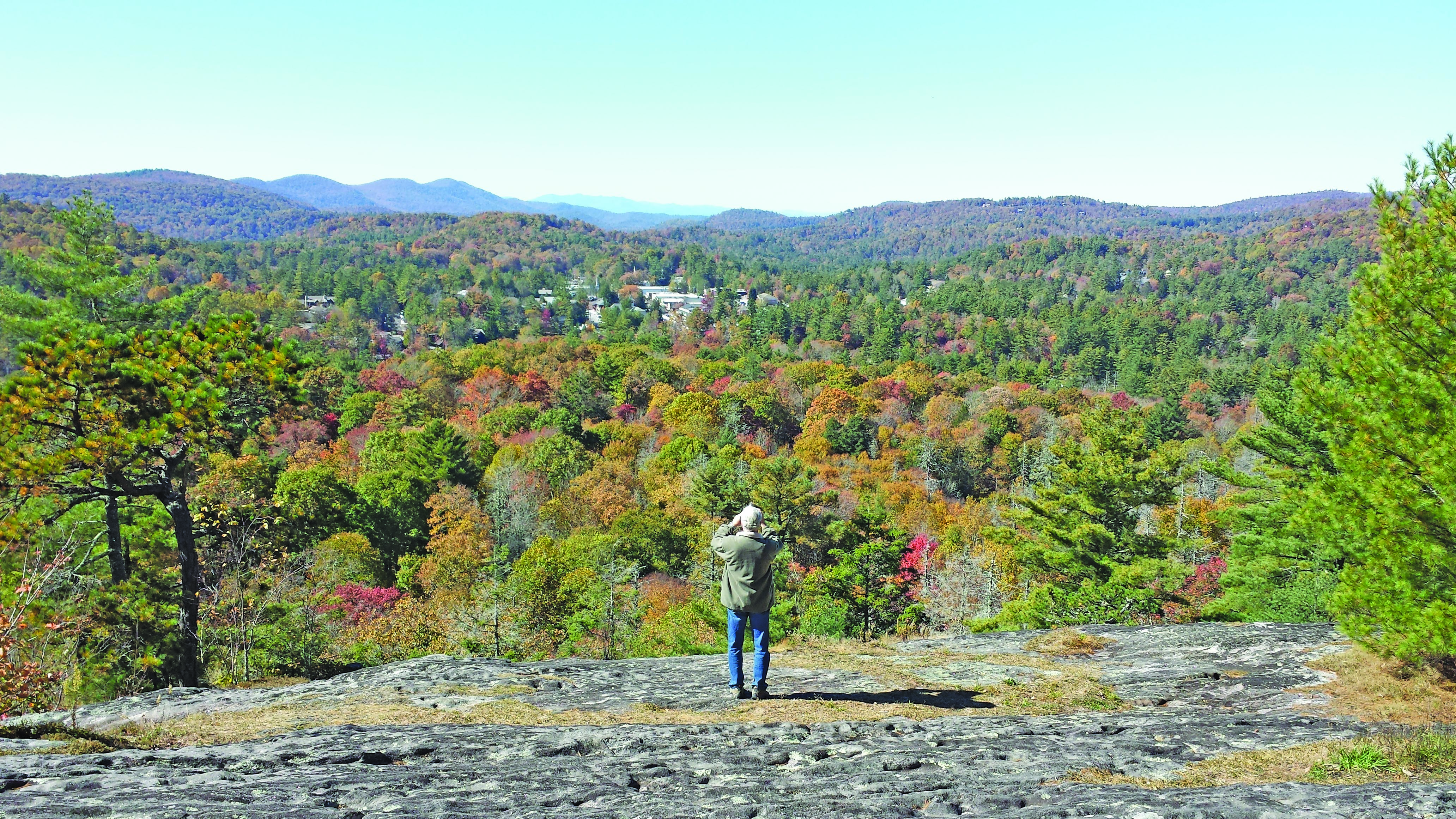
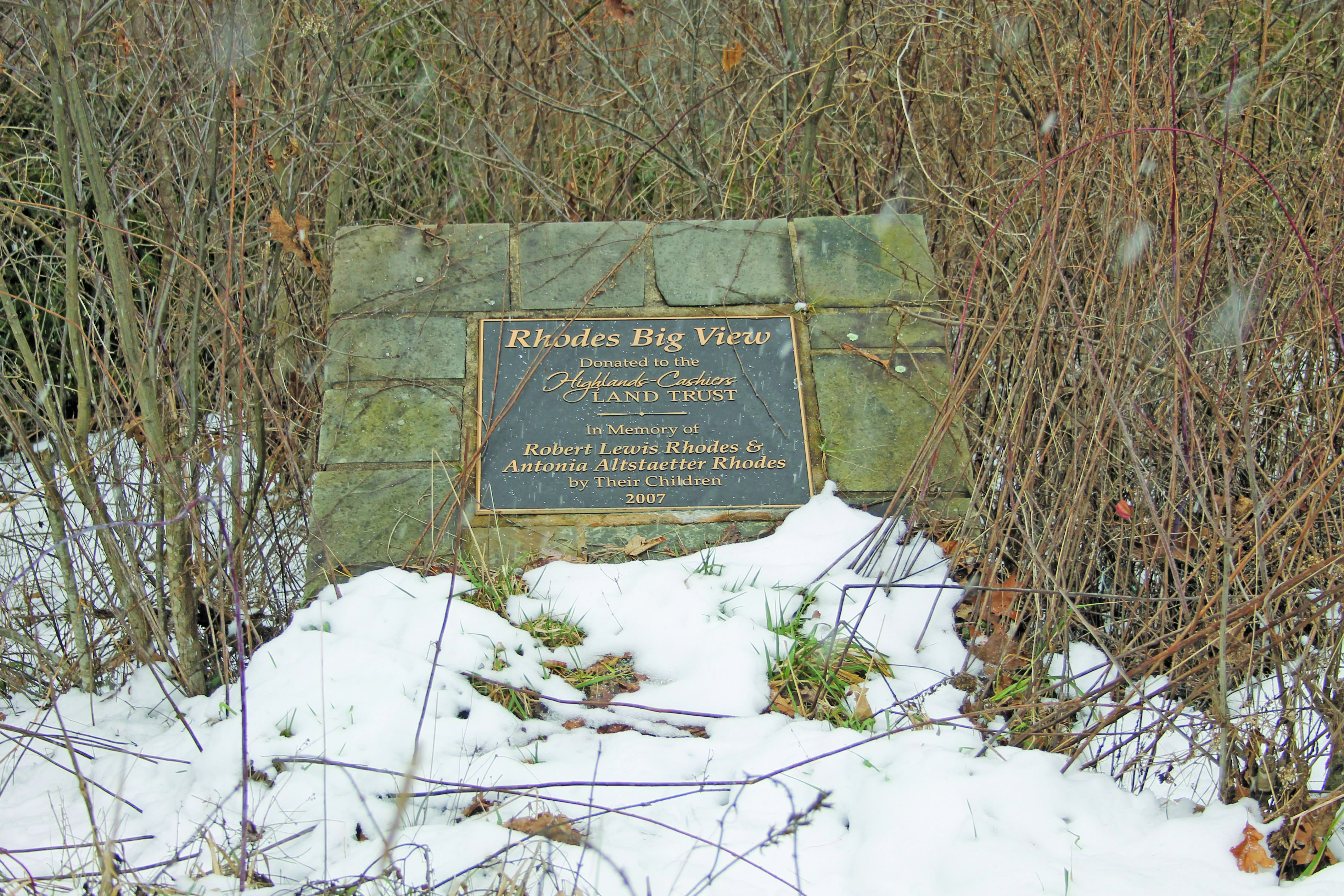
Photo by Christopher Lugo/Staff The Highlands Cashiers Land Trust owns the Big View, home of the Shadow of the Bear on the way to Cashiers.
It was a busy 2021 for the Highlands Cashiers Land Trust, completing nine projects, receiving half a million dollars in funds and receiving an endowment at the end of the year.
Executive director Gary Wein said 2021 was very busy for the land trust, but also strategic.
“I have been here 16 years,” Wein said. “We have grown the organization, but as we go along, there are things that we can’t do because we don’t have the resources. With the endowment, the $500,000, it gives us a war chest and that means that we could possibly receive another million dollars from the state because we now have a 20 percent match. It moves us from being a passive conservation organization to an active conservation organization. It means that we can go after projects instead of waiting for them to come to us. Strategic and busy are the two words that I would use to describe this past year.”
Wrestling with money
Wein said that every nonprofit wrestles with the same problem every year and that is securing funds to run the organization.
“Staff won’t work for nothing,” Wein said. “There is a lot of effort that goes into getting resources. So, all of a sudden, we have an endowment that gives us some stability for operations.”
The endowment was given to the HCLT by the Ennis family.
“We concluded that we would call the endowment the Ennis Family Endowment,” HCLT president Carlton King said. “Amelia Ennis was the clear margin of it all. Although Wade Ennis could have revoked that trust in his lifetime, he did not. So, I view it as a family thing.”
King said for the past couple of years, the trust has had to borrow money to stay afloat, but this year was the first year they did not have to borrow money.
“We have been fortunate enough to be able to pay that off completely every year,” King said. “We don’t like having to borrow. We anticipate and hope that the income and growth from the endowment will eliminate our cash flow issues, will provide a source of funds for unexpected contingencies and if there is enough, we will be able to get our staff compensation where it needs to be.”
What does the land trust do?
The trust is now going through a process Carlton refers to as rebranding.
“I say rebranding, but it necessarily isn’t that,” King said. “It is more of a question of how do we as an organization heighten or public profile and how do we refine and improve our message, so that the public has a better understanding of what we actually do. I am often surprised at how little people understand about what our mission is and what we contribute to the community.”
The two agreed that the trust is important to the community because of the 3700 acres it conserves.
“We conserve all of that land and keep it in its natural state,” King said. “We own 120 acres on top of Satulah Mountain that the public enjoys. Nearly every day for months, there are cars parked at the Nature Center to go to Ravenel Park and Sunset Rock. That is ours. We maintain it for the public’s use and benefit. Much of the Kelsey Trail and the Greenway is constructed on land we own.”
During the COVID-19 pandemic, King said people flocked to the acreage the trust owns.
“People wanted to be outdoors to feel safer,” King said. “Our lands have been highly utilized during that time. We never shut down our trails. We kept them all open for the public.”
Wein said the trust is the single largest landowner in Highlands.
“We own over 300 acres in Highlands,” Wein said. “That includes a couple of public properties. The largest piece of property outside of Satulah is Brushy Face Preserve. We have actually developed two miles of trail at Brushy Face. We also own a lot of road frontage. So, when you drive out of town to Cashiers and you pass the Highlands Community Building, everything on the right for exactly one mile is ours. When you drive Hwy. 28 South, once you pass Brushy Face, everything is ours for about a mile. The land on the way to Cashiers was owned by a group of Little Bear Pen homeowners and was gifted to us for the sole purpose of it being forever green.”
According to Wein, the Highlands Cashiers Land Trust does four things: Land Conservation, Land steward, education and good governance.
“Everyone talks about the three-legged stool, well we have the four-legged table,” Wein said. “With conservation, we preserve land primarily through people giving us land. So, we either own it outright or we have these things called a conservation easement, where you own the land, and we own the development rights. This year, we did five conservation easements. Three of them were in Highlands and were all done by the same person. In the easement, a bog is included, and it is recognized as a part of the U.S. Fish and Wildlife Service’s Mountain Bog Preserve. We also just did 87 acres in High Hampton.”
The trust also did four land acquisitions in the past year. One is a narrow sliver of land that contains a section of the Kelsey Trail, where people can now walk from the end of 5th Street to Sherwood Forest Road on land trust property. Another is an 11-acre tract on Grouse Mountain near Glenville, a 22-acre tract on Windover Road and a 64-acre tract on Laurel Knob Road, just north of Cashiers.
“We owned the end of Kelsey Trail, but we didn’t connect to Sherwood Forest,” Wein said. “A gentlemen gifted .04 acres to us and is about to give us another five acres. The biggest donation we had is in Cashiers on Laurel Knob Road and we have named it the Edward Baker Preserve, after the donor’s father. We will build public trails on it for people. We had a little over 200 acres total, which is not a lot of acreage, but nine projects is the most I have ever done in a year.”
Why should people donate?
King said people should donate to the trust because of the protection it provides for the land in the community.
“These lands that we protect bring people here and they keep people here,” King said. “If you want to get real mercenary about it, people should give us money to protect what we protect because it enhances the value of their property. People love to buy their homes next to land trust property because they know it is always going to be there. I don’t have to worry about people building next to me.”
Helen’s Barn
Earlier this year, Helen’s Barn was part of an endowment that was given to the Highlands Cashiers Land Trust.
Since the news of the ownership, several residents have taken to social media and written letters to the editor about preserving the building.
“From what we are able to determine, the outcry about saving Helen’s Barn is a very small group,” King said. “They are loud, but there are not a lot of them. There is even lack of unanimity among the historical society as to whether that building is historically significant. It has been used commercially for the last 40 years. It doesn’t even look like the original building anymore. We have a fiduciary responsibility to maximize the value of that asset. Had the donor wanted that building saved, they would have restricted its use and said we couldn’t sell it. We hear these stirrings, and we have repeatedly said that if somebody with a preservation motive can come up with the money, we would be delighted to sell it to them.”
Wein said before putting Helen’s Barn on the market, they offered the Highlands Historical Society an opportunity to acquire it.
“The building is worth $1.6 million,” Wein said. “The other component of that is that the Asia House is there. He’s there until 2035. The historical society said they weren’t in a position to acquire it.”
Looking forward to 2022
Moving forward, Wein said he already has five or six conservation easements for the next year.
“We are also working on a pretty big project,” Wein said. “It is a 300-acre tract in Jackson County. We have five projects going and we will probably pick up another four or five throughout the year. This is the slowest time of year for us. So, for us to carry over five projects is pretty good.”
Wein said conservation continues to thrive.
“We will continue to take care of our properties,” Wein said. “That means we will continue to treat hemlocks, we continue to battle invasive species and we continue to build and maintain trails. We also have the Village Nature Series, and we hope, if things calm down a little bit, we can go back to our normal eco-tours.”
King said his goal in 2022 is to work on improving the profile of the trust.
“We need to get our message out better,” King said. “We have reached a point where wer are going to need to look carefully at our fundraising model and determine if we need to modify or enlarge it to deal with the issue. For example, we have not engaged on putting on events where people have to pay to attend. That has been our operation for years. So, we are just having to take a fresh look at how we have operated up until this point and see where we can make improvement.”
For more information on ways to give to the Highlands Cashiers Land Trust, visit http://www.hicashlt.org/ways-to-give.html.
- By Christopher Lugo