
New exhibits open at Cashiers Historical Society
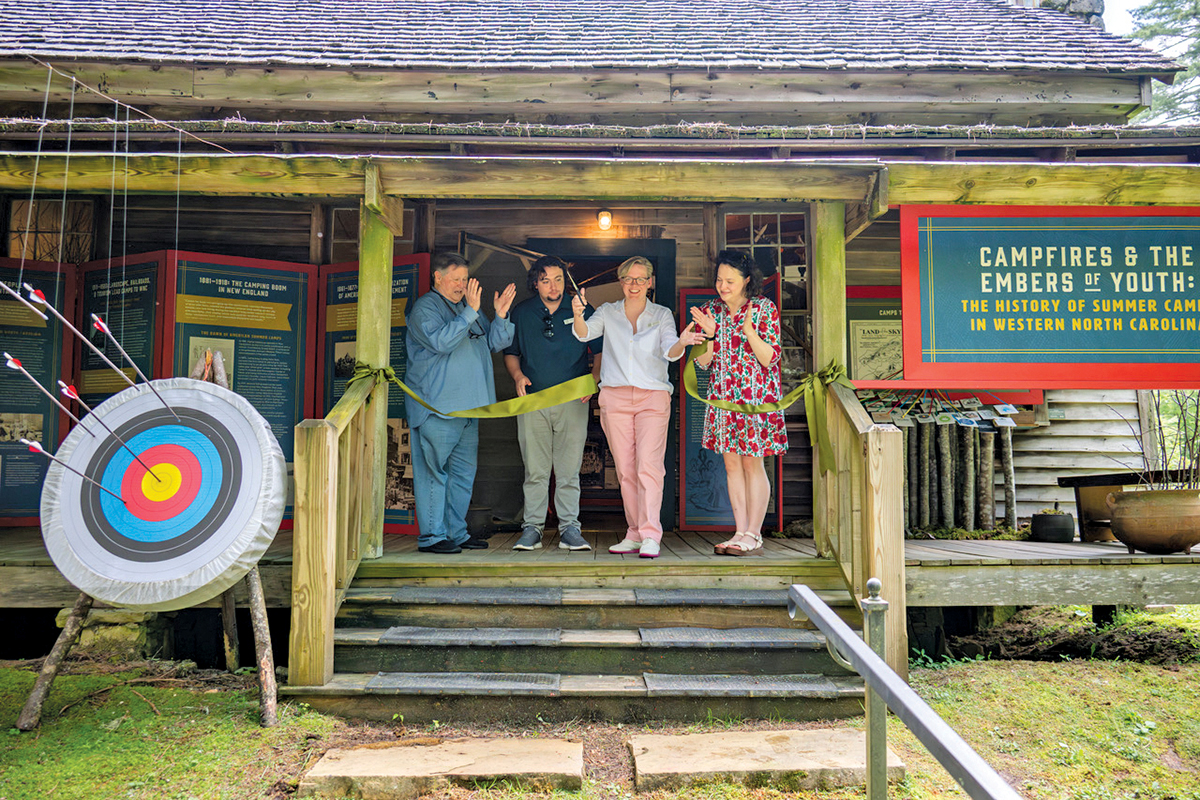
Visitors have a chance to dive deep into the history of Cashiers, and how the plateau has changed over the years, with the opening of two exhibits at the Cashiers Historical Society.
The organization first opened a permanent exhibit titled “Let No One Be a Stranger Here: High Hampton Inn and the Making of Modern Cashiers” which, according to Executive Director Amelia Golcheski, illustrates the history of one of Cashiers’ most significant landmarks.
Golcheski said High Hampton played a significant role in the early development of Cashiers by serving as a central resort that became an economic lifeline for the area, providing jobs to many locals, especially during the post-World War II era.
“Our hope is that people come through, and they’ll see familiar faces, some familiar places, and they can see High Hampton within the larger history of the Cashiers valley,” Golcheski said.
Golcheski said the resort also facilitated the growth of a seasonal resident population, which has become a defining characteristic of the Cashiers area.
“Our population blooms in the summertime, and High Hampton started that and it created generations of seasonal residents,” she said. “It’s hard to imagine Cashiers being the resort community it is today if it weren’t for High Hampton that created that.”
The exhibit features a plethora of artifacts, which includes objects from different periods, showcasing the evolution of High Hampton. This includes tennis rackets related to the resort’s notable tennis program alongside golf clubs from the 1930s, reflecting the longstanding tradition of the sport at the resort.
Also showcased at the exhibit are personal items, such as a riding saddle that was once owned by Carolina Hampton Halstead and a coat belonging to W.D. McKee, a significant figure in High Hampton’s history.
However, the exhibit also offers interactive elements as well, allowing visitors to share their own stories related to High Hampton. The exhibit features a phone booth, which is set up for guests to listen to stories. They can also record their own stories, which Golcheski said will contribute to the archive of community memories.
“We’re all historians. We all make history together,” she said. “I feel very grateful. I think High Hampton choosing to donate their history to the Cashiers Historical Society illustrates exactly what we are here to do, which is steward, care for, maintain and show the history here.”
Alongside the High Hampton Inn, the Cashiers Historical Society has also opened a temporary exhibit focusing on the history of summer camps in the region. It is titled “Campfires and the Youth: The History of Summer Camps in Western North Carolina.”
Curated by a dedicated team, the latest exhibit will run through to the end of October and dives into the roots of the American camping movement and how it blossomed in the region.
Lindsay Garner Hostetler, director of operations at CHS, said the exhibit highlights overnight summer camps established before 1970, showcasing their historical influence and evolution.
“The exhibit sort of walks you through how so many summer camps ended up in this region, and why that is significant to the larger American camping movement,” she said.
However, creating this exhibit was no small feat as Hostetler said it involved extensive planning, research and collaboration with various camps across Jackson, Transylvannia and Henderson counties, which donated select artifacts and images in the display.
Hostetler said that while all these summer camps have their own history and set of traditions, seeing them all connect to a wider story that fits into the narrative of American history will resonate with visitors.
“My hope is that this exhibit and the research that went into it kind of kicks off a new interest in in this research continuing,” she said. “I hope to see more engagement and interest in continuing to tell this story.”
- Kevin McCall
Reporter@highlandsnews.com