
Community groups join forces to help those in need
With the Town of Highlands recovering well after Hurricane Helene, local leaders are looking at how they can reach out to surrounding counties which got the brunt of the damage from the historic storm.
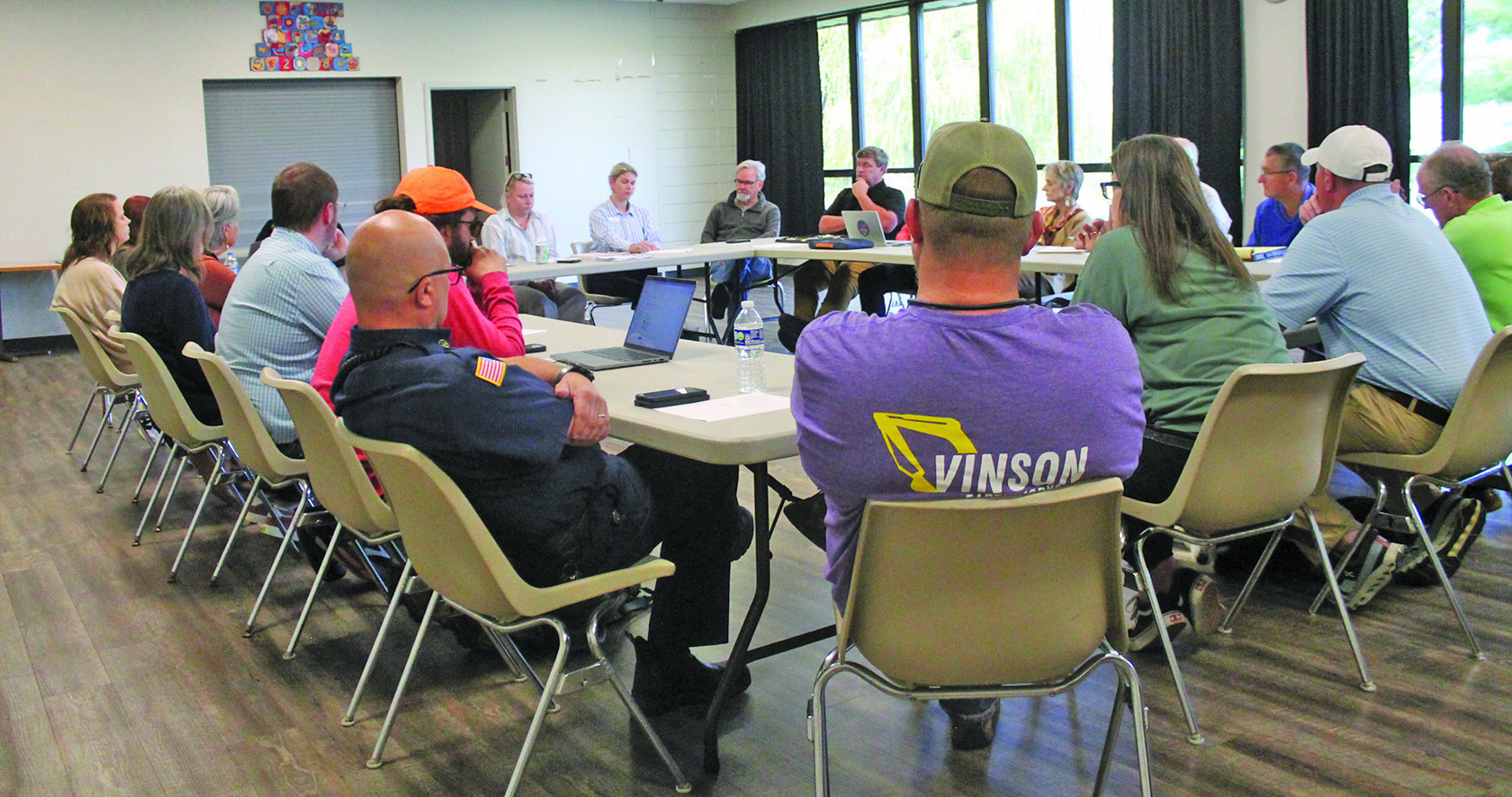
They met at the Highlands Recreation Center on Wednesday afternoon to discuss the longer-term relief efforts for the broader Western North Carolina area.
The event was a round-table led by Leslie Manning of Pisgah Legal Services, TJ Smith of the International Friendship Center and Charlotte Muir of the Highlands-Cashiers Health Foundation.
Others in attendance were from both of the Rotary Clubs, Highlands-Cashiers Hospital, the Highlands Chamber of Commerce, Highlands-Cashiers Land Trust, and many other local organizations.
Sitting in a giant square of tables, they went back and forth freeform style on the most immediate needs as well as how to get more comprehensive long-term aid done.
One of the main undercurrents of the discussion was that people should be precise with their donations and only give what’s explicitly needed, rather than overloading donation sites with too much of the same things.
“We said stop sending things, we can’t send things unless they’re requested,” said Mountain Findings President Jill Helmer. “It just sits there.”
“If you just dropped off a box of supplies in front of the hospital right now, it would be a hindrance, not a help,” said hospital CEO Tom Neal. “We need to know what they need.”
Andrew Renfro, Land Conservation Director with Highlands-Cashiers Land Trust, said some of the things most needed that he’d heard about included propane tanks and medical equipment like gloves, masks and boots to deal with toxic materials in the water and mud in some of the areas that were completely flooded.
He said there was a need for chainsaw equipment like saw gloves and bar oil, to make sure those less skilled with the tool wouldn’t injure themselves.
And he said the Land Trust could step in and help with preventing the attempts of corporate real estate companies to buy up damaged land in the storm, which he said they were “already seeing” quite a bit.
They said they needed to replenish the Highlands Emergency Council and food pantry in town and they were also looking at coordinating getting food out to further-away areas that were in need. The Bank of America building in town has been used as a central location so far to store food and other supplies. Earlier in the day Wednesday they learned that MANNA Food Bank, whose headquarters in Asheville had previously been destroyed by flooding in the storm, had gotten operations going and would have food going out to various parts of the region again.
Manning said it was important to have one central location to take the food and other things like clothing. She also said it was important that people bought mostly just one type of item, rather than large boxes full of different things.
“The people sorting them won’t have to go through and take everything to 12 different tables that way,” she said.
Manning also said they should look into making sure people can get various basic needs in one place as “kind of a one-stop-shop.”
“We had one client who was driving to get gas and food, and she said she spent seven hours in the car trying to get everything,” she said. “She’d depleted the gas she’d just started to get in the beginning of the day.”
Helmer said she thought there would be a good amount of support for the worst-hit areas from the storm now that things were getting back to normal on the Plateau. She said they should make sure to broadcast where people can send monetary donations.
“There’s a lot of wealth in this town,” she said. “I think a lot of people would write a fat check, if they knew who to write a fat check to.”
Renfro added that there would likely be a need for the fat checks for at least another year all around the region – so it would be good to start communicating the information.
Muir and Manning talked about contacting other areas that have faced debilitating disasters, such as New Orleans, to ask for tips as the region begins to move forward.
Renfro said there was also a prudence in making sure the area was better prepared for other storms in the future.
“The breadth of destruction [in other areas] is quite eye-opening,” he said. “It’s hard not to drive around places in Highlands and think of what could’ve been.”
The meeting ended after an hour, and the organizers of the event set the next meeting for Wednesday, Oct. 23. It will take place at 1 p.m. at the Highlands Community Building, next to the baseball field.