
Hatchery-supported trout fishing season kicks off in WNC
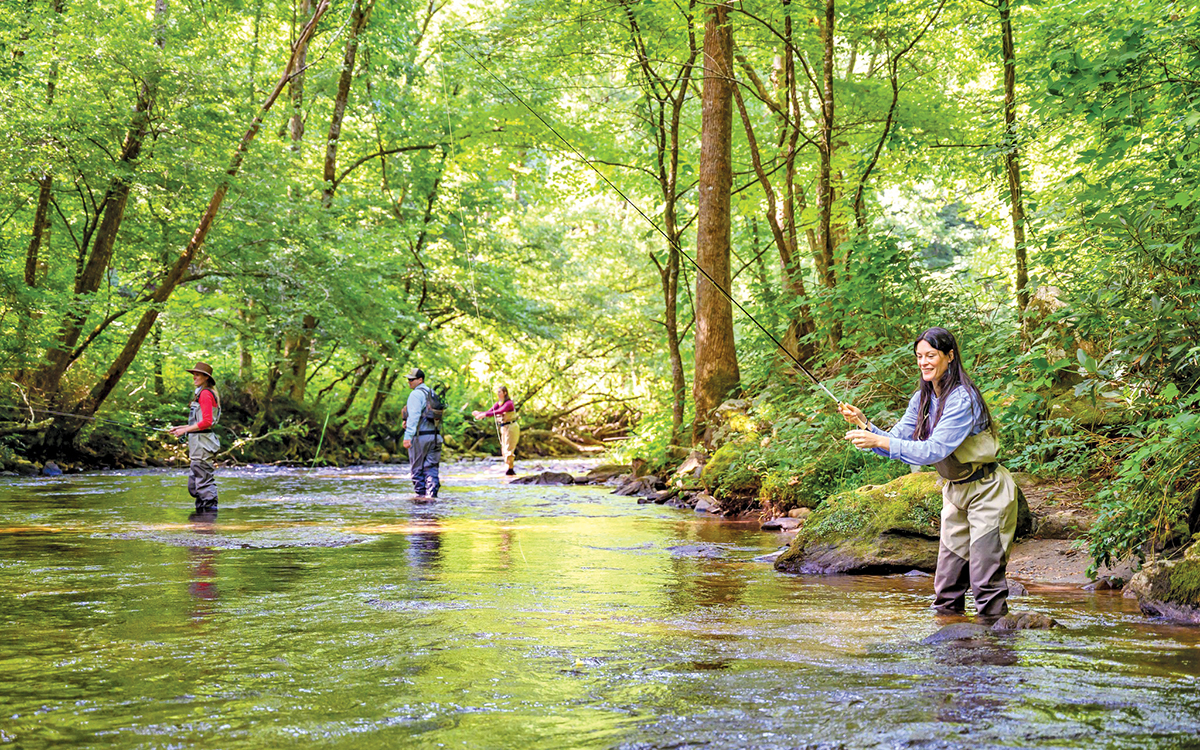
Following a month-long closure, hatchery-supported trout waters reopened across Western North Carolina at 7 a.m. on Saturday, April 4, drawing anglers back to locations like the Nantahala River in Macon County and Greens Creek and Savannah Creek in Jackson County. Anglers were permitted up to seven fish a day with no size or gear restrictions.
Due to hatchery renovations and the effects of Hurricane Helene, not all hatchery-supported streams were stocked ahead of opening day. Despite this, anglers from near and far flocked to well-stocked waters to capture rainbow and brown trout.
Matt Canter, owner and general manager of Brookings Anglers, said opening day is typically the busiest for hatchery-supported trout fishing due to heavy stocking in certain stream sections and the month-long closure.
“People are there before sunrise, holding their spots and waiting for the official start time,” said Canter. “The hype is really throughout that opening weekend, but I’d say it returns to normal pretty quickly because a lot of the fish are already taken.”
Trout are a cold-water species and are most active when water temperatures range from 45 and 65 degrees, making fall through early summer an ideal time to fish. During the summer, anglers often fish at higher elevations, as water temperatures around 70 degrees can be lethal for trout.
“Right now, the bigger rivers and streams are ‘perfecto’,” said Canter. “This is when you want to fish.”
Canter noted that hatchery-supported trout fishing offers an excellent opportunity to learn the basics, especially for beginners and children.
“It’s something they can be successful at pretty easily and it prioritizes the quality of experience,” said Canter. “A kid doesn’t care if somebody’s standing 10 feet away if he’s actually able to catch something. It’s a really good way to get folks involved in fishing in general.”
For beginners looking to learn how to trout fish ahead of these peak months, there are several types of gear and equipment recommended.
Canter said line nippers are essential, especially in fly-fishing, for cutting lines and tippets, along with trimming tag ends. He added that forceps are also crucial for removing swallowed hooks without harming the fish.
“If you’re planning on releasing the fish, you want to handle the trout as little as possible because the slime on their skin protects them from disease,” said Canter. “If you handle them too much and take that slime off—even if you let the fish go and see it swim off—it might not survive another day.”
Polarized sunglasses, which allow users to see through the glare of the water down to the river bottom, and proper footwear are also beneficial.
With proper gear and knowledge of state regulations, trout fishing in hatchery-supported and other waters is truly special in Western North Carolina.
“There’s a saying that trout don’t live in ugly places and I think that kind of sums it up,” said Canter. “Some of the focal points here in the mountains— running water over rocks, clear water and water falls—are where these trout live. The places that it takes you are pretty spectacular, and we’re just blessed with so many of them.”
- Mitch Stone
reporter@highlandsnews.com