
“Shelton Laurel” opera explores Appalachian life during the Civil War
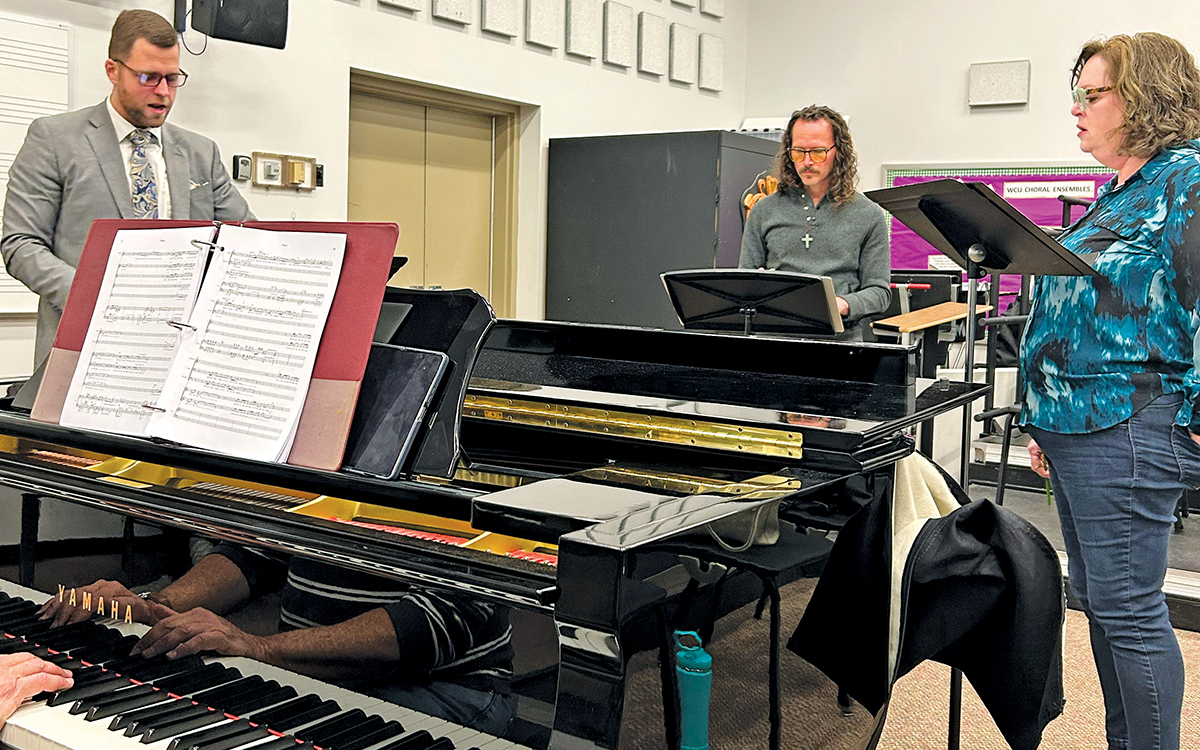
Opera may not be the first thing that comes to mind in the mountains of Western North Carolina, but that’s about to change with the premiere of “Shelton Laurel: An Appalachian Opera.” The production, deeply rooted in regional history and culture, offers a unique blend of local storytelling and world-class musicianship.
We spoke with Eddie Garner, one of the principal performers and a teacher at Blue Ridge Early College in Cashiers, about what makes this opera so special—and why it’s an event that shouldn’t be missed.
A story from the heart of Madison County
The opera tells the story of the Shelton Laurel massacre, a tragic event during the Civil War in Madison County. Inspired by the poetry and prose of Ron Rash and based, in part, on contemporary accounts, the libretto gives voice to a difficult and important reality in Appalachian history. “Shelton Laurel” is a moving reflection on loyalty, survival, and the harsh outcomes of civil conflict. As Garner explains, “You learn not just about the massacre itself, but the lives of the people of Madison County during the Civil War.”
Composer Damon Stine, a professor at Western Carolina University, has crafted music that not only tells a compelling story but also resonates with the authenticity of the region. “He’s really good at taking language and setting it to music in a way that makes sense, where the listener gets more than the words actually convey,” Garner says. The result is an opera that brings the words and emotions of the characters to vivid life.
Blending tradition and innovation
While “Shelton Laurel” is a traditional opera—sung nearly all the way through—it stands out for its Appalachian flair. Garner points out that the production incorporates local dialect, traditional mountain music, and even shape-note singing at the opera’s start. “He’s careful to make sure that it seems authentic to the area by including all of these North Carolina mountain characteristics,” Garner notes.
Meet Ira Wilkie: A character torn by conflict
Garner plays Ira Wilkie, a wealthy landowner and church elder who is deeply opposed to war. “He just sees it as a waste—of human life and of money,” Garner explains. Wilkie, like many in the region, finds himself caught between conflicting loyalties: to neighbors, to the South, and to the nation. The opera explores how the Civil War’s impact in these mountains was less about slavery and more about survival, heritage, and divided allegiances.
The story also touches on the lingering trauma of the Trail of Tears, which happened just a decade earlier. “You still have a lot of Cherokee that stayed and are still very angry at the federal government,” Garner says. These layers of conflict and history are woven throughout the opera, offering audiences a powerful glimpse into the complexities of mountain life during the Civil War.
A relatable experience for all audiences
Opera may feel foreign to some in Western North Carolina, but Garner believes that this production will resonate with local audiences. “The beauty of this production is it is absolutely relatable,” he says. “The way he brings in the music, the dialect, the stories, and the mystery that exists in this area—I feel like an audience member that’s never been to an opera before is going to immediately fall into the world of the show.”
I have worked with other composers, but it is a special gift when a composer not only excels in music but also brings the words to life the way Dr. Stine can. It really brings the words to life for the listener.
World-class talent, local roots
“Shelton Laurel: An Appalachian Opera” is an original production created entirely at Western Carolina University. The opera is composed by Damon Sink, directed by Isaiah Feken and conducted by Margaret Underwood, all of the WCU School of Music. The production features WCU student and faculty musicians and vocalists, community performers, and guest artists Audrey Welsh, mezzo-soprano; Jake Surzin, baritone; and Dominic Armstrong, tenor.
“They are brilliant, brilliant musicians,” Garner says. “From the first rehearsal with them, we all knew that we were in the presence of world-class musicians.”
A dark story with universal themes
Without giving away spoilers, Garner hints at the opera’s emotional impact: “The story of the massacre itself is devastating. But at the same time, in the opera itself, you get to know these people, and what they’re going through is, in a lot of ways, even darker, even more mysterious and more taboo than what the massacre itself was.”
Garner has taught his high school music class about the Shelton Laurel Massacre. He said his students were genuinely fascinated by the event, drawn in by its darkness and the unsettling realization that such a tragedy could have happened. This firsthand experience shows the story’s enduring power to captivate and resonate with new generations.
The opera’s many layers and its exploration of personal and communal struggles promise to keep audiences riveted from start to finish.
A new chapter for opera in the mountains
Garner hopes that “Shelton Laurel” will open doors for more opera and musical theater in Western North Carolina. “We have a great music school at WCU, and I’m really hoping that more things like this will come up—particularly because it’s part of history and that story needs to be told.”
For those new to opera, this is a rare opportunity to experience a world-class production grounded in local history and sound. As Garner says, “Even if you’ve never been to an opera before, you’re going to feel like you can relate to the story.”
Premier night details and information
The world premiere of “Shelton Laurel: An Appalachian Opera” will be performed for one night only at the Bardo Arts Center at Western Carolina University on Saturday, Jan. 24. Doors open at 7 p.m. and the show begins at 7:30 p.m.
Before the performance, City Lights Bookstore in Sylva will host a book sale and signing by Ron Rash from 6:30 to 7:15 p.m.
Tickets are available at arts.wcu.edu/tickets. The box office is open 10 a.m. to 7 p.m. Thursday and 10 a.m. to 4 p.m. Friday. Tickets can also be purchased online at any time.
- By Josh Bryson
editor@highlandsnews.com