
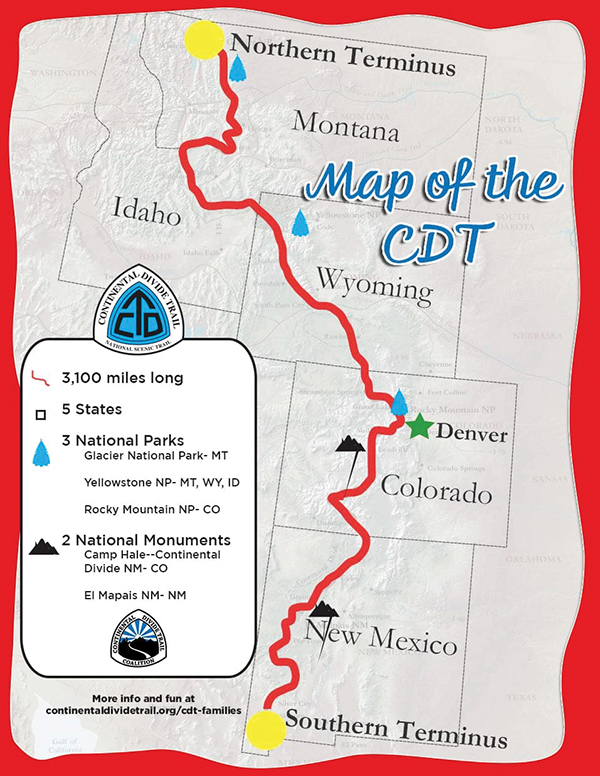
The map showcases the 3,100 mile route that de Graffenried will hike from Mexico to Canada.
An avid hiker and conservation supporter, de Graffenried hopes his journey will inspire others to venture out into nature and protect the land they call home.
“I hope to raise awareness for the HCLT, as we’re going to send some funds to help them do the important work they’re doing,” said de Graffenried. “But also spark some sense of adventure and enlighten people to the CDT and some of these wonderful places to help inspire them to get out and see some of the trails around here.”
De Graffenreid said President Trump’s cuts to U.S. Forest Service staffing and reversal of the Roadless Area Conservation Rule threaten to drastically alter national forests. He added that roughly 60 million acres of inventoried roadless areas are at risk of potential development and the changes prioritize short-term resource extraction over long-term ecological health and public land stewardship.
“Roadless areas are key to wilderness designation and wilderness protection, with the CDT going through dozens of protected areas and wilderness areas,” said de Graffenreid. “We have to do what we can to help conserve and protect the small amount of land left for public use and the HCLT is doing that locally.”
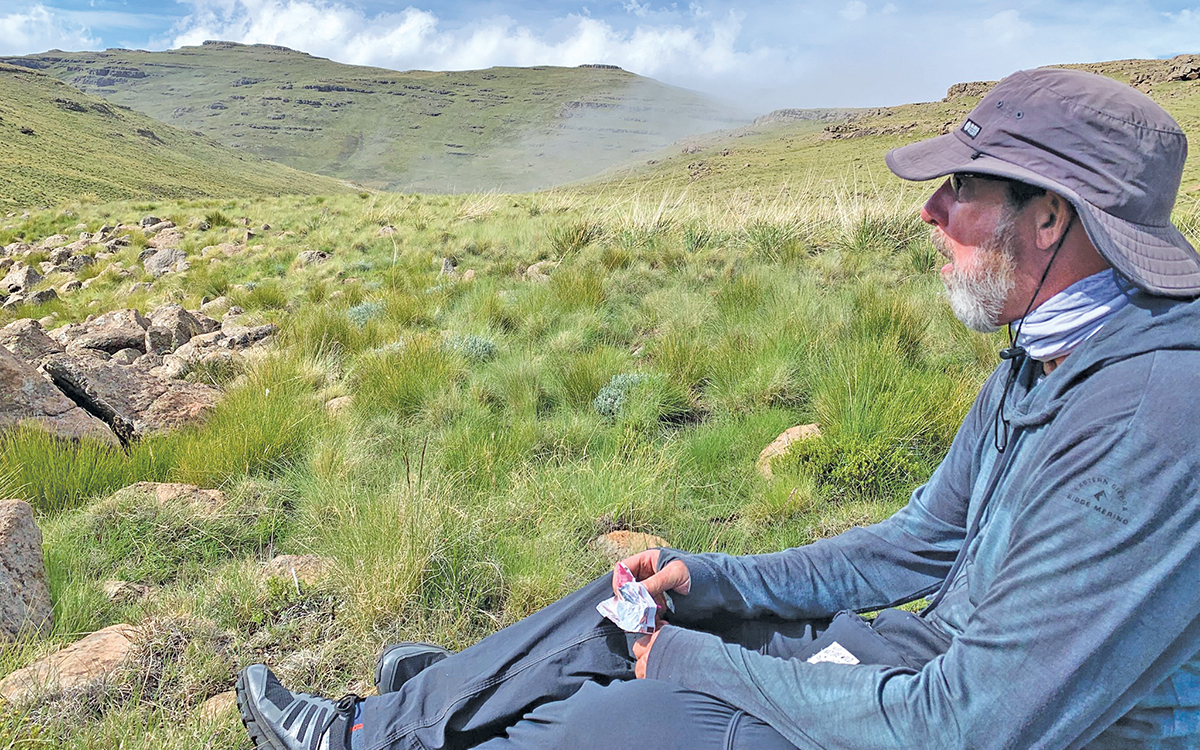
The hike also fulfills a personal goal. After retiring from USAID as a foreign service officer, de Graffenfried was ready to undertake a new challenge. With the CDT thru-hike stretching across iconic locations such as Yellowstone and Glacier National Park, the trek seemed like a perfect opportunity to push his limits.
“Part of my motivation is to see some of these things I’ve always wanted to see, but really never had the chance to,” said de Graffenried. “Now I get to do a lot of this in one epic trip.”
His hike will begin on May 1 at the U.S.-Mexico Border. De Graffenreid said the average time to complete the trek is 150 days, though he expects to take a slower pace.
“I want to ease into it because it is a marathon, not a sprint,” said de Graffenreid. “I just have to see how my body feels and give myself time to recover and check out things.”
De Graffenreid plans to bring a tent, 10-degree sleeping bag, backpack, rain gear, a jacket for changing temperatures and hiking shoes. At certain stops along the way, he said he will receive resupply boxes for food and may also stay in hotels, eat at restaurants and explore towns as a break from the trail.
He added that one of the most difficult aspects of the trip will be carrying enough food to stay adequately fueled. In places like Colorado, where elevations reach above 14,000 feet, it is possible to burn 6,000 calories a day, making high-energy, nutrient-rich food critical.
De Graffenreid said another major challenge is the loneliness and solitude of the hike.
“The thing about the CDT is that everybody says it’s kind of a lonely trek. You may spend days or weeks maybe that you won’t see anybody,” said de Graffenreid. “Not only is this physically demanding, but also mentally as well.”
To prepare for potential obstacles, de Graffenreid has undertaken detailed planning, outlining water sources, lodging and other sites on a digital map, while also calculating mileage and timing on a spreadsheet. He has spoken with experienced hikers on what to expect and how to respond when things go wrong. He said he hopes his prior experiences will prepare him mentally for tough decision-making on the trail.
While de Graffenreid expects to follow the “redline” path, there are plenty of alternatives he may consider. With the southern half of Colorado currently at 30% of their normal snowpack, there is a risk of forest fires, meaning he may be forced to switch routes in that specific area.
De Graffenreid will update those interested in following along on his journey on Linkedin, Facebook and through HCLT press releases. To donate, people can visit his spotfund named “Every Step Protects What Matters” under his name. His fundraising goal is $10,000 and 70% of it goes directly to the HCLT, while 30% will help offset remaining costs on the trek. After $10,000 is raised, 100% goes to HCLT.
- Mitch Stone
reporter@highlandsnews.com