
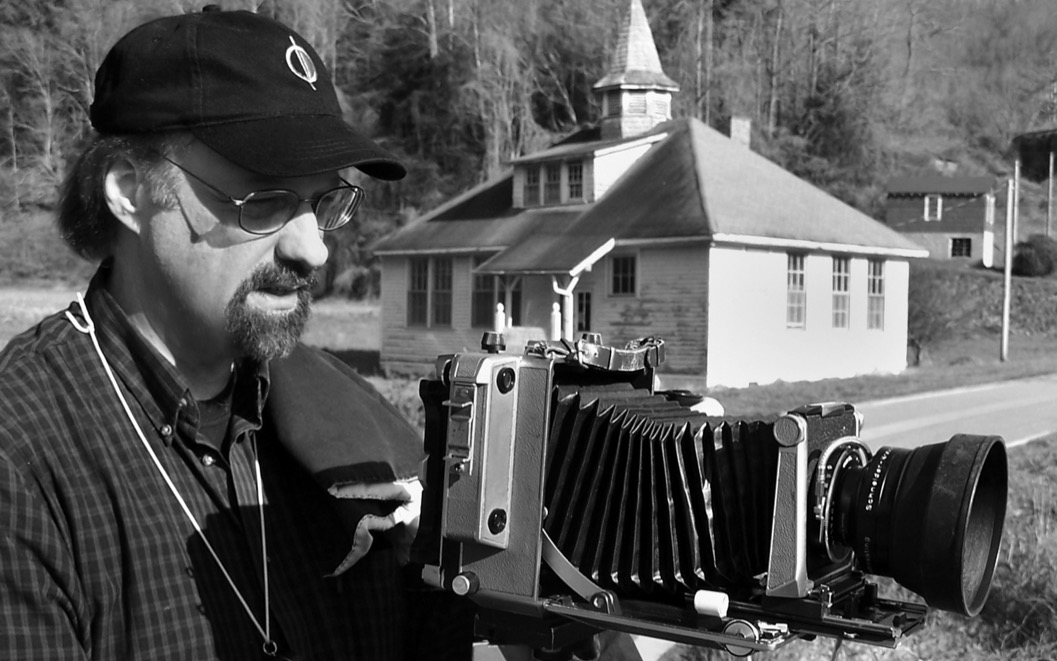
Photographer and author Tim Barnwell is heading over to the Albert Carlton-Cashiers Community Library to talk about his extensive work in the region. The upcoming discussion will take place on July 30 at 3 p.m.
Hosted by the Cashiers Historical Society, the upcoming discussion will dive into his work on Faces and Places of Cashiers Valley alongside his other projects including his Appalachian-themed books and his YouTube channel, The Face of Appalachia.
“Photography is just a way of documenting and capturing the essence of a person and a place in one time, so Tim’s work just kind of serves as a lens to understand this place through photography,” said Amelia Golcheski, executive director of the Cashiers Historical Society.
Golcheski said Barnwell’s photography plays a significant role in documenting and preserving the history and culture of Southern Appalachia without bias through several key contributions, such as intimate portraits, cultural representation, historical documentation and community engagement.
“Tim has this ability to go out in rural places, places he was born and raised, and he takes really intimate photos of people working or people dying or people just living their lives,” she said. “I think there’s something really powerful in that. I think Tim shows people as they are without an agenda.”
For his upcoming discussion at the library, Barnwell said he aims to share his experiences and insights into Appalachian life, hoping that attendees will gain a deeper understanding of the community’s history and the importance of familial ties and connections.
“I grew up here. Grew up in Jackson County or in Buncombe County and around. Most of the books have an oral history component, and I think doing the oral history interviews adds a dimension to these portraits,” said Barnwell.
Barnwell began his journey in fine art photography shortly after graduating college in 1977, and ran a photography school in the 1980s. He eventually began compiling several books, which highlight Appalachian life, showcasing the natural beauty of the region.
“I’m just amazed at the capabilities and talents and intelligence and some practical knowledge these people have and just the love of the area. I just love living in the mountains,” he said. “There’s just nothing better.”
Barnwell said one of the key philosophies in his work is the importance of human connection, adding that engaging with the subjects before photographing is crucial for capturing authentic moments.
This approach helps him create environmental portraits, where the subjects are depicted in their natural surroundings, reflecting their lives and stories, which he said is rich in the region.
By showcasing both architectural and human elements in his work, Barnwell said he strives to foster appreciation for the region’s culture and its people.
“Most of the time, these people live here their entire life. They’re in their 80s or 70s, and they’ve created this. They’ve built the buildings and all the stuff that is part of what they created,” he said. “I try to include elements of that in my photographs.”
The Appalachian region often faces many misconceptions, with Barnwell noting that one notable stereotype people often have toward the community is the conception of poverty. He added that while economic conditions may vary, the spirit and resilience of the people are often overlooked, with many individuals in these communities prioritizing family and local connections over wealth.
“I think they’re very proud, independent, resilient people. And we can witness that over and over by the most recent hurricanes, or whether it’s them trying to make a living and changes in the environment, and all those kinds of things,” he said.
- Kevin McCall
reporter@highlandsnews.com