
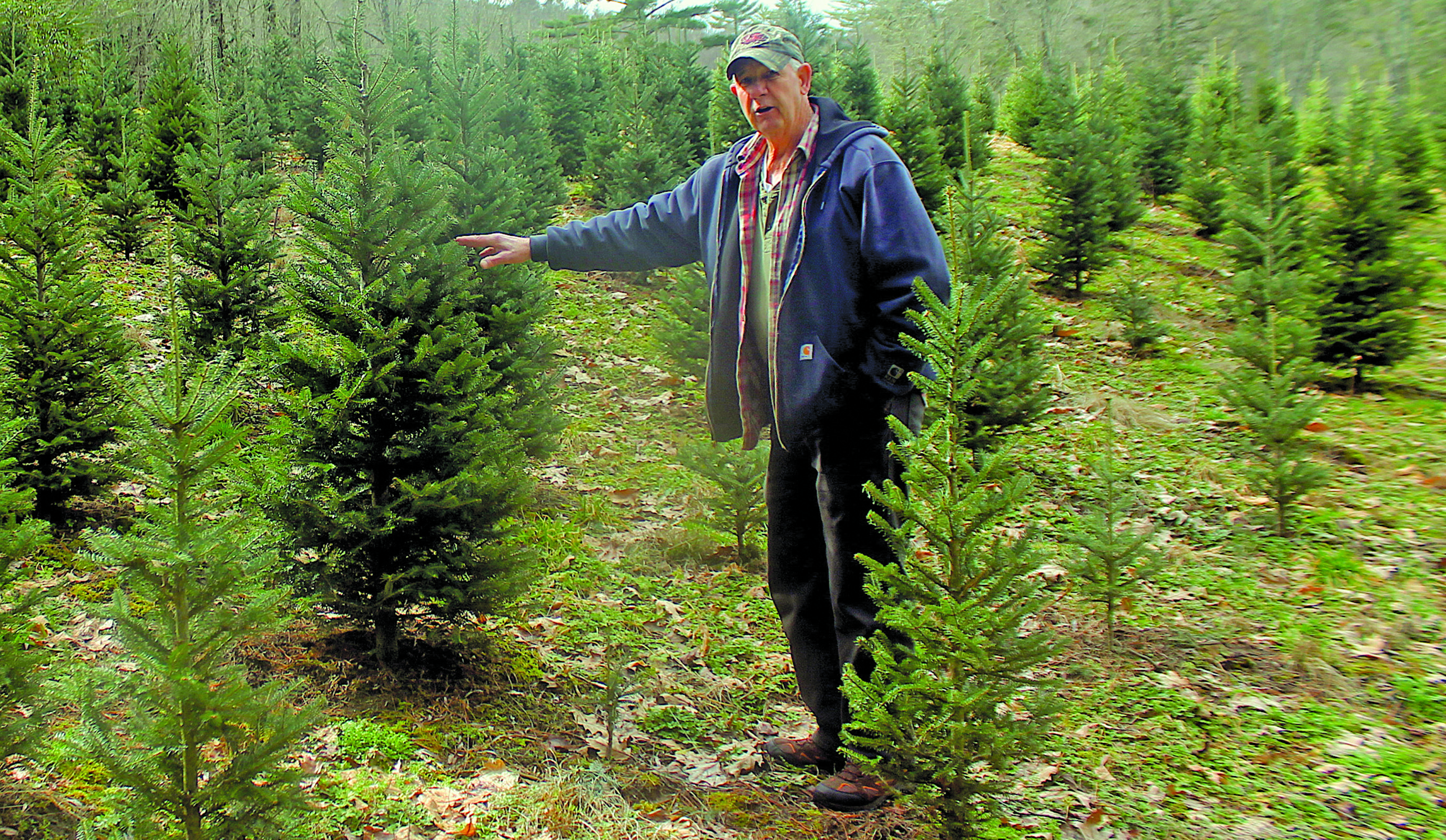
The 2019 Christmas tree shopping season was a resounding success according to local tree farmers in the area.
“We had a great year,” said Tom Sawyer, owner of Tom Sawyer Christmas Tree Farm in Glenville. “Our sales were up about 10 percent over last year.”
The area is still feeling the crunch of the 2008 recession, where the market crashed and the Christmas tree farming industry was hit hard. Many farmers opted to retire than weather the storm, while those who did gut it out planted fewer trees.
Those trees came of age in 2018 and 2019.
“Prices will continue to be up for a few more years,” Sawyer said, who has chosen to discontinue selling wholesale so as to provide his choose-and-cut customers the best selection of Fraser fir trees possible. “Our choose-and-cut customers are what sustain us and we want to make sure we have trees for them each Christmas.”
Sawyer has an inventory of about 40,000 Fraser fir trees and will plant about 6,000 trees in the spring. With a background in accounting, Sawyer has been consistent in his tree planting over the years since the recession, planting about 6,000 trees annually.
“In this business you have to project out 10-to-12 years as to what the market may or may not be like when these trees mature,” Sawyer said. “Planting about 6,000 trees each year keeps inventory steady.”
The trees begin as seedlings in the nursery until they are about three years of age before being planted in the fields. What trees didn’t get cut and sold last Christmas will be eight-foot trees this coming year, which Sawyer believes will be another good year sales wise.
“Prices will be up,” he said. “Supply will be down. Demand will be high again.”
North Carolina has about 854 Christmas tree farmers producing the Fraser fir on an estimated 38,893 acres, which thrives in colder, higher altitude climates above 3,500 feet above sea level, according to the website ncchristmastrees.com. Fraser fir trees represent over 94 percent of all species of Christmas trees grown in North Carolina.
The Fraser fir is grown in the 17 far western North Carolina counties, which include Jackson, Macon and Transylvania counties.
Christine Bredenkamp, the new extension director in Macon County as of Feb. 3 and former Jackson County extension agent, said the time-honored tradition of finding the family Christmas tree will thrive.
“In 2020, the tradition of visiting a Choose and Cut Farm for families and individuals to find their beloved Christmas tree will continue unabated,” she said.
Through annual consumer surveys, the National Christmas Tree Association publishes year tree production and sales data.
In 2017, NCTA said 27.4 million real Christmas were purchased in 2017 at an average price of $75. In 2018, 32.8 million trees were purchased at an average price of $78 per tree.
Larry Moss, owner of Moss Christmas Tree Farm in the Norton community, said while he got a late start opening for the season, he still enjoyed a good year.
“We finished about the same last year, but sales were good,” he said. “It was good, but could have been better as we opened a week later and missed that opening week.”
The North Carolina Christmas tree Industry is ranked second in the nation in number of trees harvested and cash receipts. In 2017, Christmas tree sales in North Carolina totaled in excess of $86 million dollars according to the 2017 USDA Census of Agriculture.
North Carolina produces over 26 percent of the Real Christmas Trees in the U.S. and harvests more than 4 million trees annually.
Moss, whose inventory of trees numbered in excess of 100,000 Fraser firs, now maintains an inventory of about 35,000 trees after the last cut on a 20-acre patch of land farther up the mountain.
He is planting about 4,500 trees this spring, and like Sawyer, Moss plans on phasing out wholesale sales to reserve quality trees and quantity, for his choose-and-cut customers.
“We lost a week last Christmas because we opened late,” he said. “Next Christmas we plan on opening a week earlier as well as be open at times during the week for families who want to avoid the rush over the weekends,” he said.
Moss said the first crop of trees he planted after the recession ended was four years ago in 2016. Those trees now stand about five-feet high and are a long way from being ready for market.
“Each spring we do a sheer-to-grow, which gives the trees its shape,” he said. “We let them go in June as that is the prime growing month of the season.”
On seasons when the trees are ready for sale, Moss will do a ‘sheer-to-sell’ to get the trees ready for market. Moss hires one full-time pruner to help with sheering and part-time help in December, but otherwise the task of pruning is left to the family.
“Every tree, one at a time, down each row, for 35,000 trees,” he said. “It’s me and my son, and other family members.”
The grind has taken its toll.
“We work six out of seven days a week, year round on our trees,” he said. “It’s hard work. I’ve been in the Christmas tree business for 50 years. I’m getting tired.”