
NCWRC biologist calls Highlands the "gold standard" for bear protections
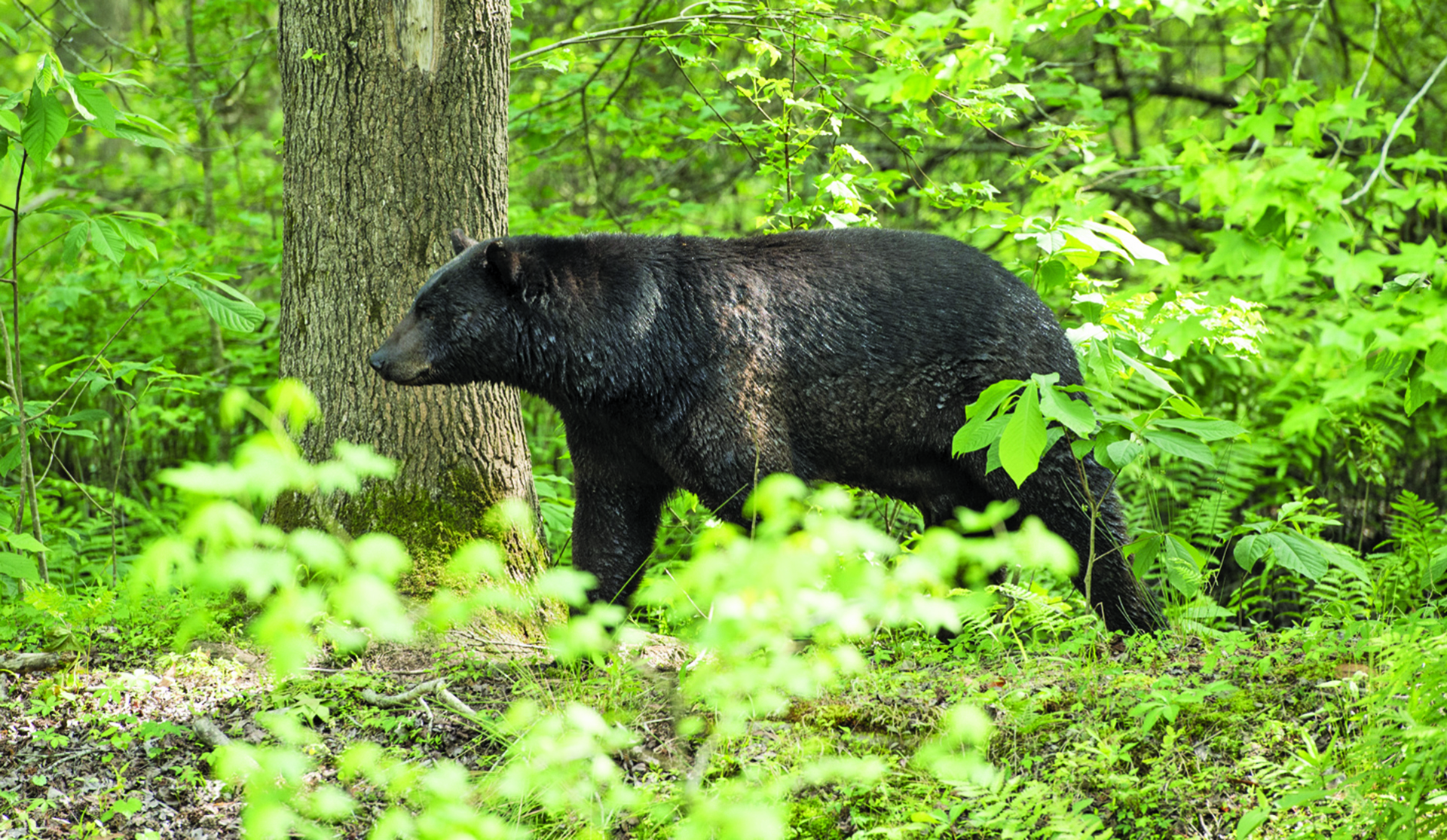
With spring temperatures in place and summer right around the corner, the NC Wildlife Resources Commission, Town of Highlands and the BEAR task force got together via online video conference on Sunday to discuss ways to mitigate human-bear encounters in 2021.
“The Highlands BEAR task force has been around for almost 10 years now,” task force chair Cynthia Strain said. “It’s a never-ending process educating people about bears and how we can coexist. We have several initiatives in the works that we hope will reach members of the community and guests.”
NCWRC biologist Ashley Hobbs noted that North Carolina has a bear population of 20,000 animals split into two separate and distinct groups.
“In the mountains we have roughly 7,000 black bears and along the coast we have approximately 13,000,” Hobbs said. “We do not currently have a black bear population in the central part of the state and we are trying to keep it that way since the central part of North Carolina is where a majority of the human population lives. We try to keep the mountain bears from intermingling with the coastal bears.”
Despite there being less bears in the mountains, Hobbs noted that there are more human-bear interactions in Western North Carolina and thus more complaints about bears becoming a threat or a nuisance.
Last year Buncombe County accounted for 39 percent of all bear-related complaints to the NCWRC.
“We have a high number of human-bear interactions in the mountains and because we also have a high number of retirees, second home owners and tourists, who may not have the experience with bears that fulltime residents do, it leads to calls,” Hobbs said. “A majority of the calls are resolved with some simple educational tips that we offer to keep people and bears safe from each other.”
Hobbs offered six key directives for dealing with bears:
• Never feed a bear – Whether intentional or unintentional, bears that find food will continue to visit a location. It is illegal to feed a bear intentionally and doing so can result in a fine.
• Secure garbage and recycling – Bears can smell a pack of gum over one mile away and that refined sense may lead them to food scraps left in trash cans or recycling bins. It is important to secure trash inside a protected enclosure or a bear-resistant trash can.
• Remove bird feeders – Bears eat roughly 20,000 calories per day and too often a large percentage of those calories come from residential bird feeders. Hobbs recommended removing feeders from March through November when bears are active.
• Never leave pet food unattended – Dog and cat food are particularly attractive to hungry bears. If a pet eats outside, it’s important to pick up food and water bowls after feeding, rinse them and store them inside.
• Clean and store barbecue grills – Last night’s steak may only be a fond memory, but its smell can linger for days on a barbecue grill. Putting grills inside a garage or shed makes them tougher to access and cleaning out the grease trap regularly eliminates another attractant.
• Alert neighbors of bear sightings – Anyone who sees a bear should let their neighbors know. When entire neighborhoods take proper precautions to keep bears moving along it serves both the humans and the bears.
Strain noted that the BEAR task force is working on a bear sighting reporting system for Highlands as the town continues to move toward being a BearWise certified community.
BearWise is a regional program in 15 states that helps community leaders educate the public about living in areas that feature bear habitats.
“Highlands has become a leader in the BearWise program because you all are really setting the gold standard,” Hobbs said. “By being proactive and putting ordinances in place to protect the bears and town visitors and residents, Highlands has emerged as a great example for other similar sized communities.”
Highlands Mayor Patrick Taylor covered the town’s two recent ordinances that make it mandatory to use bear-resistant trashcans and make it illegal to intentionally feed a bear.
“We had an issue where some of our vacation rental owners were encouraging their guests to leave food out so they could see a bear,” Taylor said. “Of course, that is the exact opposite of what we want them to do so the town board saw fit to make feeding bears intentionally illegal.”
Commissioner Amy Patterson asked if bears that are deemed a threat to humans have to be euthanized. Hobbs responded that euthanizing the bear is the absolute last resort, but it has happened.
“We at the commission have been forced to euthanize five bears and that number does not include any bears that may have been killed by local law enforcement if they were considered an immediate threat,” Hobbs said. “We have a number of alternative remedies to eliminate the human-bear encounters, but there does have to be a last resort.”
Hobbs added that dogs interacting closely with bears is more common than humans being attacked.
“We had an issue like that on Satulah, where a dog got into it with a bear and we had to put the dog down,” Patterson said. “In that instance the dog was on its own property but the bear got close and the dog didn’t back down so the bear swatted it. One shot from a full grown bear and it’s very bad news for a domesticated animal.”
For more information about living with bears, visit bearwise.org.