
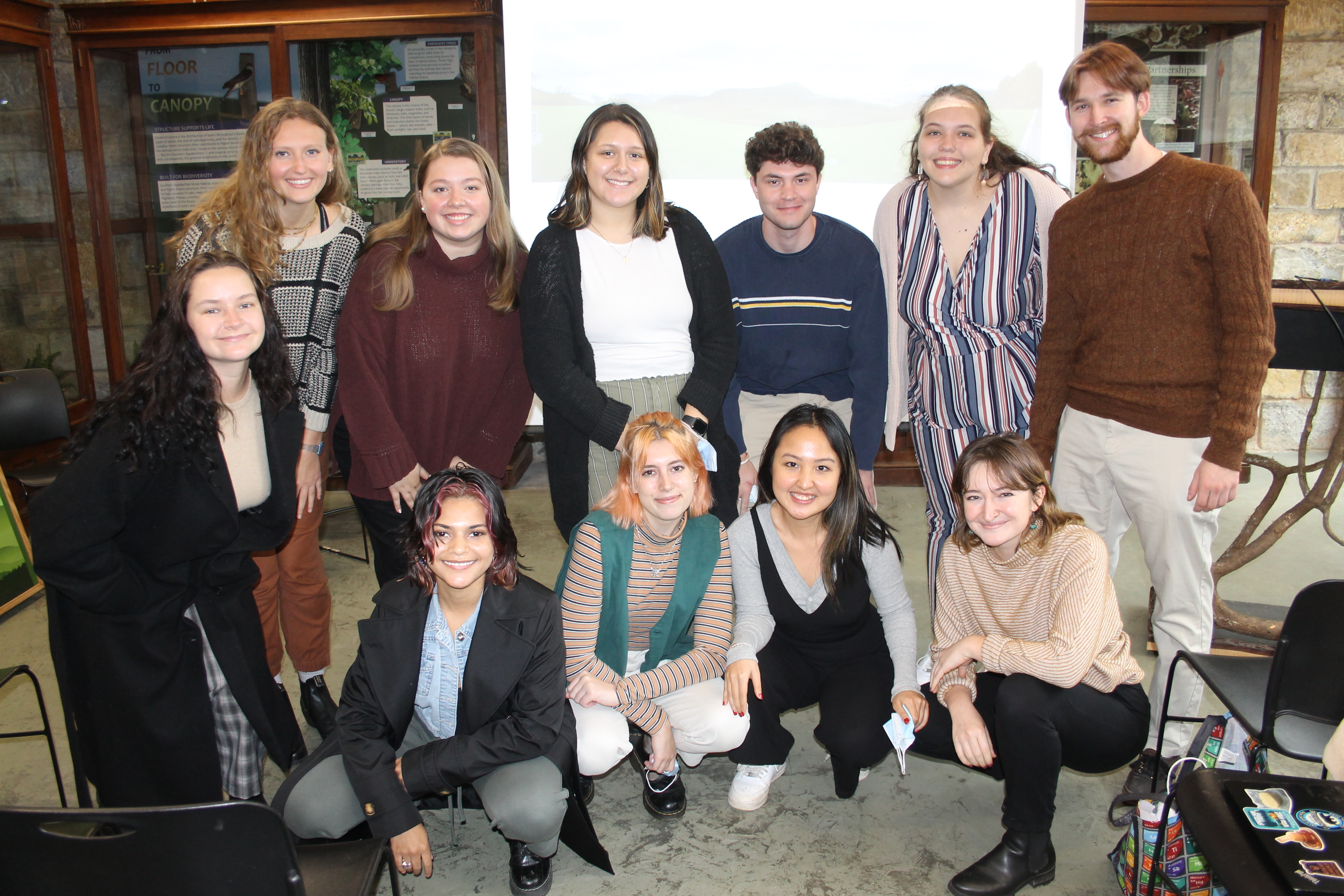
The Highlands Biological Station hosted another year of the UNC-Chapel Hill Institute for the Environment.
This year, 12 students stayed at the biological station, conducting research on several issues on the Plateau.
The research projects included, using dendrochronology to study growth patterns in Eastern and Carolina Hemlocks, influence of urbanization and water quality on Southern Appalachian insectivorous bats and insects, habitats and characteristics of Northern Saw-whet owls, comparison of land cover and distribution of the common land mudpuppy in the upper Little Tennessee Watershed, comparing the color of male and female Blue Ridge two-lined salamanders, detection rates of polyethylene terephthalate and polyethylene, and a Capstone Project.
First-year I.E. Program director Dr. Rada Petric said this year was full of challenges but was successful.
“It was a very interesting experience,” Petric said. “There were some challenges of course and learning how to navigate situations that were out of our control. During our first field day trip, there was a huge storm that came in and the students were soaked to the bone and didn’t get to quite experience everything we wanted. This program worked out way better than I expected it to. I am just so thrilled to have watched these students grow and develop in their confidence and intellectual merit. Over half of the students want to come back here and continue doing their research, which is a great indicator to us that we have done something right. They have taken a really big interest in making sure that everything they have learned they can come back and reapply, and this is going to help set them up for future endeavors.”
Along with the research projects, the students took six classes that counted towards their continuing education.
- By Christopher Lugo