
Highlands Pharmacy owner Sherry Sims told a customer the truth: she couldn’t fill their prescription because the insurance company wouldn’t reimburse the pharmacy enough to make it worthwhile.
After the customer called their insurance company to complain, Sims got a call from the company, who told her they would cancel her contract to process claims with them if she kept disclosing their business dealings.
Sims said she wasn’t bothered by the threat.
If insurance companies keep reimbursing pharmacies substantially less for the prescription medications the pharmacies buy, then Highlands Pharmacy will have to close its doors permanently, she said. They’re losing too much money.
She said the problem is the presence of Pharmacy Benefit Managers (PBMs) who negotiate pricing between the pharmacies and insurance companies.
Sims joined other critics of their practices in saying their methods resulted in less money coming back to the pharmacies.
“I can’t keep working in the negative,” she said. “I’m not supposed to disclose anything about the insurance companies to customers. They said it’s illegal. But I do it anyway. This is the approach I’ve taken this year.”
On the attack
The insurance company in question isn’t the only company Sims has had issues with. She’s had trouble with reimbursements from all the big insurance companies.
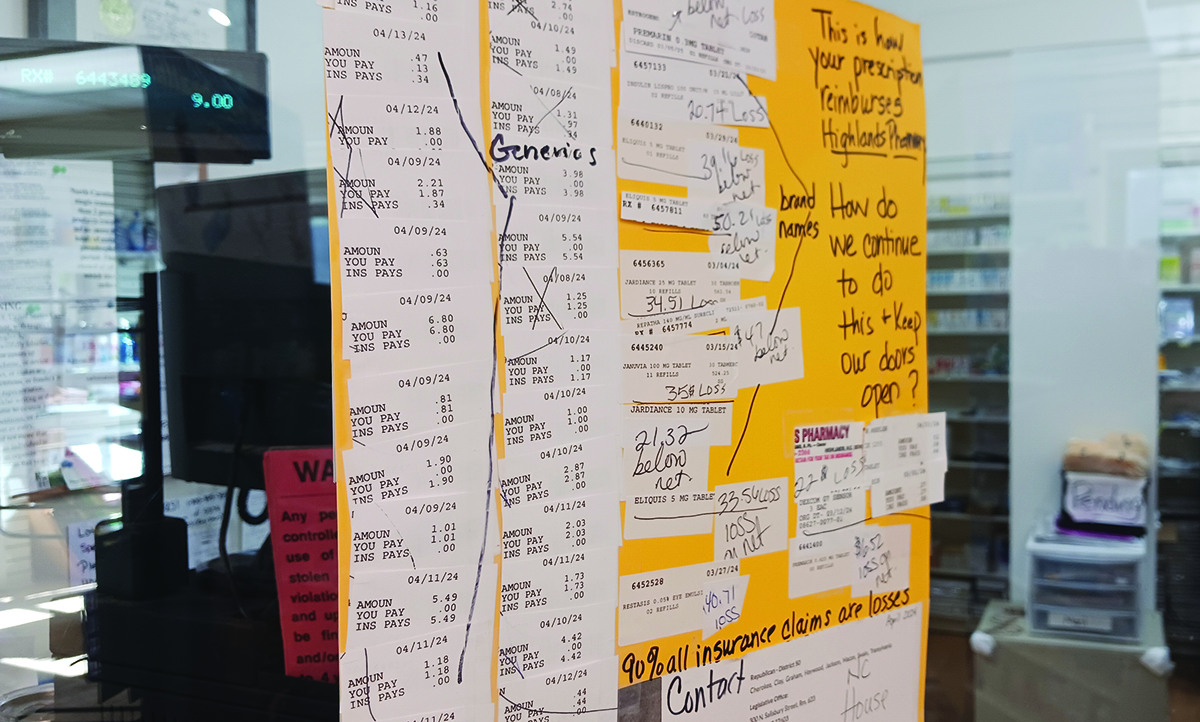
Sims’ personal Facebook page as well as the pharmacy’s page are both full of criticisms of the insurance companies. In the pharmacy itself, she’s hung up a bright yellow sheet of cardboard construction paper right next to the checkout window, on which are stapled dozens of receipts for reimbursements from the insurers she’s gotten recently.
She rattled off some numbers she said have come back lately for branded prescription meds: “One was $72 less than what I paid, one was $22 less, one was $35 less…”
Sims said some of the reimbursements for generic medicine are less than a dollar.
It all adds up. Sims said the pharmacy will keep losing money unless something changes at the state or federal level to force insurance companies to act differently.
“How are we going to keep the doors open? How are we going to pay our bills when we’re spending $600 on a medication and getting $500 back?” she asked. “Every year, the reimbursements have gotten worse. This year, they’re over the top worse. I don’t know how else to put it.”
In her perception, the issue is that the insurance companies “do whatever they want” – which has dire consequences for “pharmacies and patients” alike. She said patients are harmed by the ways the companies can dictate the amount of medication a patient is allowed to receive and how much they pay for it.
A larger problem
The issue has been written about nationwide. It’s uncertain how the PBMs determine prices, and critics have accused them of artificially charging higher prices to line their own pockets.
The Federal Trade Commission is looking into how the PBMs reimburse pharmacies, the fees they charge and other aspects of the business.
Reuters reported recently that there are several bills being introduced in Congress to fight back against some pricing rules and to advocate for more transparency from PBMs, and both Democratic and Republican lawmakers have said there needs to be investigations into PBM practices.
Smaller independent pharmacies have been feeling the squeeze everywhere, including in Western North Carolina. Citing troubles dealing with insurance companies, the Waynesville Pharmacy closed its doors forever at the end of March after being open since 1890.
Further west in the state, last December, pharmaceutical giant Walgreens bought out both Bryson City Pharmacy and Robbinsville Pharmacy, rerouting all their patients to Walgreens’ services unless they chose to go elsewhere.
Sims said she didn’t want to have to sell to a big chain drug store, but likely it wouldn’t even be a question anyway.
“They’re not going to come here. There’s not enough 12-month business – the population changes too much for a chain to come here,” she said.
Sims said if her pharmacy closes, people will instead have to drive to Cashiers or Franklin for their pharmaceutical needs.
Sims said the insurance companies’ threats to cancel her contracts with them don’t scare her. “What have I got to lose? I’m going to tell people what’s going on. I’m going to be honest and transparent, which the insurance company is not.”