

On Tuesday, Oct. 19, The Highlander hosted its first ever live Mayoral Candidate Forum to inform the town of the two candidates’ opinions on different issues in the Town of Highlands. Below is a direct transcript of the happenings on Tuesday and it will be spread over two weeks, with the first article including the introduction to the candidates and the first three questions. Next week will include the last three questions and their closing remarks.
Introductions
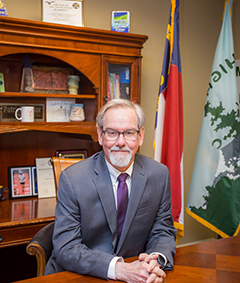
Pat Taylor:
I have been thinking about this today, I have been married for 42 years to my wife Sallie. We have two children and two grandchildren. We’ve lived here in Highlands for the last 22 years.
I have had a 50-year career in public service. It started when I was 21 and I was brought into the United States Army. I learned a lot from that experience. I learned about working with people.
I have been a public-school teacher for a number of years and there again, I learned a lot. I have been a university professor and administrator for 30 years and there again, I learned a lot about working with people and how to get things done.
After retiring from Kennesaw State University in 1999, Sallie and I moved here to Highlands, where I took a teaching position at Peidmont College, where I would commute every day, 105 miles, to teach and be a department chair and then come back to this wonderful community of Highlands.
I have also served as the Town Magistrate for a decade before retiring from that position. I was always on call, and Sallie can remember many nights where I would have to get up at 3 a.m., to go and deal with a case that the police had identified.
I have been in this community for many years. I am a businessperson. I have a home occupation. I have Taylor Pottery, at my home, which is an R-3 home occupation. As soon as I finish tonight, I’m going to go to my studio, because the folks downtown that carry my work are complaining that I’m spending too much time on this campaign and they need product, because it is the Fall season.
It has been an honor to serve eight years as the Mayor of Highlands. I think we have made a lot of progress working together for the last eight years, and I look forward to working with this community as the Mayor on Duty for another four years.
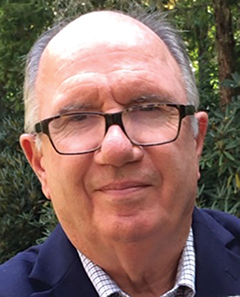
Marc Hehn:
Five generations of my family have been coming to Highlands.
I grew up in Anderson and graduated from Clemson University with a Master of City Planning.
I spent forty-five years working in all aspects of local government in four counties, and two towns in South Carolina.
As a result of this experience, I have been involved in many of the issues facing our town.
I have been through thousands of hours of meetings, I get up in the middle of the night to read reports, and I pay attention to detail so you will appreciate that I’ll keep this short.
I can work with everyone, and I will do what is best for the whole of Highlands.
I am not taking contributions.
We have to face the issues and there are problems you may not be aware of and there are solutions.
Here is why I am running - We need Health for Highlands.
I volunteer weekly to help with COVID vaccinations.
We are suffering because of the lack of workers at our hospital and all over our town.
We can fix the worker shortage by partnering with the nonprofit community and building worker housing.
Yes, there is $90,000 available annually, and we are doing nothing. We can fix that.
Another win-win will be a partnership for daycare service on the hospital campus, not only for healthcare workers, but other workers, as well.
A viable work force is part of the success of every healthy town. We can attract people to work and live in Highlands. We need to rewrite our very vague zoning regulations.
Legal advice has been so conflicting that I recommended we hire an expert in North Carolina Land Use Law. We received an opinion in executive session in September that is different than what has been made public as of today. We must compromise to serve our community as a whole.
My background and experience are making sure every voice is heard.
Another concern is the broadband project which is 17 months late. I was the only commissioner to vote against a contract which would have limited the income our town would receive.
Our town is changing, and we have to allow the growth of Highlands to be done in a thoughtful way for all and not based on relationships.
I have the qualifications and experience to get the job done.
I am available to talk to anyone and hope you will read my platform that is printed on the postcards.
The election will be over in two weeks and no matter who wins, my prayer is that we will be one group working on health for Highlands. I look forward to your questions.
Question 1: Now that we are more than 18 months into the COVID-19 pandemic, is there anything in hindsight you would change regarding the town’s response to the pandemic? Is there anything you would like to see done as we move forward?
Marc Hehn:
You know, we all lost a really good friend last week and that was Marvin Carmichael. He was the chief of staff at Clemson for years. Betsy and I knew him very well and I served on the board with him at Clemson. He was always very cautious while being at Mountain Findings and wearing a mask and staying protected.
I think we have done a very good job. I would have been a little more lenient with the restaurants with allowing tables and outside settings and trying to help them as they were suffering through that.
Patrick Taylor:
When we were first dealing with this state of emergency, Commissioner Steihler said the problem with making these decisions is that we have about 10 percent of the information we really need to know. So, we had to make some very difficult decisions at the beginning of this pandemic.
One of the things that I was instituting while being on the board is that we were trying to set up road checks coming into town, trying to encourage people to do social distancing and following all of the protocols. I was also trying to discourage people from the outside areas, especially from the states where we had outbreaks, coming here as a refuge. We were very concerned about the spread of COVID at that time.
Looking back, some of those things were not necessary, but we did not know at the time. I think the board has acted responsibly in the policies that we have instituted. I know that right now, there are a lot of people that would like for us to eliminate the mask requirement downtown, both outside and inside. We had expert medical people, as Commissioner Hehn knows, come in and talk to us about the positivity rate that was very high just a month ago, up to 18, 20 percent. Last time I checked with Tom Neal at the hospital, that is going down and we will look at what we will be doing with the mask requirement at our board meeting on Thursday night.
It has been a very difficult situation, and I know some people thought that we were too stringent on the restaurant requirements. Some of the restaurants wanted to put tables and chairs one the sidewalks, which would have caused people to go out into the streets, or putting tables and chairs on the streets, which would affect roads. After consulting with state officials, they were not enthusiastic about those kinds of situations where they thought safety would be a real critical factor.
Looking back, I wish we could have some things more effectively, but in a state of emergency you have to make decisions as you are confronted with those decisions.
Question 2: During peak times Highlands has a parking issue. Do you have any ideas regarding how to increase the inventory of parking spaces around town?
Patrick Taylor:
I have already done that and here is what I mean. A few years ago, Old Edwards Inn was preparing to extend 200 Main and over near where they were going to extend it, we had some old rough paving and stuff where trucks parked. I was able to work with the folks that were developing that project and said, “You know, we could extend the parking on Oak Street if you are willing to partner with us.” We said we know you are going to have to do your parking lot with paving. We have our road crew. We will go and pair and grate the parking spaces and then when you get ready to pave, you can come in and pave those parking spaces. So, that worked out. For about a day, our road crews were able to prep the beds for the parking and then the contractor came in and paved and marked off those parts. We picked up about 12 parking spaces. I know that is kind of an exaggeration, but we did add to the parking.
Our town has more parking, 900 and something parking spots, than any town in Western Carolina, especially in a town of our size. Blowing Rock has come here and asked how we got all of this parking.
There are some options that we are going to have to look at. One, as the Community Plan has said, we could extend parking with the major construction project going from Third Street, all the way down to First Street. That might be an option. There might be an option of putting platform parking decks areas, but that is something that I think we are going to have to work together and come to a decision on how that is done and also, who will tote the note on that project? Who will pay for that? Because parking decks and things like that are not easy to build and they are one of the most expensive construction projects one can undertake.
So, do we need more parking and are their creative ways of addressing this? I think there is, but I also say this, more and more parking means more and more pressure on downtown and that is something I think we have to balance also.
Marc Hehn:
The mayor knows that I get up early in the morning at about 2 a.m., and I like to read for two hours. They always ask why in the world am I sending emails at 2 a.m. Well, I read the Comprehensive Plan at least twice and it referenced the 2007 downtown transportation and parking plan. I got a copy of that from Town Hall and read that. There were two sites that were recommended for parking. One of them sat for years, and it’s really sad that we didn’t do anything about it. Another one is still there, but I believe there is a plan for something else.
Recently, I made a suggestion that we make an offer on a .9-acre track that had a building, and it sold for 24 percent of its tax value. There is another spot that I’d like to pursue if I am elected mayor, and if I’m not, I’ll bring it up again, but yes, we need more parking. You have to compare the construction cost of the structure to the land cost, and I think we are still at a point where land and building ground surface lots are cheaper than building a parking deck.
We also have two plans in the comprehensive plan, what to do with the old fire station, that’s a subject of conversation, and what people don’t realize is that when you build a parking deck, I’ve been through this, they collect material that has to be washed and it goes to the sanitary sewer. So, it’s not really a simple problem and I think we have a few more land tracks that we could pursue and maybe partner with some businesses that are here to get more parking.
Question 3: The hot button issue of the past several months has been short term rentals. What do you see as the future of short-term rentals in Highlands and how would you propose handling short term rentals in the future?
Marc Hehn:
The first note on my card says rewrite our zoning regulations to regulate short-term rentals. I think everyone, the pro-short-term rentals and the ones that are against, realize that we have to do something.
I pointed out, in a public meeting, that Russell vs. Donaldson is a court of appeals case that determines short term rentals are residential in nature. The town zoning ordinance prohibits commercial in R-1. We have not done a good job at enforcing our zoning ordinance equally. There are special exemptions all over town and our zoning ordinance could be challenged and I am sure we would lose. I think we have lost a couple of times already.
In the Comprehensive Plan, the planners recommend that several zoning amendments, one of them has to do with the downtown urban support district could support short term rentals and another has to do with accessory dwelling units. It is very difficult to know what to do in this town about accessory dwelling units. Basement apartments, garage apartments, it’s very difficult. There is no clear direction, and they are recommending we do something with that. They are recommending we adopt an ordinance for short term rentals. Everybody would agree that you can’t register a short-term rental, but you can require a zoning permit and if there are multiple problems, you can pull a permit for a year.
Questions that we need the lawyers to resolve, and I know the mayor has got them doing that, is, what are we going to do about, a lot of people like to use the word “grandfathering,” but actually, it’s a nonconforming use, what do we do about those people? If we adopt a new zoning ordinance, then we have to decide is that going to be just for the new people or is that going to address everybody? That’s going to be difficult to do. The lawyers are going to have a great time with that.
We do have a number of widows, that depend on that income that are in R-1. It is a real problem. They move to their basement or garage and rent out their house and use that income to stay in Highlands. I’m sympathetic to that. These are people who have lived here all of their lives and we need to protect them and take care of them.
The first thing we have got to do, is get the professional planners to get us recommendations on zoning ordinances, give those to the lawyers, and we don’t need to do the top down that we have always done, we need to start at the Planning Board, have public meetings, involve all sides, get lots of community input and feedback from the owners, realtors and the residents. It’s not just the short-term rentals, you’ve got people who have built apartments in houses, they are renting for vacation rentals that are illegal and everybody knows that. We have to build up our zoning ordinances.
Patrick Taylor:
All of the members of the board, when we were contending with this short-term rental issue recently came to the understanding that we need to bring outside resources and experts to address some of these critical issues. We’ve retained Mr. Justice, who is an attorney that is an expert in in this area. He has been working with our staff, and very soon, at our next meeting, our lawyers will be doing a report on the status of what they have determined and how we proceed forward.
I agree with Commissioner Hehn, this is a multi-layered process. It’s a total issue over zoning. We will include the stakeholders, the public. Right now, we are having conversations with attorneys, but we will have a situation where we will bring in the Planning Board, all of the people who have a stake in this process to try and move forward and come to a resolution on this issue. It does mean that we have to look at all of our zoning areas.
I will say this, I am very concerned of the trend that we have now, that we will make everything in Highlands, short term rental. I do not want to see this community become nothing more than a rolling ghost hotel community in our residential areas.
I am very concerned about the long-term civic vitality of this community where we depend on folks to live here, to work here, to volunteer and be a part of this community. If we flip over to where everything is short term rental, to accommodate hotels and events downtown, if that’s the only thing we do, I think that it will have a negative impact on the long-term vitality of this community and people want to be here because of that civic engagement.
So, yes, we have to address this problem, it’s going to be hard to do. It’s already a difficult situation and I know that there are a lot of intense feelings on this, but I am confident that the board can work with the staff, the attorneys and the people of Highlands, the stakeholders and resolve these issues.
Moving forward, this will be addressed, and we will come together as a community to address this in a comprehensive matter.
- By Christopher Smith