

On Tuesday, Oct. 19, The Highlander hosted its first ever live Mayoral Candidate Forum to inform the town of the two candidates’ opinions on different issues in the Town of Highlands. Below is a direct trarnscript of the happenings. The first set of questions and the introduction were published in last week’s edition of The Highlander. This week’s article will include the last three questions and the candidates’ closing remarks.
Question 4: The town budget is a big talking point each year, are there any big-ticket items that you would like to see added to the budget over the next two to three years?
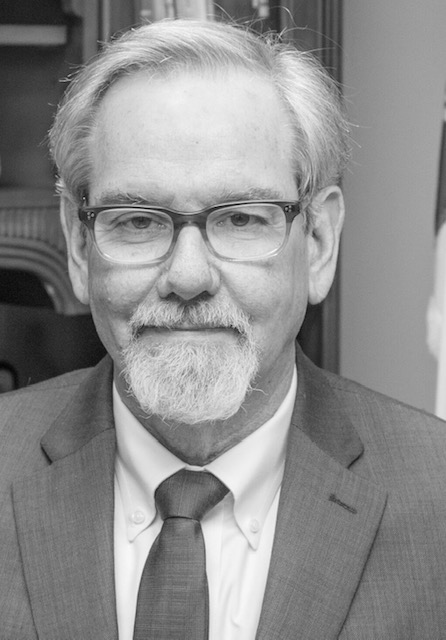
Patrick Taylor:
Let me address the budget. First of all, we carry very strong reserves. We have, right now, $10 million plus in reserve funds. That comes from our enterprise fund, our electric funds and so forth. We use that money to address those big-ticket items. It is something that we have been doing for decades in this community. We also use those funds in case we have something like the Blizzard of 1994, where we lost so much fo our infrastructure, where we lost a lot of money fast and had to spend a lot of money to get back up fast.
There are several things that we need to be addressing in the coming budgets. One will be continuing to keep our water and sewer utilities upgraded, and we have got some big-ticket items just like we do this year. For example, we have replaced a waterline on split rail, which is a two-inch water line to a state of the art, ductal-iron six-inch line that improved fire protection. That costed $850,000. We have a backflow pump system we are going to put in this year at the water plant that is going to be a million dollars. We have water tank replacements like we did on Buck Horn and on Satulah that we have got to address.
Many of those things are going to be addressed by those reserve funds. We basically are our own banker on so many things and that helps us keep debt down, but addressing infrastructure is very critical. For example, we have an issue on Dog Mountain where we are going to have to replace a tank and all of the waterlines, just like we did on Moore Wood and Satulah. That’s going to cost several million dollars. We have a water clarifier tank that has been at the water plant since it was built in the ‘60s. That could cost $3 million. We will have to make these kinds of upgrades continually and we do that.
We are looking right now, and I’ve got my fingers crossed that the people in Washington will get their act together, but we are looking at infrastructure funding. If that becomes available, we will certainly try to apply. We even have a consulting engineering company that is already looking at potential funding sources. We have shovel ready projects to go. So, that is going to be a real challenge in the coming year to keep all of our infrastructure up and effective. Those are the big-ticket items that we invest in every year, and we will continue to do so.
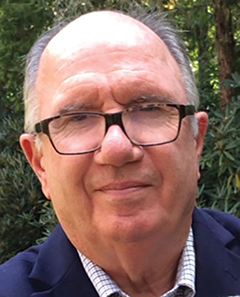
Marc Hehn:
I really appreciate this question. I am an infrastructure guy and that is all I did for 40 years is plan, design and build infrastructure.
The mayor is right, we have to finish the water pump station. According to our Master Plan, we should have replaced last year a 1965 tank at the water plant that has got a crack three feet around the bottom. It should have been replaced this year. I voted against the budget, because I didn’t think we were paying close enough attention to our infrastructure needs.
We have got to talk about roads. As I go door to door, it’s just unbelievable. We’ve got roads that we don’t own that we maintain, roads we own that we maintain, we’ve got roads we built that we don’t maintain. This is the elephant in the room. Roads in the town. We’ve got to figure out some consistent policy on how we are going to treat everybody the same. It’s going to cost a fortune, but we can’t keep ignoring it and treating some people one way and other people another way. We just accepted a right of way, 450 feet of right of way and the developers should have paved that road, but no, the town is going to pave it. I voted against that.
The thing that we are all going to wonder what’s going to happen next is, I talked to Lamar the other day, about how it seems that we get a 100-year flood all of the time. He told me we get a 100-year flood every 100 days. Did you know on the sixth of October, we got 14 inches of rain? There’s going to be more of that. We’ve got a 2007 water plan that I read that was never adopted by the town. We’ve got to get a budget to update that storm water plan.
We’ve got projects that we have to do. We can’t have buildings in the town of Highlands flooded.
Question 5: Highlands has amazing natural resources and scenery, is there anything the town can do to help protect our natural resources while continuing to promote business, tourism and economic development?
Marc Hehn:
As an infrastructure guy, one of the things that bothers me most is when I see algae in the spring water coming off Satulah Mountain. That means that somebody’s septic tank is failing. That happens when we have high waters. We have a problem where there is raw sewage going into our drinking water supply, and we have got to pay attention to that. The health department has come out and they have verified that. We have got to pay attention to our drinking water supply. I have read the master water plan and there are projects that would be simple to provide fire protection to every home. Every home should be within 500 feet of a fire hydrant, but every home in Highlands is not, and that is one of the projects that we need to undertake.
There is nothing more that I love than walking up at my house at the top of Satulah Mountain and looking out and seeing where I grew up, Anderson, Clemson and the family farm in Westminster. I love this area. I love this environment. We need to keep it safe. We treat our hemlock trees every year. They are thriving and we want to do all we can to keep this area beautiful so our children and their children and our grandchildren can come here and enjoy it as much as we did.
Patrick Taylor:
First of all, this idea that there is raw sewage going into our water supply, that to me is a bold and inaccurate statement. We monitor our water. We have to be tested at all times and that is the first time that I have heard we have sewage going into our water.
Second of all, the storm water plan that we had, I was not the mayor then, but parts of that were implemented. For example, the crating that kept silt that’s under Founder’s Park, the culverts that were put in. Part of it was implemented. Other parts were not, because it would have required, pretty much, tearing up Main Street and doing things that we just didn’t think at the time I have been told were cost effective.
Third of all, Mirror Lake. Yes, there is silt that comes from downtown, but let me tell you, we have a community where we get 97 inches of rain on average, now it’s going on past 100. We have multiple forces into Mirror Lake. I would like to see something happen with the siltation. It has never been dredged in 70 years. The silt didn’t just come from Main Street or the business district. It has come from everywhere. Anytime you do an impoundment in this area, you will have the buildup of silt. It is an issue.
Finally, road paving, which Commissioner Hehn was alluding to. We have a very rigorous road paving project. You’ve got Cullasaja, Hickory Hill, we are about to pave Laurel Lake, Upper Lake and one of the reasons we have got this project in play is to cut down on siltation and to improve the water quality. That is a critical part of our strategy to try and preserve this natural and beautiful environment.
Let me just say one other thing. I’m a fisherman. I love to go trout fishing with Stell Huie. There are streams still in Highlands, North Carolina where you have native Brook Trout. I’ll be happy to take you to them and show you. They are very quick and very agile, but that is kind of a good marker that we still have some very clean water ways in this community. But yes, we do still get a lot of rain. We’ve had 14 inches in just a short period of time. I would submit that there’s not a storm water system that you can construct for any kind of reasonable cost that could handle all of that. When I look back on that last event, yes, there are a few houses where there was flooding, especially when you build a house in a flood plain and put a basement in it. You’re going to get flooding. Overall, I looked at what happened with those heavy rain events, and we held up pretty well. There’s always room for improvement but this is something that we will be having to address in years to come, especially with climate change.
Question 6: Workforce housing is an issue for a number of employers in the area. What are your thoughts regarding how the town can help promote increased affordable workforce housing?
Patrick Taylor:
This is a difficult situation. When you think about the Town of Highlands, we have a strong budget, but for us to try and go in and build workforce housing, within the town limits, I think that is a real problematic situation.
The U.S. Census just came out and it said that we have 165 people per square mile in this community. I like to hear that. That is a good balance. A balance between our natural environment that I want to see preserved and accommodating people to live, but for us to try and put housing within city limits, it’s problematic. I think Commissioner Hehn would understand. He’s trying to sell a piece of property right now. The cost of trying to buy a piece of property here is astronomical. The building cost is $500 per square foot. So, that, to me, is a problem and I know that people are saying let’s do employee housing at the hospital. If HCA is willing to commit financially to that, I certainly would consider that, but I am very concerned about some type of non-profit situation where we would have, at one point it was going to be hospital employees, now it may be other health workers, or maybe just workforce people. It gets down to the idea of should we be extending water lines and things out to these areas to provide for workforce housing? That is something I think the board would have to decide, and the community would have to decide, but I am conservative about that. Not having large numbers of workers is a concern for many business owners, but how big do we want to make this community? I want to keep it as a small village type community and not replicate something that you might see in Atlanta, Charleston or other places. So, that’s a very difficult challenge about workforce housing and how we go about addressing that.
I think, quite frankly, a lot of this can be solved by employers paying an incentive wage and salary and benefits that make people want to come and work here in Highlands. That’s what we had to do with our town workers right now and that is to be competitive in the market, so people are willing to come and work here in Highlands.
Marc Hehn:
This is my favorite question. Mayor Taylor and I took a walk in July, and we were talking about whether I would run for mayor or not and I told him that if he would just help me get this done, I wouldn’t pay $10 to run for mayor, but here we are. So, let’s talk about workforce housing.
The town, in 1987, approved 50,000 gallons a day of sewer service to the hospital campus. There is a site plan included in the minutes of that meeting that shows workforce housing very close to the site that we picked out. In 2001, the town approved a water service agreement with the hospital, and it was a formal agreement that said that 70,000 gallons a day of water would be provided for the hospital campus, again, there was a concept plan and workforce housing site.
Betsy and I sponsored a study, the mayor participated, with the Clemson University College of Architecture, where I was, in healthcare facilities and the study determined that last year, we needed 16 units at the hospital. That is when we had 16 openings. This year, we’ve got 40 openings at the hospital. One of our largest employers estimates that we need 150 workforce housing units in this area. People complain because they can’t go out to eat, they can’t get service. There are signs on the restaurants that say, “Please be patient.” The workforce shortage is real.
All we’ve really got to do is be a partner. We’ve got the water and sewer, and yes, I said there’s $90 million available from the Dogwood Trust. I talked to one of the board members. One of the other reporters in town said, “Mark, there’s not $90 million, there’s only $60 million available.” I checked today, there’s more than $90 million available. There’s special funding available just for workforce housing. All we really have to do is say, “Let’s be a partner.” We are not trying to give money to HCA, that’s a private cooperation. We are not trying to give money to these big companies in town that can afford to build housing, but we do have to be a partner in healthcare.
I was out there today. I listened to the nurses, staff and people who can’t take off because they can’t hire people to fill in. This is a problem. I saw a man, drug out of a car two weeks ago who was passed away and immediately, his wife was cared for and it was a tragic situation. We’ve got to have a hospital that we can all go to. I’ve taken several members of my family there, I’ve been there. This hospital is important, and we have got to do everything we can to make it a success.
You know, and the mayor knows that the CEO of HCA just bought a house on Mountain Top. We want to be good partners. They are losing money. Why not be a partner and make this a successful venture? This is never going to be a money maker for them. So, yes, we need workforce housing, and we need to help the businesses in town and the hospital.
Closing remarks:
Marc Hehn:
The best question that I have gotten while campaigning is, “What do you like the most about Pat Taylor?” and I always say that he is a very good communicator. I don’t always agree with the message, but he is a good communicator.
Betsy and I talked with our granddaughter Sunday. She’s going to be a Doctor of Pharmacy in a few months, and we had a medical question and she was quick to answer, but she said, “You know Pop, I’m going to get my North Carolina Pharmacy License.” That really made my day, that she likes this community as much as we do and she’s thinking about coming up here. Of course, housing won’t be cheap, but we are very happy that she is thinking about that.
The short-term rental decision, honestly, was based on very poor legal advice at the time. I think if we had the current advice, there would not be any conversation about having a moratorium in January. We absolutely have to revisit that. I am worried about spending attorney fees for us, and I’m worried we are going to have to spend attorney fees for those that are making a claim against the town. That is a decision that has got to be revisited and I’m glad that the town board accepted my recommendation to hire an expert attorney. I do want to protect the residential nature of our neighborhoods. The Comprehensive Plan says we have got 2300 and some odd homes in Highlands and only 600 are full time owner occupied. So, yes, we have got to protect our neighborhoods, but there is a way to do that through zoning amendments and zoning permits and those that want to be a continuous problem, we’ll get them pulled. We also have a problem with congregate housing. Those are units that have been bought by large employers for employees and we have got to do a good job of making better neighbors of those property owners, so they respect other property owner’s rights.
The big word here, as far as short-term rentals go, is compromise. The quicker we can reach a compromise – I don’t want to go through Christmas with all of these hard feelings and division and turmoil in the town. We just need to revisit the zoning ordinance and get public input.
The algae in the spring is not a pleasant sight. I think the problem is that we don’t require everyone to tie into the sewer where it is available. That is something we are going to have to visit. The mayor is correct. I think the study on Mirror Lake says 80 percent of the sediment comes from 20 percent of the storms, so these deluges are the things causing the problem.
Again, private roads that we maintain is something that we have to address. We can’t keep ignoring it.
You know what I like most about living in Highlands in compared to Charleston? I don’t hear any sirens. Where we used to live, there were sirens all of the time, which means there was somebody in distress. EMS, fire, police. I know what’s it’s like to have two police officers killed. Betsy and I know what it is like to walk into a room with 20 some odd police personnel and the police chief in shock, based on a violent act and we are so lucky to live in this community where violence is rare. We should all thank God that we live here in such a safe area.
Patrick Taylor:
I want to end by saying that it has been an honor serving as mayor for the last eight years. I want to continue to serve this community. I think I have the ability to, first of all, work with the town board as a consensus builder to build collaborative activities not only for the board, but with our staff and also the people of this community. I think if you look at my record, you will see that pattern of collaboration throughout.
I also want to say that I have a vision of Highlands and it isn’t a vision that mimics other communities. This is a unique Plateau. It is special and I want to embrace something that I have held as a guiding principle and that is preservation and at the same time progress.
I want to preserve the environment. I think it is critical, especially with the pressures we are facing now. I want to preserve the village quality and the sense of community that we have and yes, I do want to embrace progress, like the broadband which will help us continue to engage in business practices and many people work from home and so forth. I think there is a balance there that we need to always keep in focus.
The other thing is this, I believe I work with and collaborate with communities and with the staff, but I am also a fighter for Highlands. Let me tell you about some of the fights and battles I’ve had over the last eight years. First of all, I have worked with the DOT. I am on the Southwestern Planning Commission and Advisory Board. I’m the chairman. I’ve been working with DOT to address the problem with the trucks on the Gorge Road. First, we put in flashing lights thinking that it would help. It did not. We worked with the state patrol and DOT, and they went back and changed the regulations where now, a 55-foot tractor trailer cannot come down that road and the signs are very clear, only 30-foot trailers. State patrol likes that because they can make a quick and definitive chase. DOT likes it and hopefully we can keep addressing that.
I fought for coal ash remediation for this town. Duke Energy came to us and said, “If you sign a nondisclosure agreement with your utilities with your customers, we will give you a good deal on coal ash.” My response was no. We are a public body. If you’re going to charge our customers a coal ash fee, we are going to let them know what you are charging and on your bill you get that every month. I fought for that. I went to Asheville, to a huge public utilities meeting, where there were hundreds of people. I sat there for three and half hours listening to all of the folks. They finally let me speak and I got up in front of the commission, got roughed up by the chairman, but I said no. The Duke Energy people should not be charging customers whether they be retail or wholesale. Their investors should be carrying part of this burden. I got roughed up that day, but I fought for this town.
Let me say something about the hospital. I am for the hospital. If the HCA folks who made $1.8 billion in profits last quarter, if they would invest in employee housing, then absolutely, let’s hook them up to water, but this idea of this big complex on that campus, I think the board has concerns about that.
Let me just finally say, I have done some things with working with people in this town for the benefit of this town. It has been collaboration, with private stakeholders in the community and of course, the town board. The broadband project, which we are about to pass, the development of Founder’s Park, which was a collaboration between many people, the renovation of the Rec Center, the completion of the downtown wall, I could go on and on. Feel free to ask me any questions.
The Highlander would like to thank both candidates for agreeing to participate in this live forum and also the town for allowing us to use the Community Building for the forum.
- By Christopher Smith