
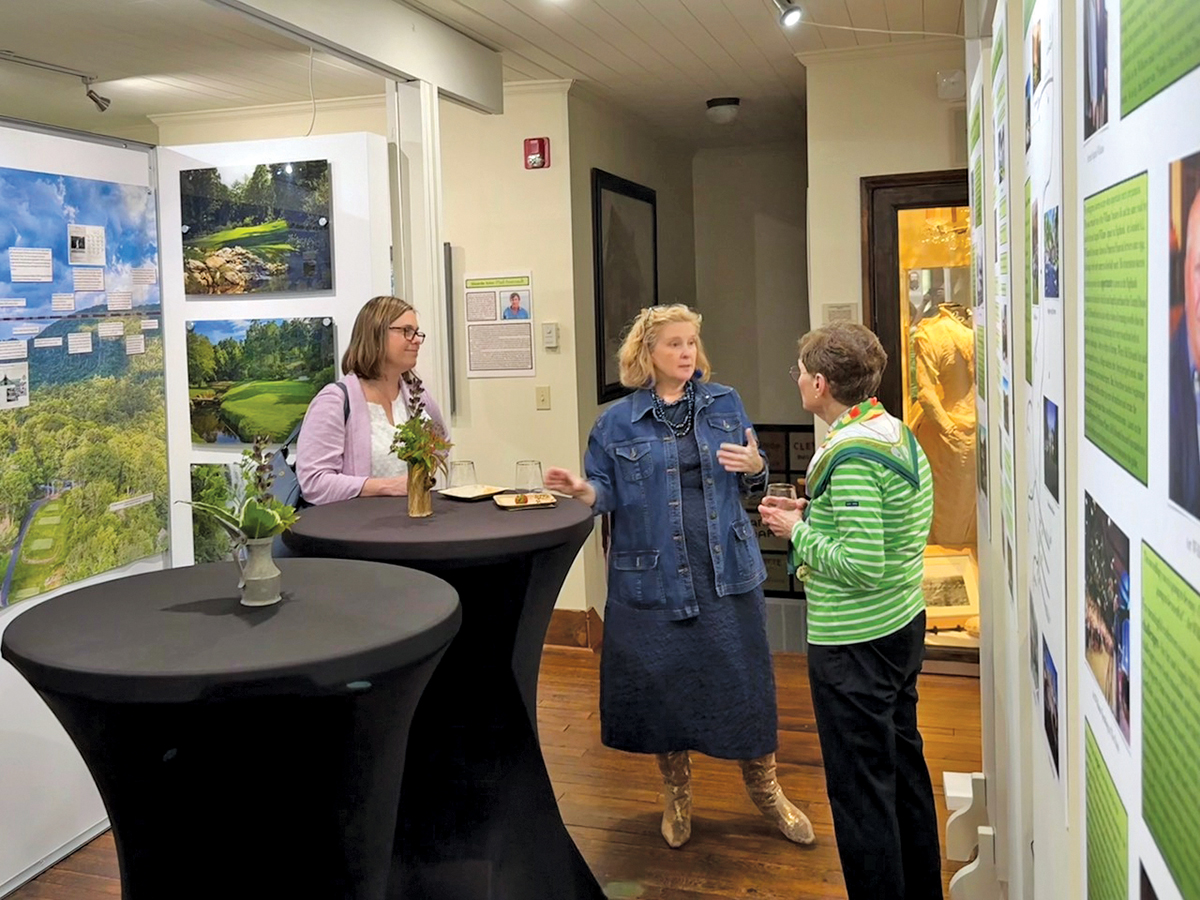
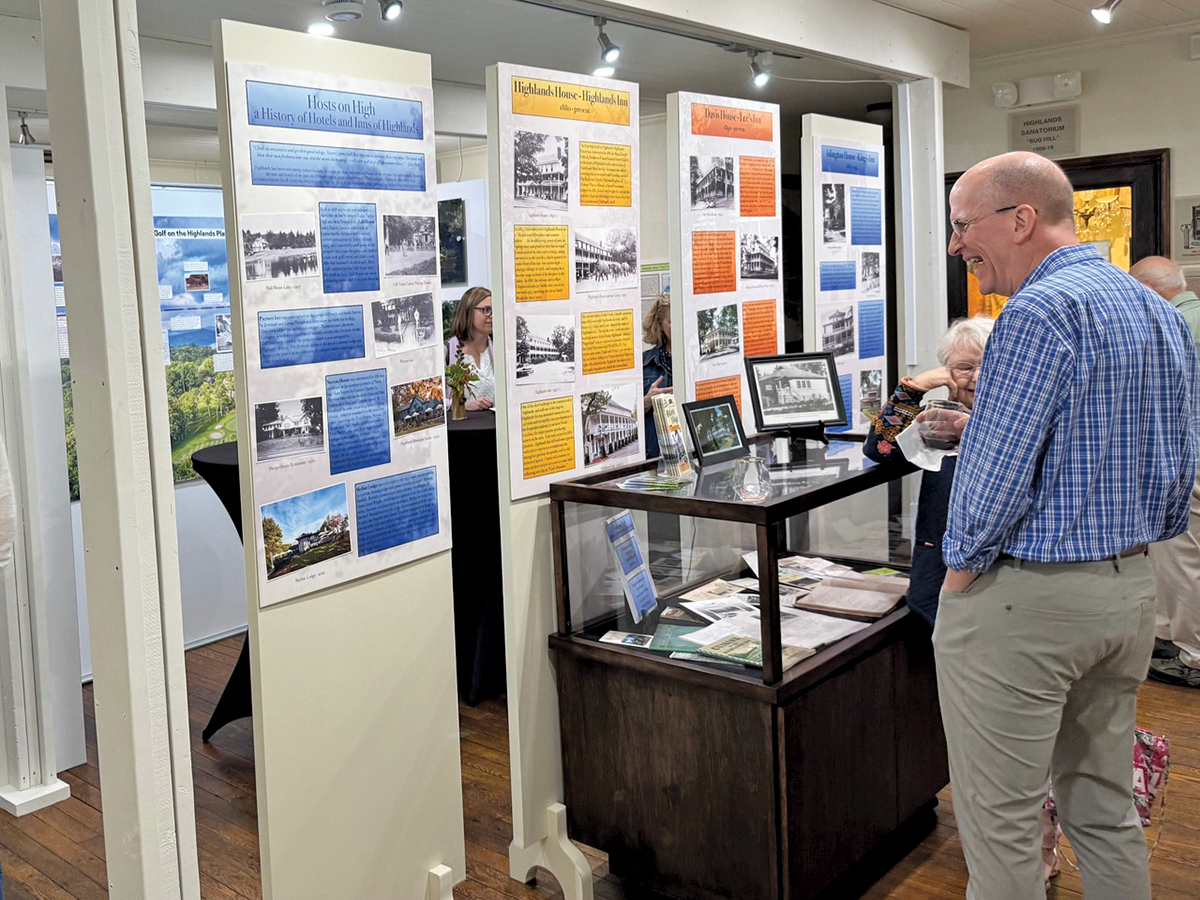
Highlands Historical Society President Tracy Foor at the reception for the book signing.
In partnership with Highlands Historical Society, author Elizabeth Engelhardt visited the area last week to talk about her book, “Boardinghouse Women”, in which she discussed the cultural importance of them.
The book centers on the legacy and cultural significance of women in the South who ran, lived in or worked in boarding houses. Exploring how these boarding houses served as vital business models, Engelhardt said these places helped enable women to support themselves and their communities in a time when women had limited financial freedom.
“In the book, she describes the unique characteristics of boarding houses, as well as the women who ran them,” said Tracy Foor, president of the Highlands Historical Society.
Foor also said Engelhardt’s visit helps tie into the history of Highlands and the overall history of the South by highlighting why boarding houses were so critical to these economies and communities while also serving as a means for women to become business people in a restrictive period in history.
Even though they not didn’t necessarily set out in life to become business people, it was a way for them to make a living,” he said. “So, I think it’s a neat way for the Historical Society to make a connection in a broader sense to this entire South.”
Speaking about the legacy of women in the United States who ran boarding houses, Engelhardt noted she got fascinated by how most of this happened in a time before women had their own financial independence.
“I’ve spent a lot of time writing about, and we ended up talking about, how many famous writers either wrote in boarding houses or developed their talents in boarding houses, or ran boarding houses and then later in their life wrote cookbooks about their experiences,” she said.
Reflecting on the cultural impact of boarding houses, Engelhardt said traces of them can still be felt in the modern day, such as pop-up restaurants and Airbnbs.
“I also think you can trace some of the influences of boarding houses in our structure for helping people age,” she said. “You know, I’m here at Chapel Hill and the legacy you can look at is sorority houses or fraternity houses or dorms. All of those are either built on the model of a boarding house or leaned on boarding house women to support.”
Engelhardt connected this to the mountain communities like Highlands, which she said were ripe with boarding houses due to their tourist economies.
“Tourist economies tended to have formal hotels, but also people would stay with a friend or people would rent a room,” she said.
With the Historical Society here in Highlands having its own boarding house, Engelhardt noted that it perfectly served as a connection to the rich history found in her book.
“They’ve done such a great job there to put together that story,” she said. “I was really impressed.”
Engelhardt praised the welcome she received in Highlands.
“I so enjoyed the follow up conversations and the stories people told me and I always hope people will reach out and tell me more,” she said.
Engelhardt said she hopes the biggest takeaway people get from reading her book is that there are many rich stories yet to be told in their own communities.
“I hope it leads people to think about the women in their community whose stories haven’t been told and whether they were in boarding houses or whether they have other interesting stories to tell,” she said.
“I just think we ought to spend a little bit of time thinking about what those faces were like and how people crafted their lives.”