
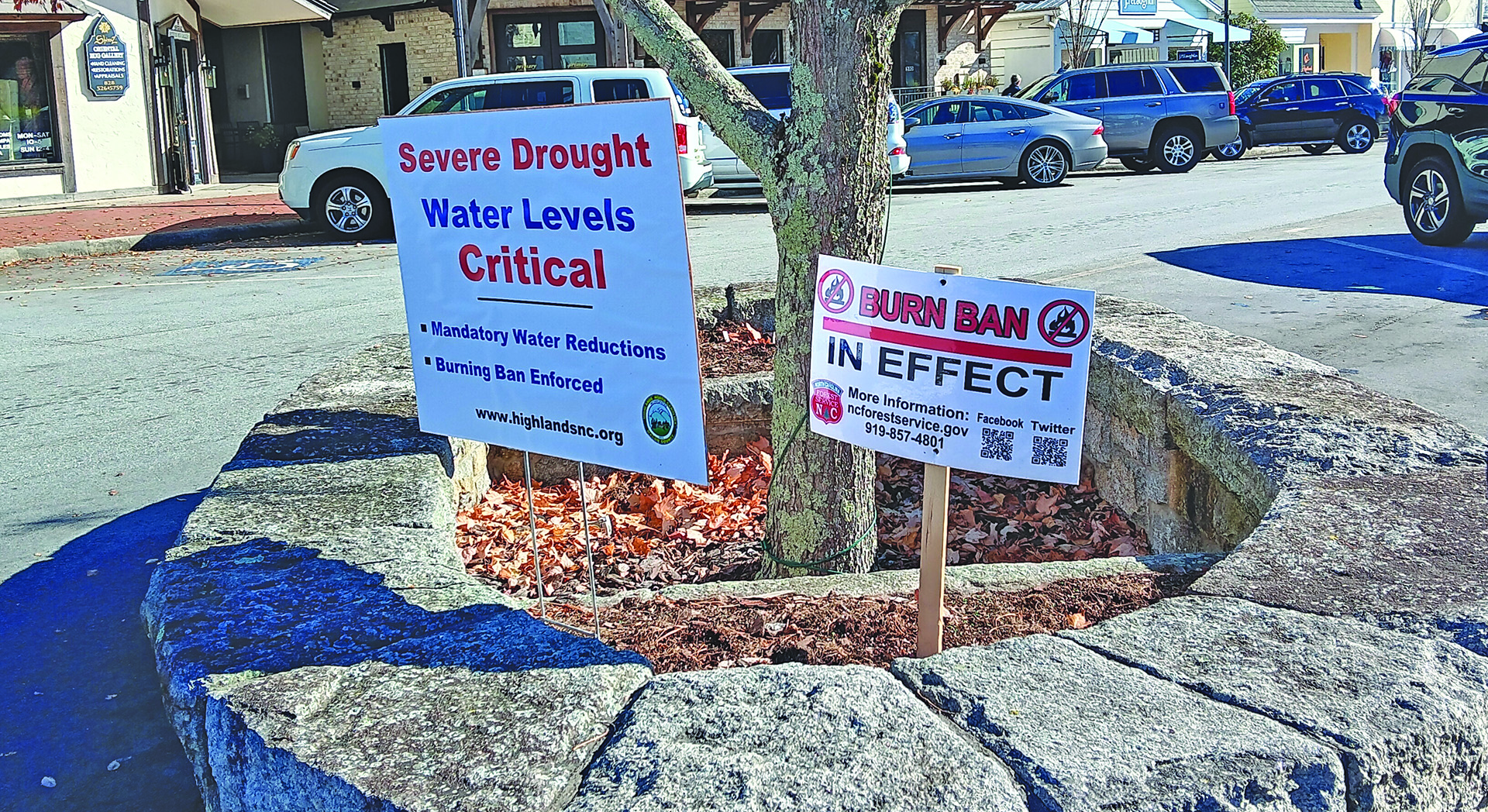
Highlands has stepped up its efforts to conserve water in the face of severe drought conditions. This week Mayor Pat Taylor enacted Levell II water restrictions, which means all citizens are asked to reduce their water use by at least 10 percent.
Residents are asked to not fill swimming pools or ponds, shut off faucets while doing dishes or brushing teeth, only do laundry in full loads, limit vehicle washing, and not water lawns.
Highlands had been on Level I voluntary water restrictions since Oct. 30.
The North Carolina Forest Service officially enacted a burn ban Nov. 5. It was expanded to cover 30 counties in Western North Carolina Nov. 8. It will remain in effect until given other notice by Steve Troxler, N.C. Agriculture Commissioner.
“Because dry conditions are expected to continue this burn ban is necessary to reduce the risk of fires starting and spreading quickly. Our top priority is always to protect lives, property and forestland across the state,” Troxler said in a written statement. Troxler encouraged extreme caution in areas not immediately under the burn ban.
Impacted counties are prohibited from open burnings. Issuance of new burn permits is also canceled for the time being.
“Burn permits are no longer valid. Anybody who has taken out a burn permit in the past 30 days has been contacted,” said Ruthie Edwards said, North Carolina District 9 forester.
Open burnings are prohibited. This includes debris, plant material, branches and leaves, trash, campfires, and more. The Forest Service’s burn ban does not apply to fires within 100 feet of an occupied dwelling.
Edwards said the burn ban will continue until this area receives significant rainfall. When Troxler deems conditions favorable, the ban may be lifted. The N.C. Department of Agriculture may also expand the ban as needed.
Those violating the burn ban may be subject to fines, including court expenses. Any person responsible for setting a fire may be liable for any expenses related to extinguishing the fire.
Western North Carolina has seen more than its fair share of fires and smoke this year. Severe draughts coupled with dry fallen leaves have fueled fires and fears from the Plateau and beyond.
The N.C. Forest Service responded to a 35-plus acre wildfire caused by debris burning on Rye Mountain Friday, Oct. 27. Nearly 300 acres began to blaze on Nov. 4 in Jackson County near East Fork. The East Fork fire has been 80 percent contained. A smaller fire, around five acres, burned near Bear Lake. 30 acres burned near Tuckaseegee Monday, Nov. 13.
A wildfire on Collett Ridge near Andrews, North Carolina has exponentially grown since it began. The U.S. Forest Service reported the fire is over 5,000 acres as of Monday. It is at 20 percent containment. Firefighters are assessing needs for structure protection in communities northwest of the fire.
Additionally, Edwards said there are many fires in South Carolina and Georgia, along with the WNC fires.
These fires bring thick clouds of smoke, which may provoke complications in those with underlying respiratory or health issues. Gretchen Guelcher, director and instructor of Southwestern Community College’s Respiratory Therapy program, said poor air quality from smoke can exacerbate cardiovascular and respiratory problems.
“It’s crucial for individuals to be proactive in managing their health during periods of poor air quality,” Guelcher said.
Guelcher said this may worsen symptoms in those with pre-existing respiratory issues such as asthma, bronchitis, allergies, or COPD. Additionally, they may increase the risk for respiratory infections, and worsen cardiovascular symptoms like heart disease or hypertension.
Individuals with these pre-existing conditions may experience shortness of breath, coughing or wheezing, chest tightness, and trouble breathing. Guelcher recommends individuals monitor air quality, limit outdoor activity, follow medical advice, and use air purifiers as needed.
Guelcher also suggested individuals with related conditions seek medical assistance if they experience moderate to severe difficulties breathing, persistent chest pain or tightness, confusion or dizziness, excess of mucus, or blue lips.