
Highlands’ two largest festivals generated more than $5 million in economic impact in 2023 according to a study conducted by Western Carolina University.
Jack Austin, with Highlands Festivals Inc., presented the findings to the Highlands Board of Commissioners on Thursday night during the board’s March meeting. Austin noted that Highlands Festivals Inc. had heard some complaints about the Bear Shadow Music Festival and Highlands Food and Wine, and the group decided to commission the economic impact study via Western Carolina University economics professor Steve Ha.
“This survey was done in an academic way that took the biases and opinions out of the equation,” Austin said. “Obviously, we were hoping that the result would show the festivals have a net positive impact on Highlands and our local economy. But if that wasn’t the case, we wanted to know that too. We were willing to examine the positives and the negatives.”
The findings within the report showed that Highlands Food and Wine, a four-day event held each year in November, generated $2.9 million in total economic impact in 2023. Of that amount, $1.9 million was identified as “direct impact.”
“Direct impact is exactly what you think, people coming to the festival, buying tickets, booking nights in hotels, eating at our restaurants, buying gas at our gas stations, etc.,” Austin said. “Indirect impact is more conceptual, that includes things like a business ordering more food, beverages, supplies, etc. for that particular weekend to accommodate larger crowds… Things like that.”
The study noted that the average stay for food and wine festivalgoers was three nights. Attendees of the festival were classified as 67 percent visitors to town, 17 percent seasonal residents, 7 percent year-round residents, and 9 percent “other.” The average per person spending of food and wine attendees was $2,421 over the course of the four days.
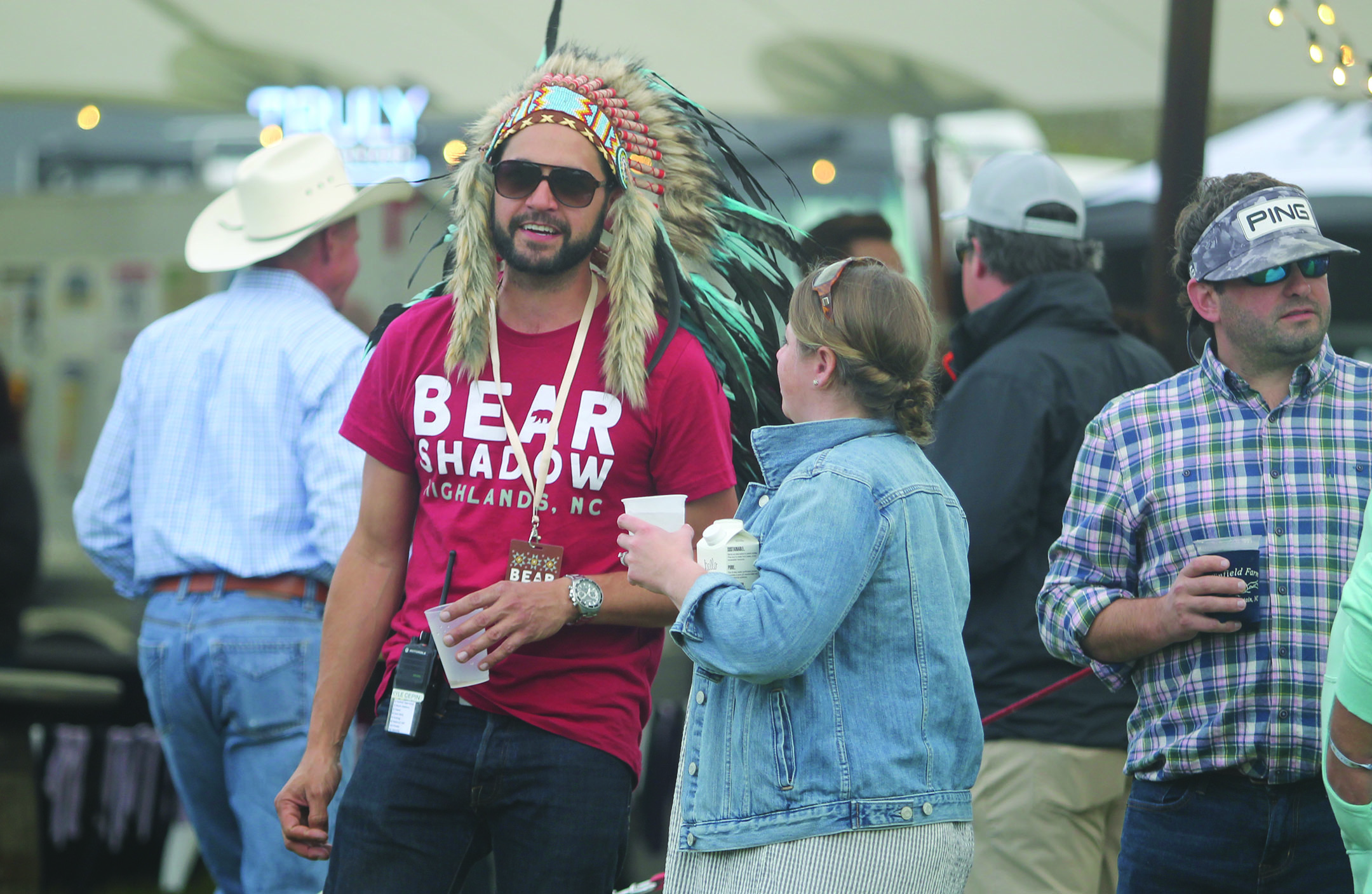
The Ber Shadow Festival, held over three days in April in 2023, delivered $2.26 million in economic impact, with $1.4 million of that being classified as direct impact. The average length of stay was 2.7 nights and the average per person spending of festival attendees was $1,042.
While the economic impact numbers were positive across the board, Austin admitted that the study was not all sunshine and rainbows.
“As part of this study they did a business survey and the results of that survey show a clear disconnect between some of Highlands’ businesses and the festivals themselves,” Austin said. “That is something we are going to work on for this year. If that means including more local businesses as part of the festivals, we can look into that. If it means finding ways to help businesses take better advantage of the crowds of people in town during those weekends, we would be willing to help out that way as well.”
Austin also noted that the Highlands Festivals Inc. board has fielded complaints from local residents that they no longer have access to the events – especially Highlands Food and Wine.
“We are discussing ways we can make that event more accessible to locals, whether that includes a local ticket presale, or some form of a ticket lottery for people who live in the 28741 area code, there are options,” Austin said. “Highlands Food and Wine has gone from selling out in a matter of weeks, to a matter of days, to now a matter of hours or less depending on the event you want tickets for.”
Austin also made note of changes being made to the Bear Shadow Festival. The host site of the event, Winfield Farm in Scaly Mountain, has been sold and is in the process of being redeveloped, so the event will need a new venue in 2025.
“We want to keep it at a large outdoor venue, because that is the vibe of that event, but there aren’t a lot of those big tracts in Highlands,” Austin said. “We have assured our sponsors that we are going to keep it as close to Highlands as possible.”
Mayor Patrick Taylor asked if the Highlands Chamber of Commerce is a sponsor of the festivals, and at what level. Austin responded that the Chamber sponsors each event to the tune of $100,000.
Commissioner Amy Patterson asked if the Highlands Festivals Inc. board had taken into consideration the negative parking impact the festivals have on Highlands’ primary business district.
“That was brought to our attention last year during Bear Shadow, and it’s a legitimate concern, we understand that,” Austin said. “We run shuttles from (Kelsey-Hutchinson Park) and that means the parking in the park and along several of the nearby streets fills up fast. To get people from Highlands to Scaly Mountain and back in a safe and efficient way, the shuttles are a necessity, but we have looked into using some possible alternative parking areas for next year.”
Commissioner Buz Dotson asked if the Louis Osteen scholarship to the Culinary Institute of America that the Food and Wine festival supports has ever been awarded to a local student. Austin replied that it has not, but that no local students have applied in the four years that the scholarship has been available.
“We would love for a local student to take an interest in the restaurant business and apply for the scholarship,” Austin said. “They are certainly not being overlooked in order to give the scholarship to students from other areas.”