
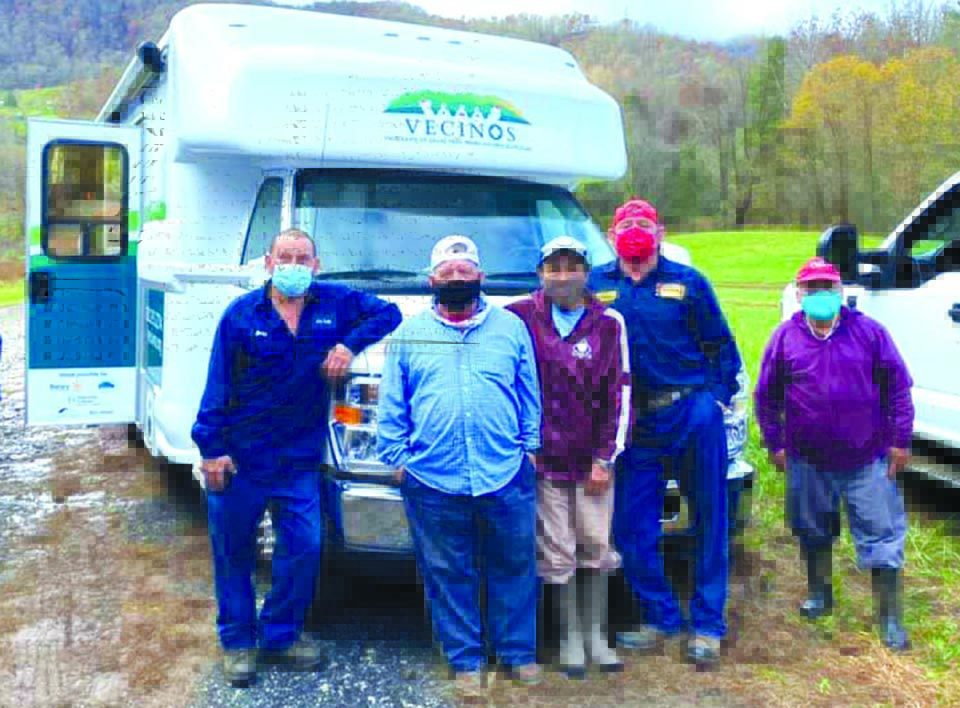
In a year marked by setbacks, Vecinos Farmworker Health Program is continuing to grow and evolve to meet the needs of the Spanish-speaking community in Western North Carolina.
A few short months after rolling out a new, state-of-the-art mobile clinic designed to serve their current clientele, which at present consists entirely of Spanish-speaking farmworkers in Western North Carolina, Vecinos has announced plans to grow in a big way thanks to grants provided by the Dogwood Health Trust.
“What the funding is for, specifically, is a new initiative to expand our clinical services to any uninsured person in need of Spanish-language services,” said Marianne Martinez, executive director of the Vecinos Farmworker Health Program. “Currently, our services are only funded to serve farmworkers. This will expand our services significantly.”
The funds, provided by grants for COVID-19 relief and through the trust’s Racial Equity Grant program, total $100,000. $75,000 of that money will be disbursed over the course of two years.
For a program like Vecinos, Martinez said that type of funding can be a game-changer.
“It gives us confidence to move forward with a project like this,” she said. “The last thing we want is to lay all the legwork, work with partners over the course of a year and then turn around and say, ‘Oh no, we don’t have funding next year.’ Having those multi-year funds helps us push forward.”
According to Dogwood Health Trust’s official announcement for the grant funding, the Racial Equity Grant program aims to provide funding to “historically underfunded organizations whose primary purpose is serving Black, indigenous and communities of color, and whose leadership is representative of the communities they serve.”
Initially aiming to provide $1 million in funding, the grants nearly tripled that goal, distributing $2.8 million between 130 nonprofits in Western North Carolina.
“One of our goals for the Racial Equity Community Grants was to recognize and support the great work and leadership already taking place in our region,” said Dogwood Health Trust board member Jackie Simms in the announcement. “We’re thrilled that we’ve been able to go beyond our original $1 million allocation in order to support and shine a light on such a strong group of organizations and their efforts to create a more equitable system.”
The expansion of services for Vecinos will provide expanded services to a much larger population than their current clientele, Martinez said. She said census estimates indicate there are between 7,000 and 10,000 spanish-speaking residents in the counties the organization serves, and those numbers are likely a conservative estimate of the actual Latinx community here.
“Right now we only serve between 800 and 1,000 people each year, and that’s such a nominal number in comparison to the number of potential spanish speakers in the region,” she said. “And then, when you think about the rate of uninsured people statewide being about 25 percent, that’s the number of people we could potentially be serving.”
The plans for expansion are still in the formative stages, Martinez said, with planning for new services currently underway.
“We are just in the baby steps, and we’re still trying to plan for this with our board,” she said. “This is all super new, but we’ll be reaching out to others and pulling them into the conversation to make sure we’re all on the same page and working together.”
She said there are already some Spanish-language services available at other clinics in the area, including Blue Ridge Health, Appalachian Highlands Free Clinic and Community Care in Franklin. The addition of these services from Vecinos would bolster those offerings, however, and offer a level of focused care that doesn’t currently exist.
“We don’t want to repeat services - we want to complement what’s going on already,” Martinez said. “We’re a unique service model that’s really situated and poised to serve this population. While the other clinics do have Spanish-speaking staff, it’s not their forte and no one clinic can serve the entire region’s Spanish-speaking population.”
The next step in growing the organization is ensuring there are enough trained staff members to serve the new clientele the group aims to serve.
“Strategic planning is a huge part right now, but we also have to make sure we have the staff to serve these people,” Martinez said. “We’re a small staff right now. We’re also looking for new clinical space, and we hope to find something that’s very cheap or free. There are also all the administrative costs that go along with that.”