
The Bascom: A Center for Visual Arts presents annual Winter Resident Artist Program
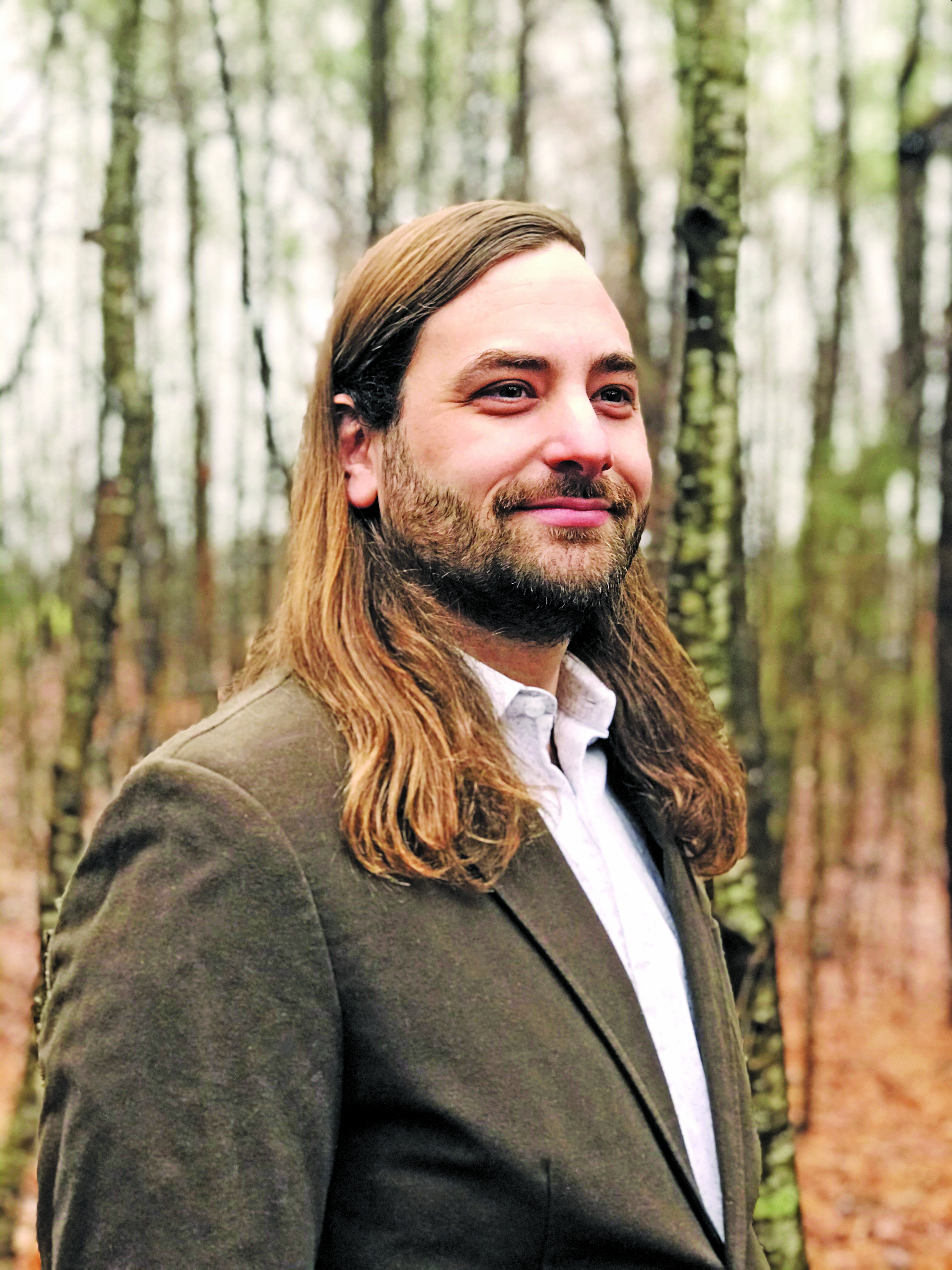
Colin Dawson
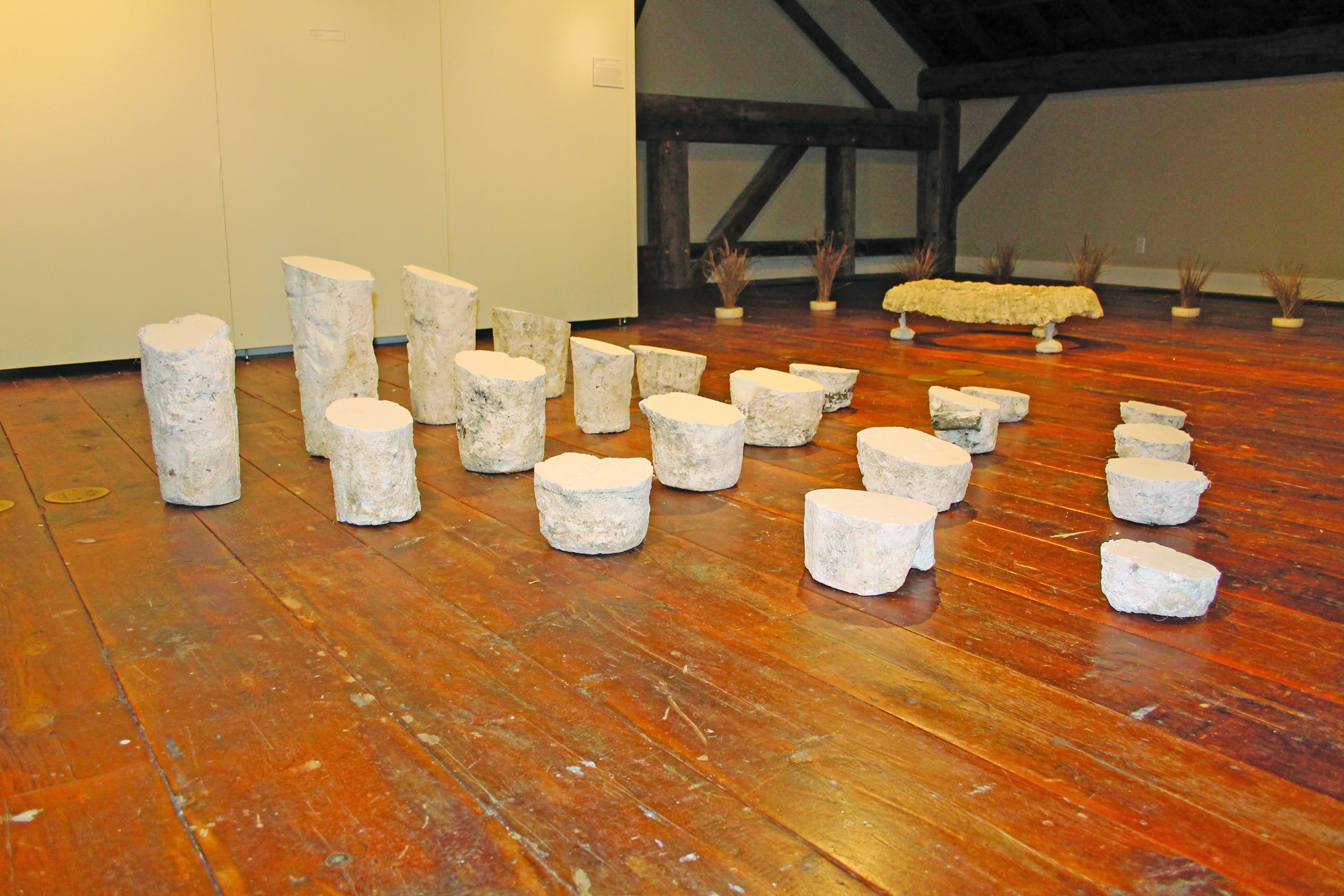
With this year’s theme at The Bascom: A Center for the Visual Arts being “place,” Western Carolina University graduate student and current Winter Resident Artist Program participant Colin Dawson decided to take chunks out of the place he would be presenting, as well as other places in Western North Carolina.
The Bascom Winter Resident Artist Program, better known as the W.R.A.P., calls on students or faculty from the surrounding universities to submit site-specific installation proposals for The Bascom’s Thompson Gallery.
Dawson said he knew at a young age that being an artist was a way for him to convey powerful moments. He grew up in the Florida Panhandle, studied at the Lime Academy in Connecticut and earned his bachelor’s degree at the University of West Florida.
“I started out doing a lot of figurative art,” Dawson said. “I always had strong emotional connections with art work. I think human expression is really important. I love creating things that people can connect with because I have had so many powerful moments with art.”
When Dawson learned of the center’s theme, he said his first thought was about how complicated the history of Western North Carolina is.
“A lot of what is seemingly quiet, has a lot behind it,” Dawson said. “There is a long, complicated history throughout this area. Obviously, the natural landscape is so important to the identity and life of Appalachia.”
Once Dawson has determined a form for his work, he creates a negative of the final form by excavating the ground. The negative form is then refined and receives a surface treatment of mark-making using a variety of digging tools, found objects, and his own hands. A plaster mixture is then poured into the negative form and further shaped as it sets.
“All of the places that I went to were public access,” Dawson said. “I also chose sites that were close to water, because I needed water for the plaster and that was another way to incorporate the site. Then, I poured the plaster, took them out of the earth and picked some of the bits off. I liked it because it didn’t really disturb the land.”
One of the sites that Dawson chose was on his homestead in Sylva.
“In a return to what began as an interest in digging and casting holes, I have explored my own personal piece of property in Sylva where an entire home is buried,” Dawson said. “After purchasing this quarter acre of property, I was told by neighbors that the previous home had likely been demolished, a large hole excavated and the remains were buried beneath. I began digging to search for the home site. Since then, every dig completed on the property by myself and other professionals, has confirmed that there is a house beneath. I have since learned this was a common practice before roll-away dumpsters entered the area. Many properties have trash pits, or in the case of my property, entire homes buried on them. This site was chosen to highlight the buried histories of the Western North Carolina mountains and the intersection between development in our region and the tenacious character of many people who attempt to make the mountains their home. The forms evoke the roof of a house and the many cables, carpets, foundations and sundry items buried beneath our feet.”
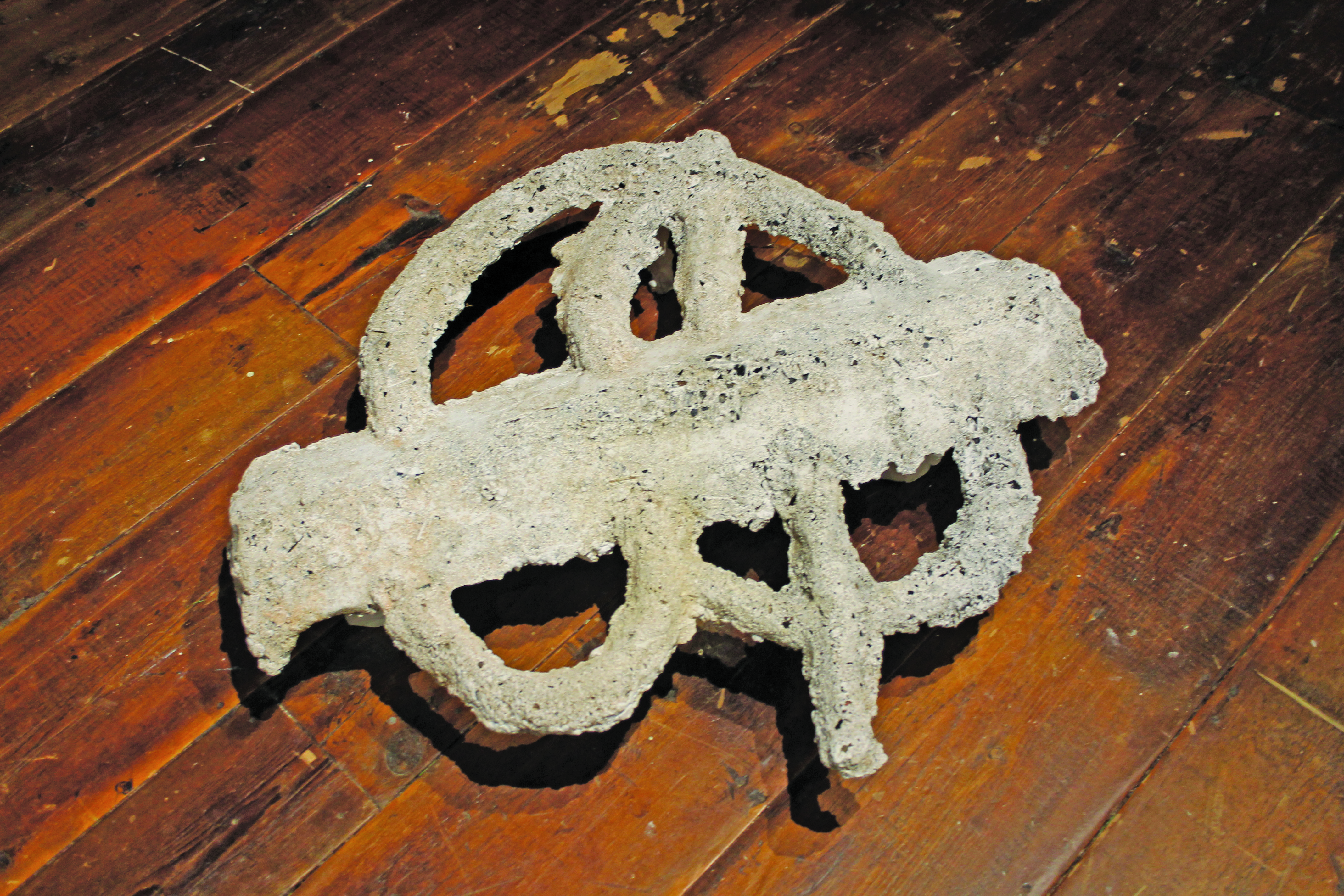
Continuing with the history of Macon County, Dawson chose a site at Lake Nantahala, formerly Camp Scott and before that, Aquone, a settlement of Cherokee Indians.
“In May 1838, volunteer troops from Macon County established Camp Scott as a temporary base to support the capture of Cherokees from isolated communities in the Nantahala River Valley,” Dawson said. “Camp Scott was established at a Cherokee village near the mouth of the Wine Spring Creek at Lake Nantahala. The site was later to become the town of Aquone, which was submerged upon the completion of the Nantahala Dam in the 1940s. This site was chosen because of the intersection between stages of displacement, the people who were to become the Eastern Band of Cherokee Indians, white settlers, institutional entities and outdoor recreation. The piece represents a ring fort with the fingered patterns representing all of the people who lived and created the history of this site.”
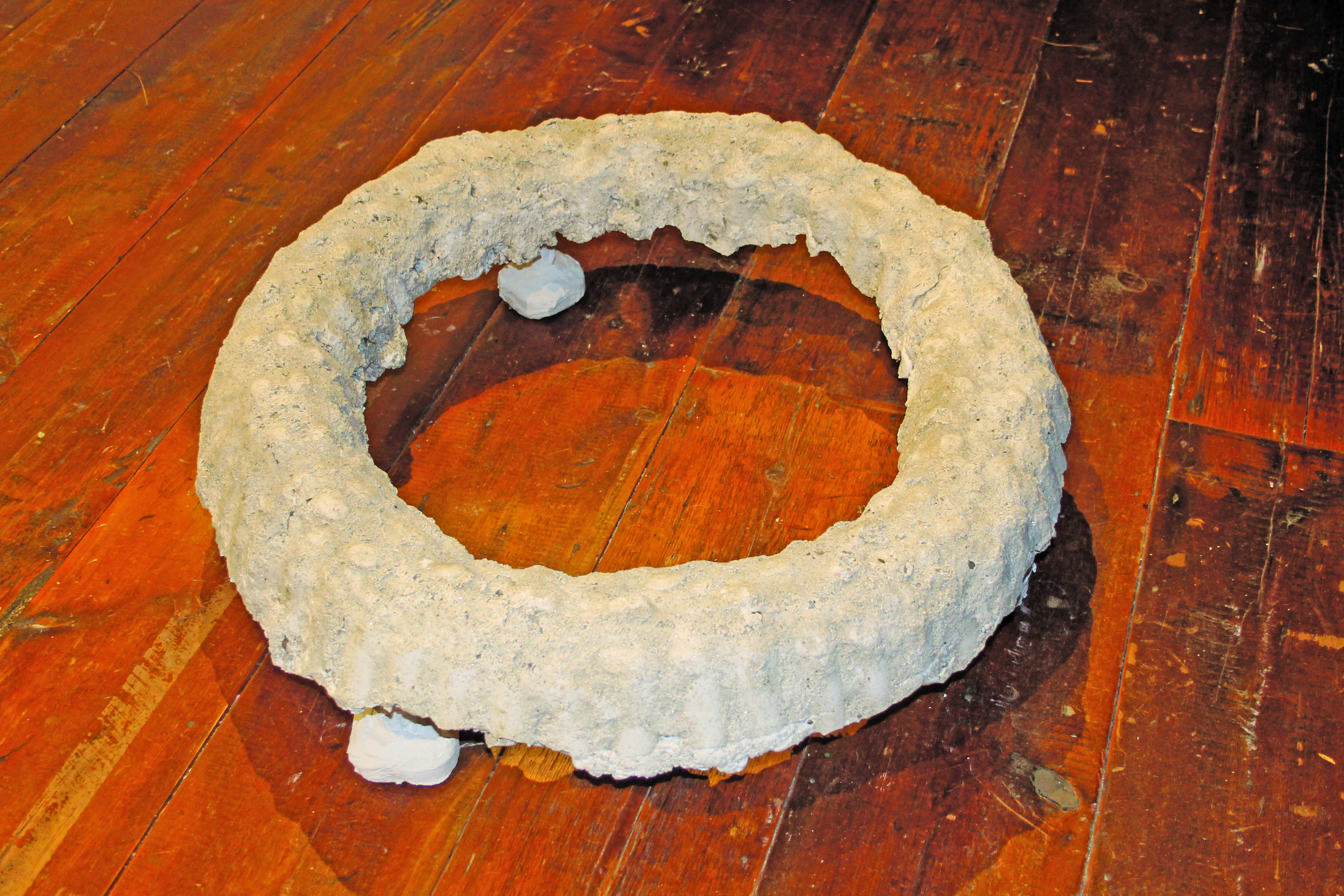
The next excavation site was Lake Fontana, where thousands of families were displaced from towns like Proctor and Judson for the creation of the Fontana Dam in the 1940s.
“Ninety percent of the north shore is owned by the U.S. government forming borders of the Great Smoky Mountains National Park and Nantahala National Forest,” Dawson said. “Promises were made and broken by the U.S. Government. These tensions are most emblematic in The Road to Nowhere, and its failure to create access to displaced families’ ancestral cemeteries. Perseverance from citizens like Helen Cable Vance and others led to the National Parks Service attempt at reconciliation with the creation of Decoration Days. Each family cemetery is given a different day, and family members are ferried across the lake by the National Park Service to clean and decorate gravesites. This location was chosen because of its intersection with displacement, common citizens, government entities, reconciliation and outdoor recreation. The piece evokes the restructures of a tombstone, a dam, a river and each thumb print represents either a grave or a submerged home.”
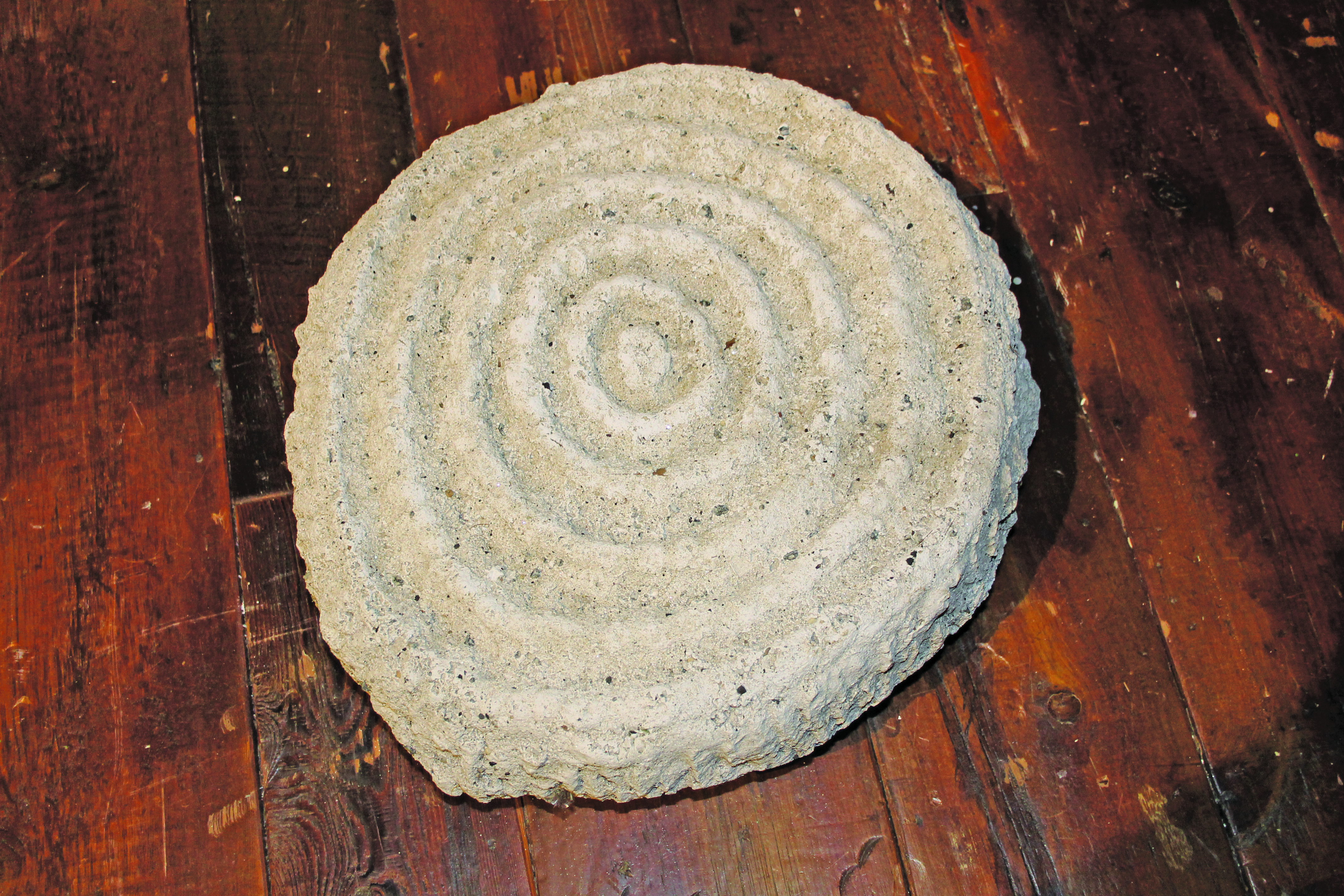
The centerpiece of the exhibit is a topography study at the entrance of The Bascom.
“As artists, we are thinking about the human impact on the Earth,” Dawson said. “I wanted to draw attention to this area and to the natural beauty of this area.”
Dawson said he hopes that people come to the exhibit and learn about the interesting history and intersections about the area.
“The people here are tough and have made an effort to survive,” Dawson said. “Pretty much anywhere you look, there are so many individual lives that have been formed by this land. That’s the thing about this project; it is about the land, but it is also about the people of the land. Everyday lives are so interesting and so many people are affected by decisions.”
As a graduate student at WCU, Dawson said his schedule is spread pretty thin, but knew the W.R.A.P. is a solid opportunity in enhancing his education.
“I had this project in mind and the W.R.A.P. is designed perfectly for something like this,” Dawson said. “It is great because I can work my own schedule and work all day. It is perfect because I didn’t have those distractions and I could focus on my creative process.”
A reception for Dawson’s exhibit will be held in February. For more information on the exhibit, visit thebascom.org.
- By Christopher Lugo