
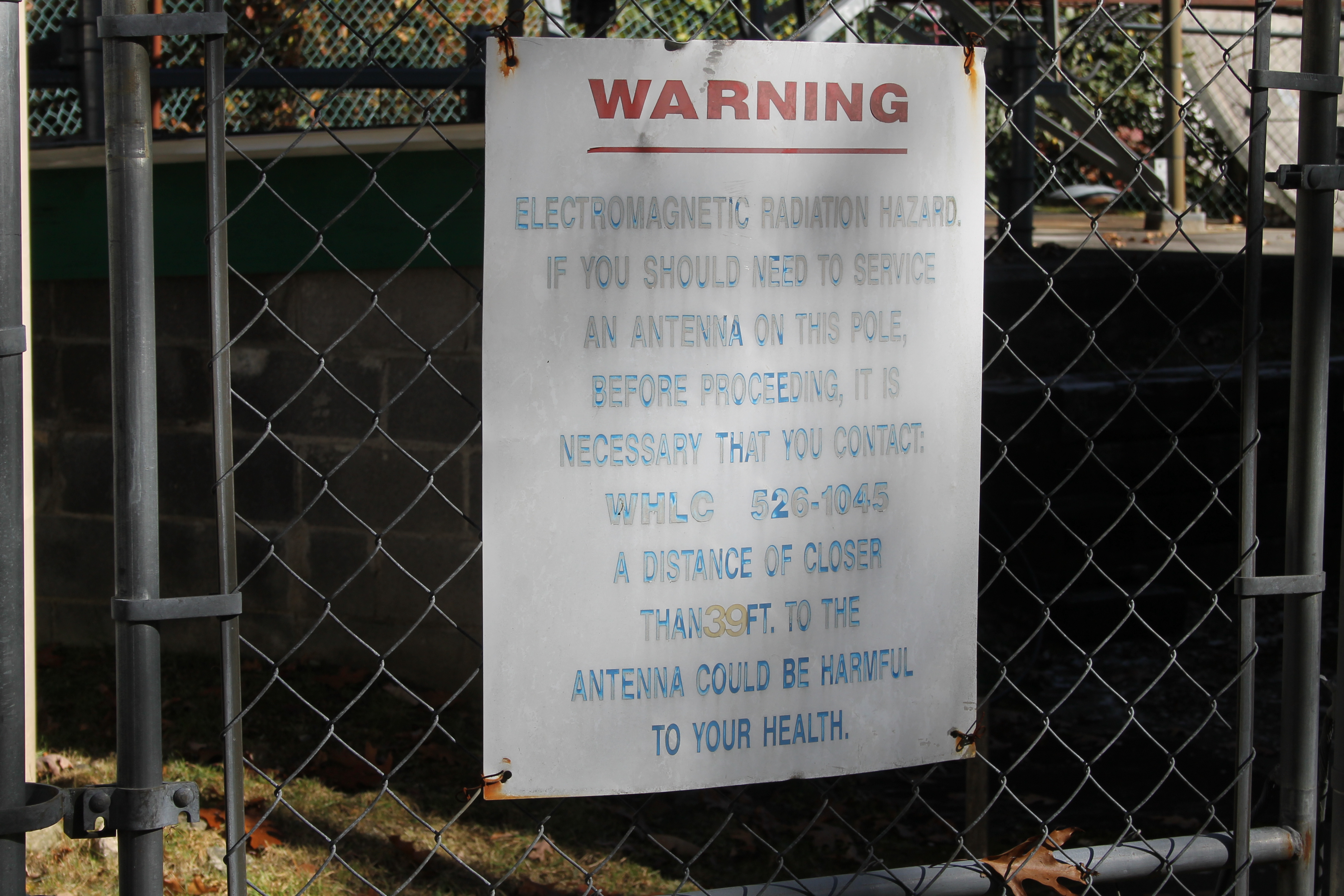
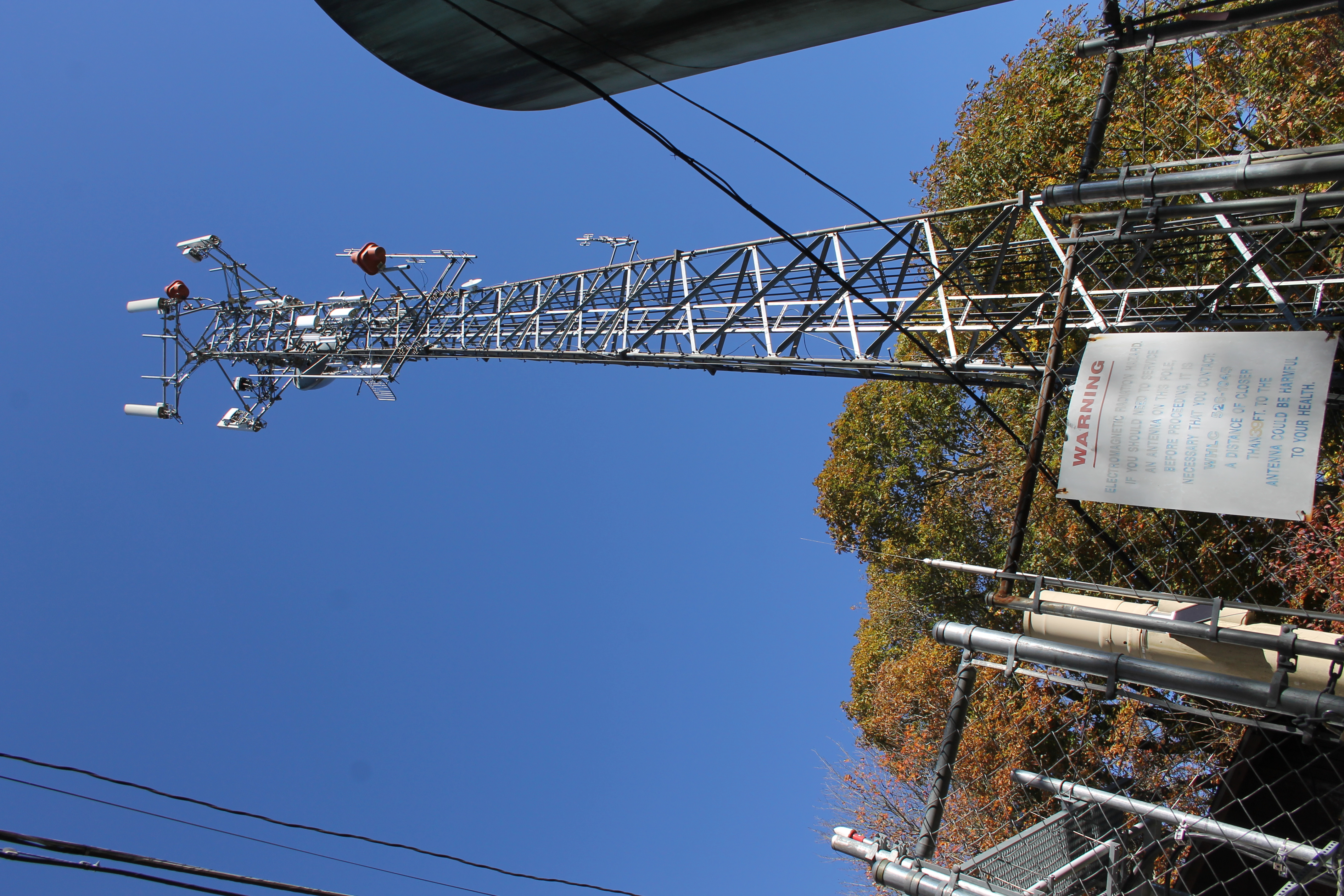
The Big Bear Pen communication tower
During meetings that stretched over three months, the Big Bear Pen communication tower has been a discussion topic that WHLC’s owner Chuck Cooper has labeled as miscommunication between Verizon, the town and the radio station.
MIS director Matt Schuler brought up the topic at the Aug. 19 meeting of the Highlands Board of Commissioners saying that town manager Josh Ward contacted him to look at the Big Bear Pen tower because Cooper had concerns that Verizon’s antennas were too close to his.
“I started doing some research and flew the drone to the top of the tower,” Schuler said. “Verizon has had some capacity issues over the summer as the population swells. So, about a month back, Verizon had dispatched their contractors out to the area, and he was going to change the radio. Mr. Cooper already had concerns that the antennas were a little too close to his.”
Verizon mounted on the tower at 100 feet, which is what the town approved back when the town allowed Verizon to get on the tower.
“They are mounted on the position that they are supposed to be at,” Schuler said. “From what I can tell, Mr. Coopers antenna is about two feet below what we filed for with the FCC and that may be some of the issue.”
Cooper said that he was at the original meeting when the town approved Verizon to be on the tower, and said Verizon agreed that they would stay one wavelength away.
“One wavelength away is 10 feet,” Cooper said. “They agreed that I could be present to make sure we kept that separation. It turns out they did not let me know and I was out of town and unavailable when they mounted. They actually mounted closer than they said they were going to mount. They went as high as they could go. The problem the other week was that the contractor called me and told me that he had to move the antennas closer to the FM antennas and I objected to that. Later, he climbed the tower and called me and told me that we were actually only five feet apart. I think the original problem originated because the original mounter went ahead and mounted and didn’t coordinate or let us know when they were going to do it. If we had that opportunity, we could have solved it. We need 10 feet. Moving up two feet is not much, but anything will help.”
The Aug. 19 meeting ended with Schuler having to do more research on the tower, and a safety inspection because of loose cables on the tower.
On the Sept. 16 meeting, Ward gave an update on the tower situation.
“Matt Schuler said that he spoke with Verizon, and they would figure out if they could move down two feet,” Ward said. “We also found out that the cable coming off the tower was the town’s and it had broken off one of the connection points and our guys went up there the next day and corrected that.”
At the Oct. 21 meeting, Schuler said the town staff requested documentation from Cooper detailing the amount of interference on the tower, but it was not received by the time of the meeting.
“I requested that Verizon move two feet as part of a solution and they agreed to do that,” Schuler said. “But last week, Verizon tried to go to the tower, and Mr. Cooper refused to lower the power to a safe enough level. For those of you that have a cell phone with Verizon, it doesn’t work too well in Highlands. Verizon is aware of that, and they have been attempting to make this change since July 12.”
Schuler said on Oct. 14, the Verizon contractors were trying to make an upgrade, but were unable to do so because the power was not turned down.
“Each climber has a personal power detector, and that detector was at 100 percent as they climbed halfway up the tower,” Schuler said. “They preceded to climb up, and as they got to the top of the tower, their alarms were going off at 200 percent, because WHLC would not turn the power down any lower. So, the climbers immediately came to the ground.”
Cooper said he did not receive any calls from Verizon while they were on the tower on Oct. 14, and they had turned down the power twice.
“Steve Day was on duty that day and he turned down the power,” Cooper said. “I was in town that day, but they didn’t ask for me to be there. They had my cell number and the station number, but I wasn’t called by the supervisor. At the control center, it is more of a fine-tuning thing, which is the best way I can explain it. We don’t have complete control over the power, but he lowered it down as much as he could. It wasn’t sufficient for them, and they suggested jut turning the power off and Steve said he wasn’t doing that. I wasn’t called, I wasn’t consulted and didn’t know about this until that night. I called the supervisor that night and he didn’t call back until the next day and said they had a problem because there wasn’t enough power reduction. I apologized and told him that I didn’t know that. So, what we decided is that if we can’t get the power low enough, we will go to our auxiliary transmitter. We want to make sure that we are still there and able to broadcast at least to Highlands.”
Upon discussing with the town board, Schuler pulled out WHLC’s lease and found out it had expired back in 2019.
“WHLC’s contract is currently dead,” Schuler said. “Mr. Coward will have to redraft a new contract. Another thing I want to bring up is that Mr. Cooper is behind on his lease payments and owes the town $4,700.”
Cooper said he got behind on the payments due to COVID, but all payments were paid as of today.
“I missed that the lease expired, and they didn’t see it, as well,” Cooper said. “Like many businesses during the height of the pandemic, we got a little behind on some bills. We are catching up, but we were able to keep all of our employees on and we were able to keep going and broadcast COVID messages every day with Mayor Taylor. We are now negotiating a new lease and as of today, that bill is completely paid.”
With the increasing need for better cell phone service, Cooper said he is willing to cooperate with Verizon.
“We certainly hope and will cooperate for better cell service,” Cooper said. “We just hope that the town will help us, as well. We just want to stay on top as we have been since the 1990s. So, we are cooperating, and we are not trying to impede this in any way. In fact, I was the one back in the 1990s that said we need to think about our cellular coverage.”
Diana Alvear with Verizon said they are constantly trying to work to improve the network in Highlands.
“Our teams are constantly analyzing our Network to ensure our customers and the communities we serve continue to receive the best-in-class service they have come to expect and deserve,” Alvear said. “Upgrading this cell site is just one example of what Verizon does to ensure we provide the best network for our customers. Verizon constantly invests in our network to deliver our customers the quality experience and reliability they expect and deserve.”
Last week, Ward, Taylor, Cooper and Verizon representatives met to coordinate a time for Cooper and Verizon to start construction on the tower.
“This was a coordination meeting to ensure the timing of our upgrade activities would not impact other stakeholders,” Alvear said.
“During the meeting, I pleaded again for 10 feet of separation, but they said no,” Cooper said. “They did agree to move down two feet and horizontally two feet. So, that at least gives us four feet of separation.”
On Monday, construction workers and Cooper were at the Big Bear Pen tower and completed moving the antenna down two feet and horizontally two feet.
- By Christopher Smith