
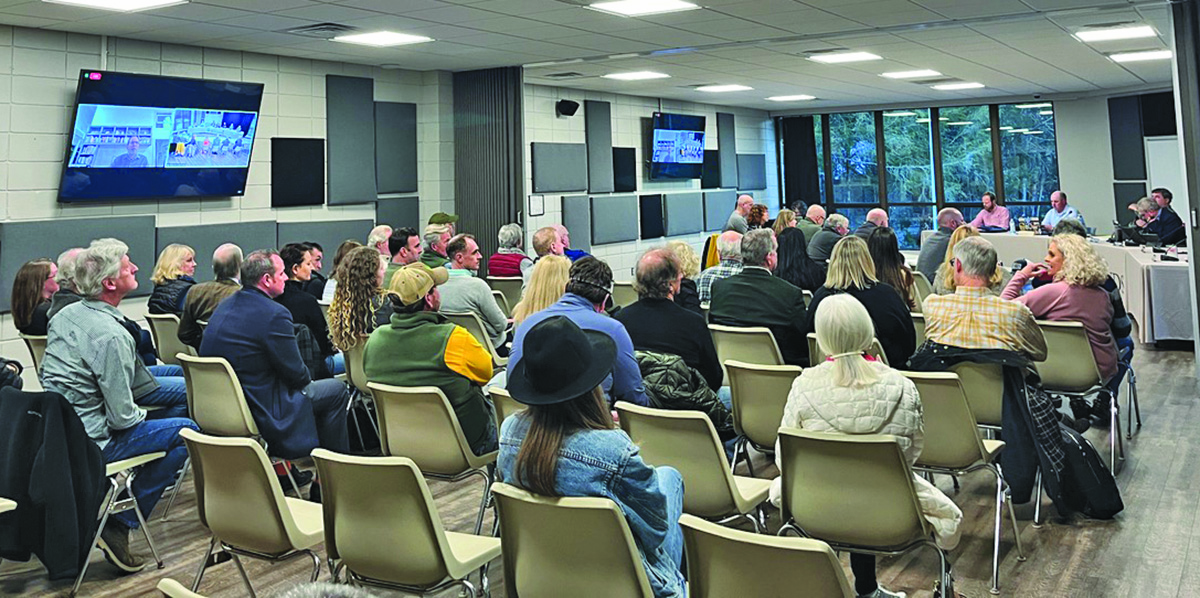
The Town of Highlands and members of the business sector took the first step in a much-needed mutual conversation on how to benefit each other in last week’s Board of Commissioners workshop.
The business roundtable has been in the works for the past few months, with Mayor Pat Taylor saying he’s heard feedback from business owners that feel the town doesn’t adequately support or foster business and economic interests.
Several members of the business sector spoke before the commissioners to relay their concerns. Hot topics included the ever-present problem of affordable workforce housing, town ordinances that may inhibit business ventures and operations, use of occupancy tax, and promoting businesses that may lie outside the town limits or off Main Street and out of mind.
Workforce housing
Healthy, thriving communities rely on their workforce, and in order for a workforce to produce and retain workers, workers need a reliable, affordable place to live.
Mike Bryson, president of Bryson Enterprises LTD, which owns Bryson Grading & Paving, said he’s glad conversations are beginning, but he feels the town should make a stronger effort toward employee housing.
The Highlands Chamber of Commerce approached Dogwood Health Trust to begin a community housing study, similar to the one conducted in Cashiers. The chamber and Dogwood have met to plan the study, and a grant application is in process to fund the survey.
“For it to go forward, it’s going to require public and private collaboration,” said Tricia Cox, former chair of the chamber and broker and vice president of Berkshire Hathaway.
Richard Delaney, president of Old Edwards Inn & Spa, recalled a conversation earlier during his 16 years in Highlands. He broached the topic of workforce housing, and at the time was told it wasn’t the town’s responsibility, but rather that of the private sector.
“Lack of workforce housing is like a cancer. It will slowly ruin the town if the people that work here, shop here, and spend money here cannot live here. It can’t just be a private sector issue,” Delaney said.
Another factor of workforce housing the town and county must figure out is determining who is eligible for workforce housing and determining how they can keep that housing. For instance, if an employee is offered housing through their employer but they later quit the job, what happens? Additionally, what happens if an employer takes advantage of their employee, knowing they can’t quit their job or else risk losing housing?
Clarissa Powell, owner of The Stubborn Bull, formerly known as The Stubborn Seeds, walked to the front of the room to voice her opinions on this crucial factor.
“I feel the conversation on employee housing is, at this point, way behind the eight ball. We’re missing the mark when it comes to strong leadership in our businesses,” she said. “How am I supposed to find professionals, a lot of which are going to have families, that can help lead the younger employees if there’s no stable environment to bring them into?”
Powell said she considers this a crisis, and she thinks the town is improperly focusing on minor issues. Powell said she lives an hour and 20 minutes away from Highlands.
“Even though I can own a business here, I can’t afford to live here. What’s being changed and talked about is things like string lights, which seem so arbitrary in the grand scheme of things,” Powell said. “Why do we care so much about non-obtrusive lighting when I can’t hire professionals to run my businesses because there’s literally absolutely nowhere for them to live, not even a tiny home that’s remotely affordable?”
Ordinances
Several speakers from the business side brought up town ordinances, which they believe to be restrictive to operation. Signs, lights, and parking are all pressing issues.
The ordinances discussion brought a briefly heated exchange between Steve Hinkie, an owner of Art Highlands Gallery, and the mayor.
Hinkie claims the town’s uneven enforcement of ordinances like signage and lighting have detracted from his business.
“We really tried to work our way in and it hasn’t worked,” Hinkie said. “I need to have people know we’re here.”
Hinkie said his business was severely over their opening budget, in part because they put a lot of money into a worn down building since no other options were available. Due to this, Art Highlands wasn’t able to get an official sign, so they put up an open sign outside the door, which was then removed by Highlands Police.
Hinkie said a predatory pattern emerged. He would put the open sign up, which violates Highlands sign ordinances. The police department would then ask him to remove the signs, and again he would lose potential clients because they wouldn’t know his story existed or was open. Hinkie said the sign removal violated his first amendment rights and the town unfairly enforced policies.
“That open sign exists on five other businesses in town separate from their building,” he said.
A similar issue Hinkie and co-owner Beata Gola, has had is lighting. The town has been discussing light ordinances recently.
Gola said she has put up lights for the safety of their business and clients who may walk by and has been contacted by the town to remove them. She said she will not yet remove them as she has no other alternatives.
“This is a very small, intimate community, yet we feel a disconnect,” Gola said. “I feel like we have been targeted and selected.”
Speaking on behalf of Berkshire Hathaway’s Highlands office, Cox said she agrees signs need to be addressed, especially on the real estate front as that generates large revenue for the town. Cox echoed similar grievances of unequal ordinance enforcement, particularly on the aesthetic front.
“I find it a little absurd, maybe, that people can literally paper their windows, which does not look good, versus being able to put a very elegant, lighted sign in a window on Main Street,” Cox said.
On the bright side, the mayor did say Highlands is working on reviewing ordinances. Town Attorney Bob Hagemann will be reviewing the Unified Development Ordinances in the coming months to determine what Highlands may need to update, change, or address. It will be a long process, though, and it will require community feedback.
Proactive progress
Other topics were discussed in the workshop, including use of occupancy tax, outdoor recreation, and how Highlands handles changes.
Jim Tate, owner of Tate Landscaping, said he believes the town is in a box due to their zoning regulations. He claimed there is no room for commercial growth, which routes growth to the outskirts of town limits, which could impact infrastructure not equipped to handle it. For instance, this requires individual septic systems versus larger sewer systems, which could have environmental impacts.
For Delaney, he believes the town should accept change and use that to help businesses stay busy, particularly in the slow season.
“Why do businesses need to be busier? That’s because that’s how we live, that’s how our employees live, that’s how their families live, and that’s what makes this town sustainable, strong, and viable,” Delaney said.
The business sector also said the town must also give attention to businesses that lie beyond town limits or are immediately present on Main Street. George Powell, owner of Highlands Aerial Park in Scaly Mountain, said outdoor recreation is the highest revenue generator in North Carolina. It’s diluted some in Highlands, he said, but the town should still work to celebrate and promote outdoor-related businesses rather than the same hiking trails.
“People ask what there is to do in Highlands. Well, there’s Whiteside Mountain Hike, there’s Dry Falls. All of those are great, but they don’t employ anybody, they don’t generate revenue, and they don’t give back to the community in donations and contributions,” Powell said.
The chat concluded with commissioners and the mayor thanking all parties for their effort. Commissioner Jeff Weller said these conversations need to continue. He thinks it would be prudent to resurrect an old business relations committee, and have two commissioners sit on it who could field business-related concerns. The mayor also said the conversations should continue, though they were pressed for time with the board of commissioners meeting following the workshop.