
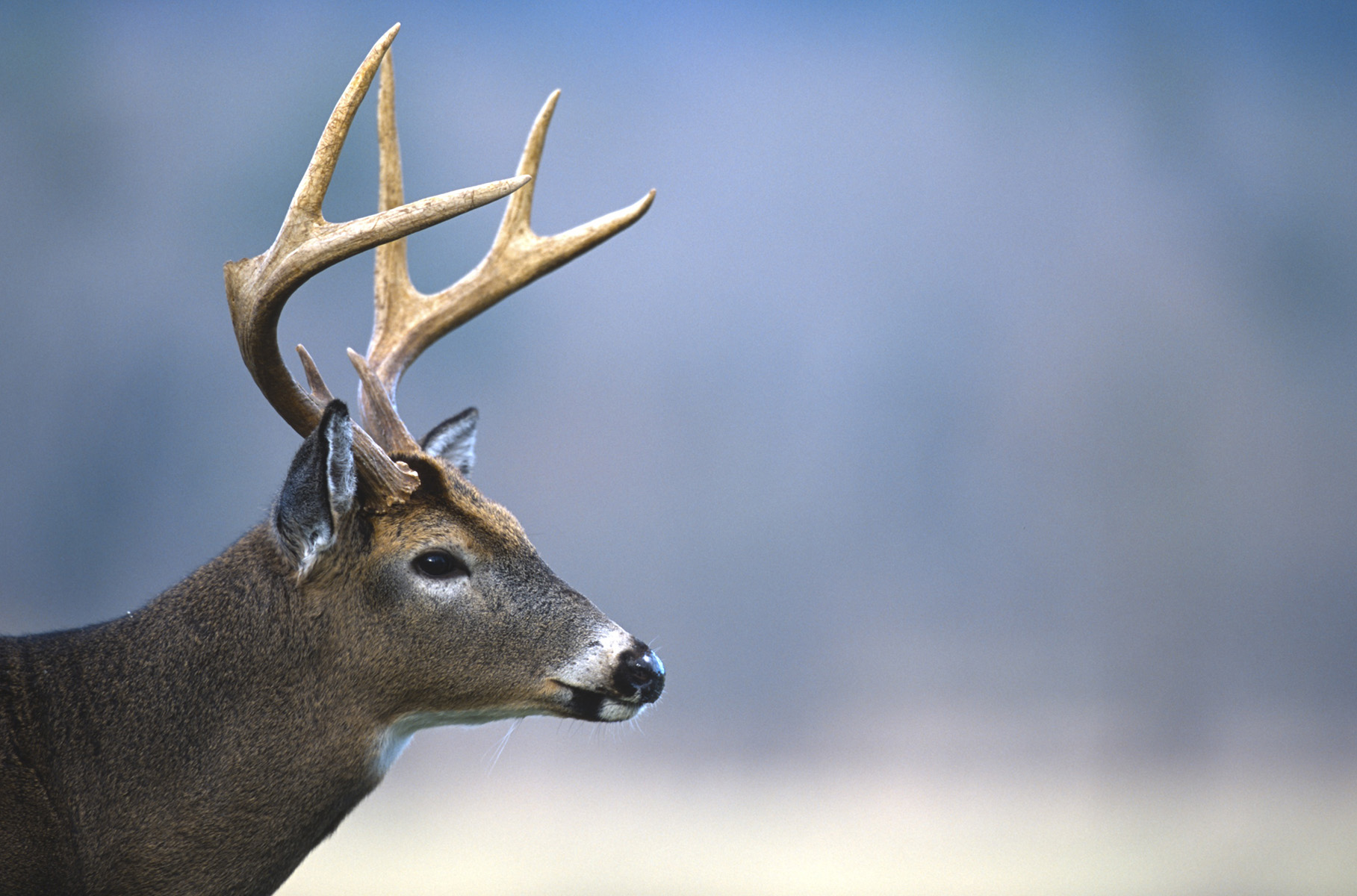
One of the most active hunting seasons in Western North Carolina, deer hunting’s gun season, is in full swing.
Justin McVey, state wildlife biologist for Western North Carolina, said the state Wildlife Resources Commission monitors deer populations through harvests, which continue to grow each year.
The Western Deer season, which encompasses 17 counties, began Sep. 11 with archery and Nov. 22 with firearms.
Archery season in the west will reopen Dec. 12-Jan.1 for antlered deer only, and gun season continues through Dec. 11.
The first stretch of black bear hunting in western counties ran Oct. 18-Nov. 20, and the second stretch opens Dec. 13, running through Jan. 1.
With the season underway, McVey said harvests are trending up in Macon County.
“If we are looking at Macon County, there have been 579 deer harvested and the three-year average has been 541,” McVey said. “It looks like it has been a pretty good year for folks.”
For the Western region as a whole, 10,804 deer had been harvested by Nov. 29, according to the Wildlife Resources Commission, compared to the average over the past three years of 8,406.
Officials also use the rate of harvested antlered bucks per square mile as a metric for the health of the deer population, McVey said, noting Macon County’s current rate of 1.61 in 2020.
“We are getting to a point where there are enough deer that are reproducing,” McVey said. “We have limited our doe harvest in a lot of these counties and as a result, you get increased breeding and increased fawn drop. So, what we are seeing is a result of that. We want to get the deer numbers a little higher than they are.”
After taking a dip in the 2018-19 season, deer harvests across North Carolina have climbed to new highs, with just under 170,000 deer harvested in the 2020-21 season, according to the Commission.
The vast majority, almost 77 percent in the 2020-21 season, are taken by guns, followed by black powder, bows and crossbows.
In Macon County, there have been 511 deer taken by guns, 53 by black powder, 188 by crossbow and 189 by bow.
From around 20,000 in 1976, deer harvests have generally climbed year-over-year, according to Wildlife Resources Commission data, peaking in 2013-14 with 188,130 statewide.
According to the Commission, the state’s deer population was as low as 10,000 individuals in 1900, a population now around 1 million.
In Macon County as of 2020, there are an estimated 11-20 deer per square mile outside municipal boundaries and other places where hunting is limited or prohibited.
Sales of new hunting licenses, including those that include fishing licenses, have increased from a low of 216,048 in 2018-19 according to information provided by the state, and at 231,076 in 2020-21, haven’t reached the level of 265,903 sales of 2013-14, after which the numbers began declining.
While new sales decline, the total number of people holding licenses increases steadily year-over-year, up to 609,131 in 2019-20 from 521,717 in 2011-12, according to state data.
Those numbers include both hunting and fishing combination licenses, and include any person with the privilege to hunt or fish at any time during that year, according to information provided by Janice Underwood, IT director with the Wildlife Resources Commission.
Staying safe on the stand and trail
The deer rut, or mating season, is expected to peak in the Western hunting zone around Dec.3, according to the Wildlife Resources Commission, including Dec. 5 in Macon County.
McVey said the deer rut is when deer, and deer hunters, will be more active. It’s the time that mature bucks, which hunters are most interested in harvesting, are chasing does.
For folks who may be taking to hiking trails during hunting season, it’s not required, but he and the Wildlife Commission recommend wearing blaze orange to increase visibility.
“Hunters are very responsible, and they’re not just going to shoot at movement,” he said. “However, it’s a good idea if doing recreation on public lands during deer season to wear blaze orange to make sure.’
Hunters are required to wear it, and any hunter on private property must have written permission, dated this year, on their person, McVey said.
When it comes to where to hunt, the state Wildlife Commission offers maps of public game lands, of which Sandy Mush in Buncombe and Madison Counties is probably the most popular for deer hunting locally, he said.
It’s illegal to hunt on National Park property like the Blue Ridge Parkway and Great Smoky Mountains National Park, but hunting is allowed in most U.S. Forest Service lands and state game lands.
For hunters, McVey and the Wildlife Resources Commission offered some safety tips, especially for staying safe in elevated deer stands.
“Make sure somebody knows where you’re going,” McVey said. “If you’re going to be hunting from an elevated stand, make sure you use your safety harness.”
According to the Wildlife Resources Commission, 10 tree stand incidents were reported in the fall of 2020, including one that was fatal. In all instances, the individuals weren’t wearing a safety harness.
Tips from the Commission include:
• Remove all equipment and inspect it before using. Replace any damaged equipment.
• Purchase a full-body safety harness as part of a fall-arrest system.
• Do not exceed maximum height or weight limits.
• Select a healthy, straight tree.
• Ask someone for assistance setting up the stand.
• Buckle the harness securely and connect it to the tree tether before climbing the tree.
• Maintain three points of contact with climbing: two hands and a foot or two feet and a hand. Most falls happen when climbing or descending.
• Use a lineman’s belt and/or lifeline when climbing or descending.
• Raise and lower all equipment with a haul line; never carry anything as you climb.
The Commission also is reminding hunters to practice safe handling when field dressing and processing harvested deer. This reminder follows in the wake of recent studies in Iowa and Ohio that confirmed infection with SARS-CoV-2 (the virus that causes COVID-19 in humans) in wild deer found in those states.
Officials with the Wildlife Commission are aware that many hunters and the public have concerns as to whether or not infected deer pose a risk to humans. At present, there have been no reports of transmission of SARS-CoV-2 from an infected deer to a person, and risk is thought to be low. According to the Centers for Disease Control and Prevention, there is no evidence at this time that animals play a significant role in spreading SARS-CoV-2 to people. The primary risk of infection to humans is from other people, and all persons should adhere to recommendations and strategies outlined by the NC Department of Health and Human Services.
“There is a lot we still don’t know about SARS-CoV-2 infections in deer, but we do know deer can be infected, and that is a good reason for hunters to continue using safe handling practices with their harvested deer,” stated Moriah Boggess, deer biologist with the Wildlife Commission.
Boggess suggests that hunters continue to follow basic safe handling precautions when handling any wild animal they harvest, as has been recommended for many years, including:
• Do not eat any deer that appears sick.
• Do not eat the eyes, brain, spinal cord, spleen, tonsils or lymph nodes of any deer.
• Wear rubber or latex gloves when handling your harvest and wash your hands afterward.
• Minimize contact with the brain, spinal cord, spleen and lymph nodes.
• Minimize contact with the respiratory tract, which includes the lungs, trachea, and mouth and nasal cavities.
• Clean knives and equipment of residue and disinfect with a 50/50 solution of household chlorine bleach and water.
According to State Epidemiologist Dr. Zack Moore, “Vaccination is the best way to reduce the risk of COVID-19. Safe and effective COVID-19 vaccines are available for everyone 5 years of age and older. To find a vaccination appointment nearby, visit MySpot.nc.gov.”
There is no evidence that COVID-19 can be contracted through food consumption, including venison. As always, hunters should practice safe venison handling precautions; raw meat should be stored below 40˚F and cooked to at least 165˚F before consumption.
- By Christopher Lugo