
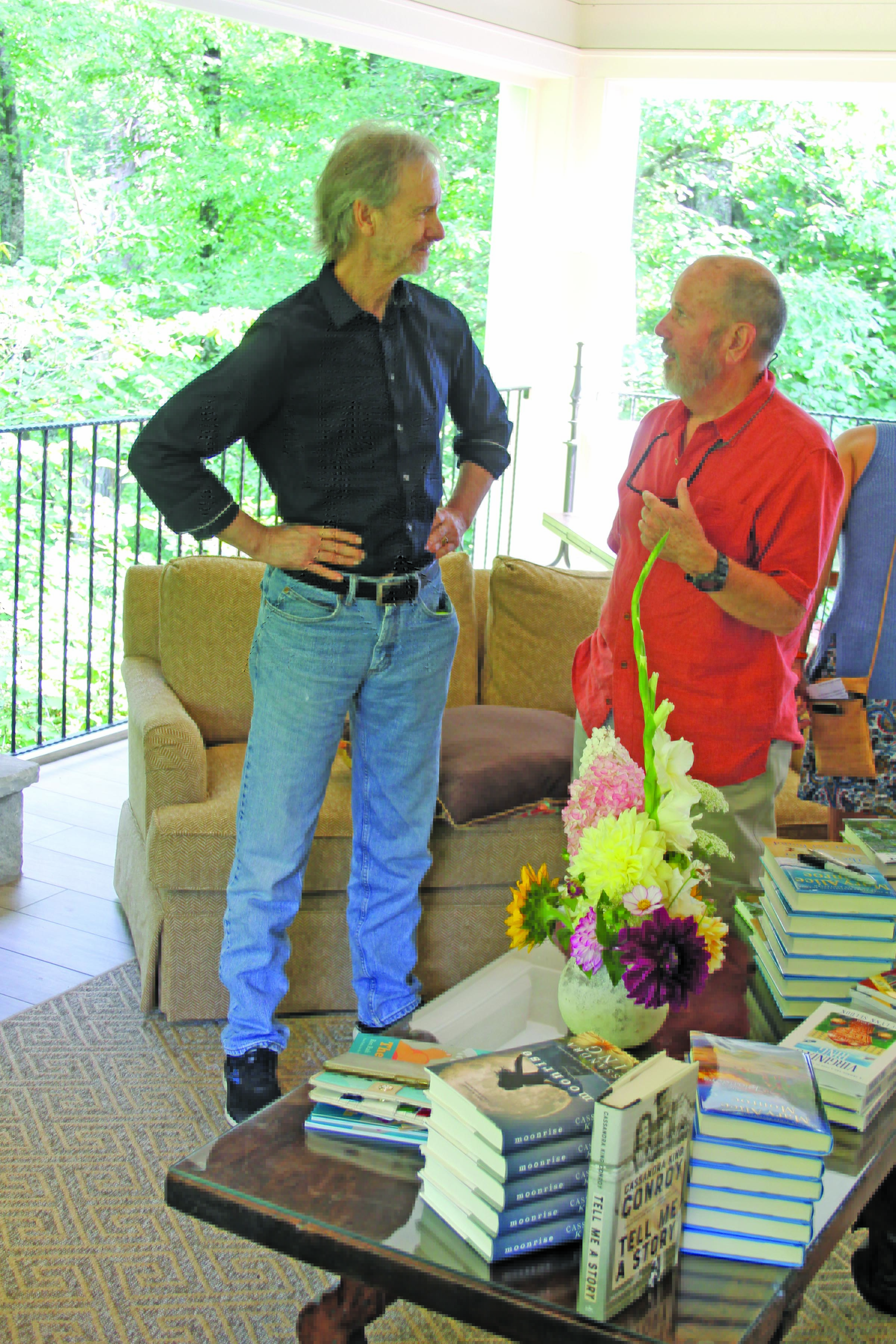
Rash, an American poet, short story writer and novelist, is the Parris Distinguished Professor in Appalachian Cultural Studies at Western Carolina University.
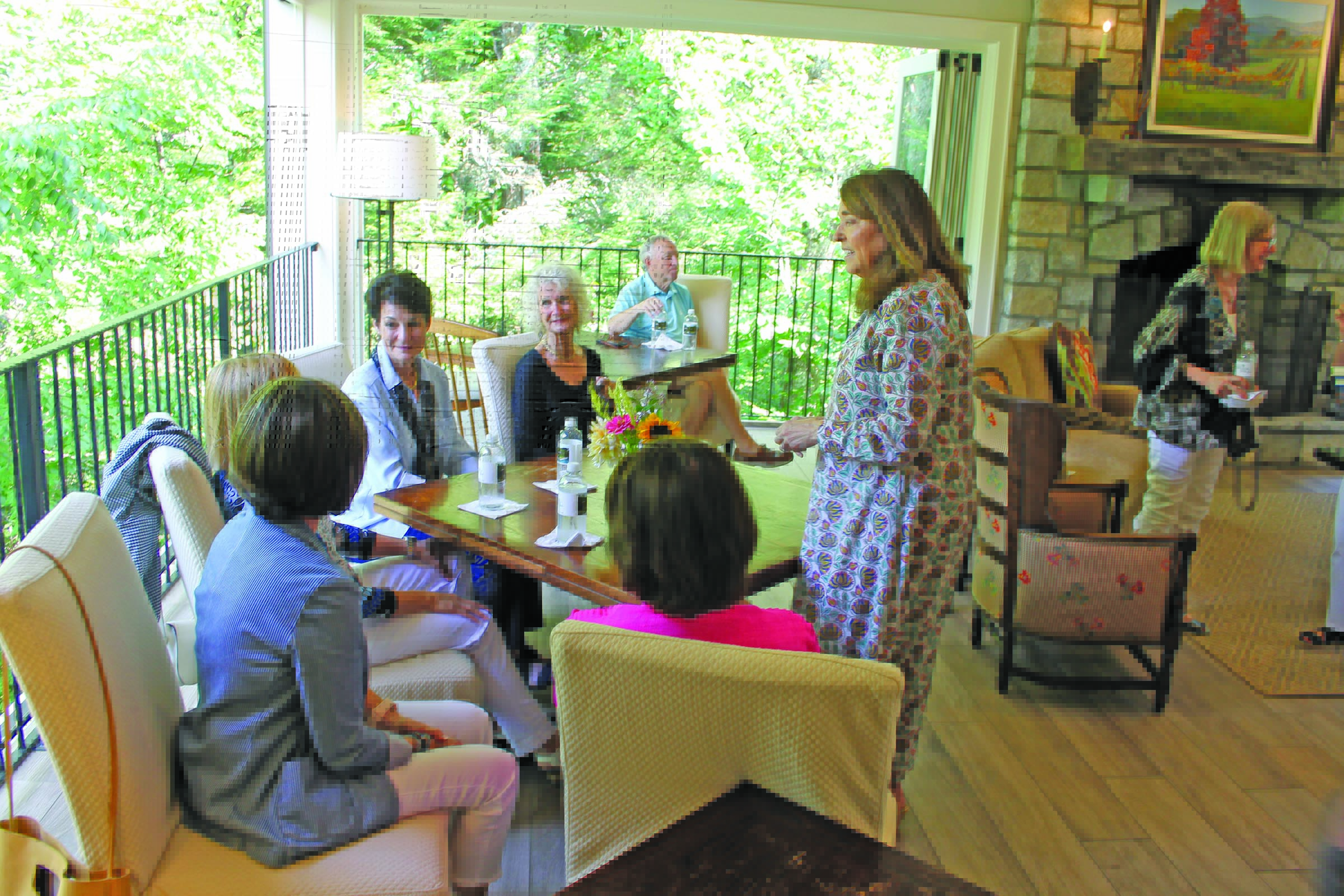
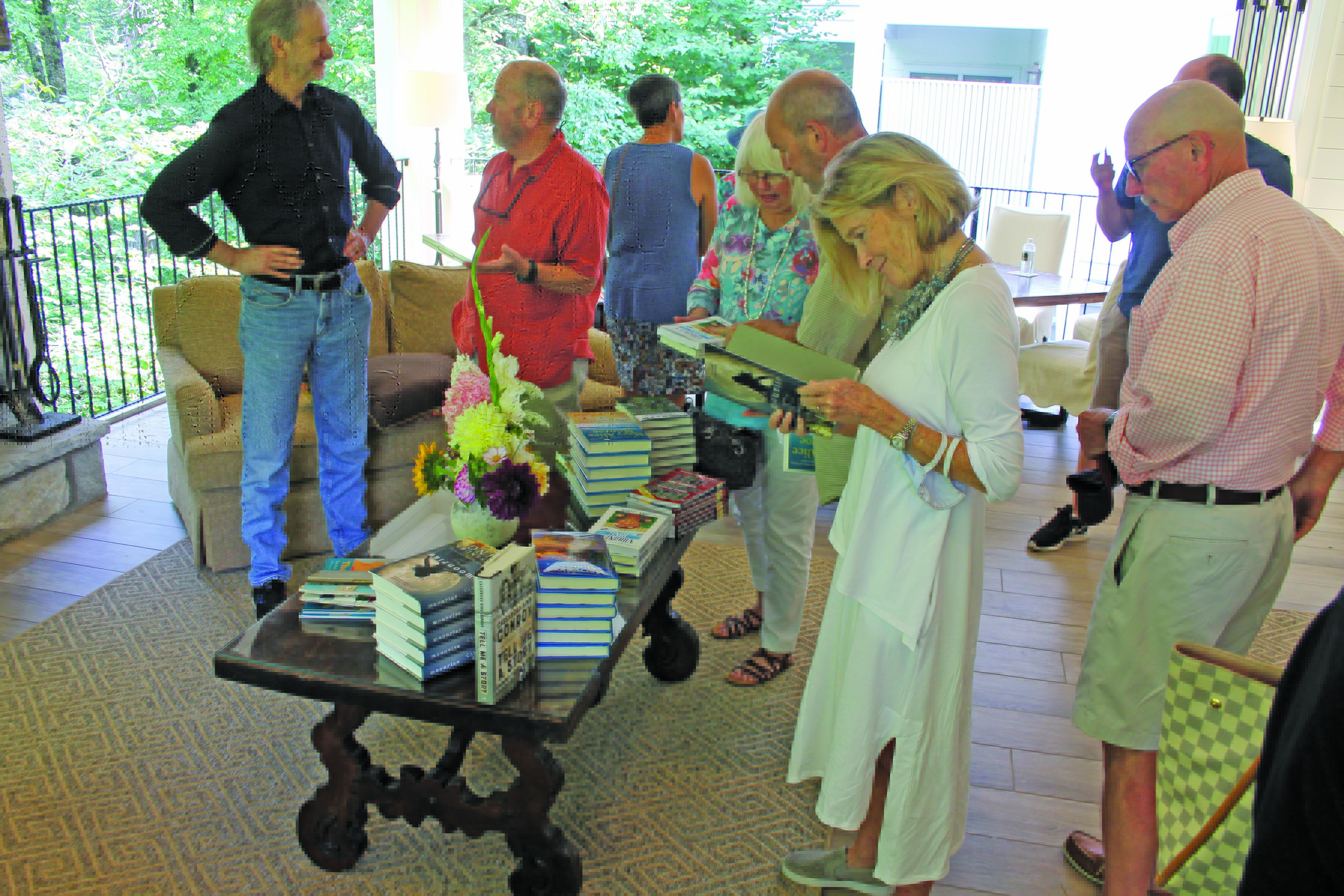
Half-Mile Farm recently held its first Southern Writers Series where residents on the farm were able to meet and get advice from contemporary authors such as Cassandra King, Ron Rash and Mary Alice Monroe, along with travel journalists Cele and Lynn Seldon.
Residents were able to enjoy social hours, breakfasts and a writer’s roundtable to find out the secrets of writing, the publishing process and the life of being an author.
With all of the authors being from the Western North Carolina area and several of their books set in the Appalachian area, they were asked why they chose to set so many books here.
“I think I started writing about this area because of the weather,” King said. “When the weather got too hot in the house, we would go outside on the porch with our families and tell stories. There is just something about a tropical, sultry climate that readers love to immerse themselves in.”
Most of Monroe’s books tackle an environmental challenge, so she said the setting of her books is always important.
“The landscape here just invites stories,” Monroe said. “I always get my stories from landscape, because I am inspired by it. I think this area is very unique. It is like nowhere else.”
Rash said he feels inspired by the rich history of southern literature that started in the Appalachian area.
“I always tell people that we have done a lot of things wrong in the South, but there are three things that we have done well,” Rash said. “We know how to make music, we know how to cook and we know how to write. I have always felt that has kind of exonerated us from a lot of things. I think once a place gets a tradition going, for example, with Faulkner and O’Connor in the 20s, you start getting a momentum. I think that has continued with Southern literature. Each generation is going to write differently, but I grew up not far from Highlands, but growing up and knowing that Thomas Wolf had written Look Homeward Angel, it made me believe that this is something that I could do.”
Getting into the process of their writing, the authors gave the residents a peak into their lives as writers.
“I know that a lot of people hear that writers write every day and that is just not me,” Monroe said. “For me, it isn’t about writing sentences on a page every day. I call it being present in the story. When I do research, I’m either out with animals or in the water, but I’m constantly taking notes. So, when they say writers write every day, you can still be writing, but it doesn’t all have to show up in the book.”
Rash said that he feels guilty when he doesn’t write every day.
“I think that Mary is right,” Rash said. “There are some days when I go in and all I do is a lot of thinking. What I found, for me, is that on a lot of the days when I don’t want to go in, I still go in and very often, something will come just because I showed up. Every writer does it differently and I think you have to find your way.”
When it comes to outlining, several writers find that it is easier, but the process of outlining was split amongst the authors.
“I try to stay away from outlining,” King said. “It takes me a few years to write a book, but I am always writing. It started in school. Anytime that we had to hand in an outline, I would have to write the essay first.”
They say that a picture is worth a thousand words and that is the case when it comes to Rash’s writing style. He said an image gets stuck in his mind and he obsesses over it.
“For me, it all starts with an image in my head that I just can’t get out,” Rash said. “I don’t outline because I’m working with just that image in my head. I’m hoping that image reveals itself and it almost always does. About a year in writing a book, I will always hit a spot where I just can’t get past it. I always just have to have faith that it’s there. I’m not Michel Angelo, but he always said that the completed statue is always in the marble.”
For Monroe, her writing process starts with an image on a wall, but it turns into an outline.
“I outline, but very loosely at the beginning,” Monroe said. “I always say that the outline is my map and if you have a good map, then you know where you’re going. I know that my research is done by the time that I start my first sentence.”
This series is the first to be held at Half-Mile Farm, but organizers say that after the large turnout on Monday, they may schedule more for the public, as well.
Rash, an American poet, short story writer and novelist, is the Parris Distinguished Professor in Appalachian Cultural Studies at Western Carolina University.
Monroe is a best-selling author known for fiction that explore the compelling parallels between nature and human nature. Many of her novels deal with environmental issues. For example, The Beach House and Swimming Lessons refer to the plight of injured sea turtles
King is the bestselling author of four novels, Making Waves, The Sunday Wife, The Same Sweet Girls, and Queen of Broken Hearts, as well as numerous short stories, essays, and articles. Moonrise, her fifth novel, is set in Highlands.
Seldon Ink is the travel journalist team of Lynn and Cele Seldon. They have spent more than 25 years covering their passion for travel. After a stint in the military overseas and getting bitten by the travel bug, Lynn has a flair for bringing their travels to life in words and pictures, while Cele, after a corporate marketing career, writes, edits, shoots, and handles marketing and research.
By Christopher Smith