
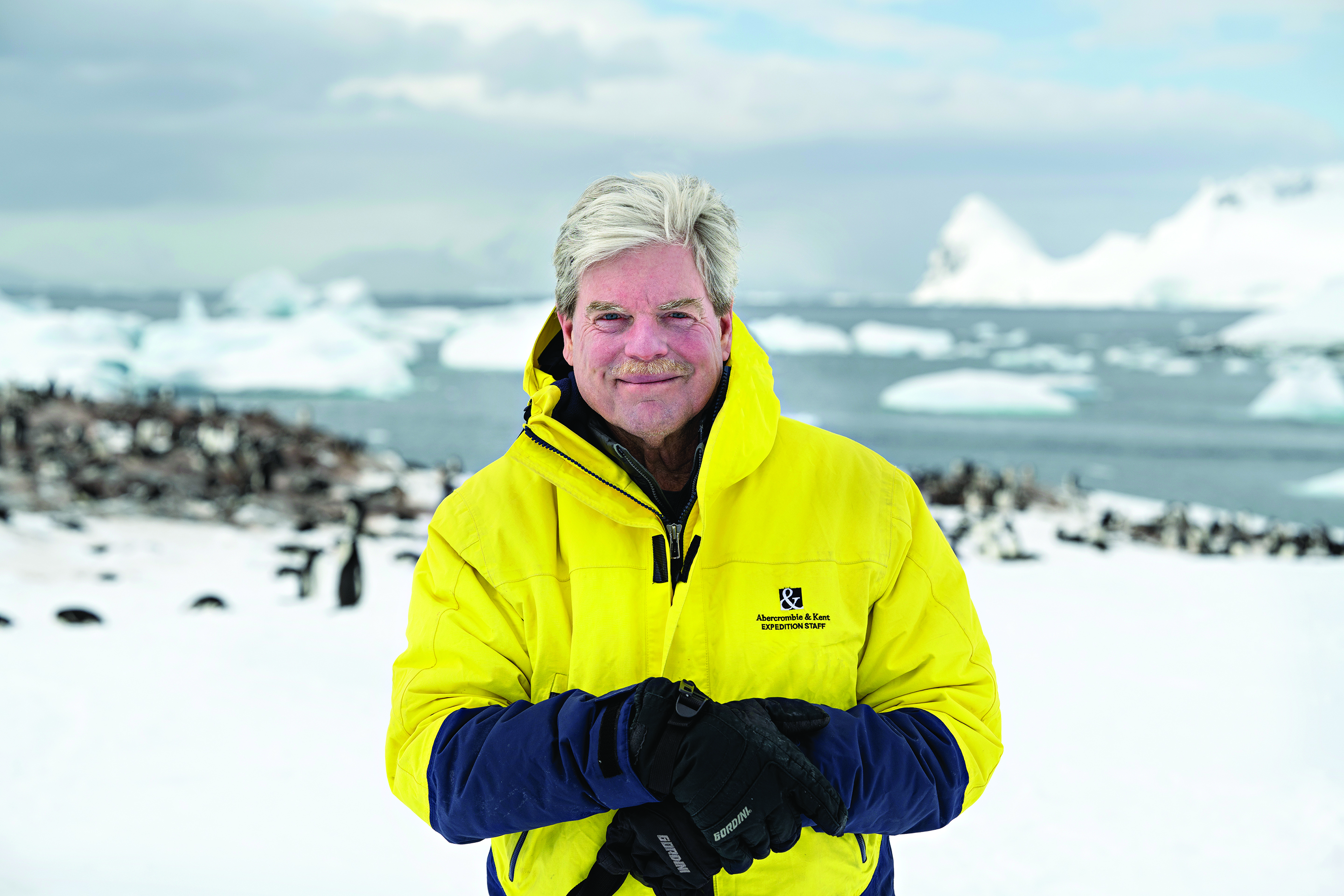
The Highlands Biological Foundation will welcome award-winning author, endowed professor of polar and marine biology at the University of Alabama at Birmingham and leading expert on the ecological impacts of climate change and ocean acidification on marine life of the Antarctic Peninsula, Dr. James McClintock on Friday, Sept. 23 for his lecture From Penguins to Plankton - The Dramatic Impacts of Climate Change in Antarctica at 5 p.m. with a reception to follow in the HBS Nature Center.
McClintock’s lecture will tell the narrative of a marine biologist working on the Antarctic Peninsula, which he describes as one of the most rapidly changing regions of the planet in terms of climate change, and the eye opening research he conducted on the impacts of climate change on the Antarctic organisms.
“I’m going to tell the story of how these changes are so dramatic, all the way from the tiniest of organisms, to the plankton to things like penguins and seals,” McClintock said. “So, it’s storytelling and it’s very much a general public talk. Then after I talk about these impacts, I’ll talk about what they mean to us here in North Carolina, because Antarctica is connected to the rest of the world, in terms of how it affects climate everywhere, and I’ll talk a little bit about how a marine biologist decided to focus on educating the public about climate change by writing books, lecturing, art, theater, it goes on and on.”
Since the state of North Carolina is about 9,000 miles away from Antarctica and has vastly different climate and ecosystems, it is only natural to wonder why Antarctica is important to North Carolinians; however, McClintock plans to highlight just how important Antarcticand the climate changes with in it is to the rest of the world , including North Carolina and beyond.
“Antarctica is a long way from North Carolina, so out of sight, out of mind,” McClintock said. “So I’m going to tell my audience in North Carolina about some amazing discoveries we’ve made for chemicals from Antarctic marine organisms that could cure melanoma cancer, could help fight bacterial diseases and infections, like Mrsa, and try to get them to appreciate that there is a huge wealth of diversity of chemicals in the Antarctic seas that would be squandered if we were to allow climate change to move forward. Also, right now one of the major realms of determining sea level rise is Antarctica. So as the ice melts in Antarctica, so goes coastal impacts along the Atlantic seaboard. And as you may know, sea level rise is predicted to be particularly a problem for the Gulf of Mexico and the Atlantic coast. So those are a couple of things that get people’s attention when they think about the work in Antarctica.”
McClintock and the staff at the HBS hope that those in attendance will leave the lecture feeling empowered and inspired to make a change in their own lives to help the planet and the nature around them. McClintock also hopes to help people change the way they have conversations about climate change, especially in the south, and to show people that those conversations don’t have to be confrontational or on a large, overarching scale.
“At the end of my talk, I give an example of a global event that’s occurred, that humans are responsible for that affected climate that affected our health that has been successfully addressed as an example of what we can do to address the burning of fossil fuel and the warming of the planet,” McClintock said. “It’s not impossible. I try to convey that when you talk about climate change with your family and friends that you don’t need to be confrontational, that you need to find common ground and you may want to talk about when the tomatoes are ripening rather than buying a Prius. So, there’s ways to convey these dramatic changes without coming to the point where the communication breaks down.”
In addition to his lecture at the HBS, McClintock is also currently offering an opportunity for those interested to visit Antarctica alongside him on a cruise with Abercrombie and Kent. The cruise, which has been led by McClintock for the past 15 years, will allow guests to get a firsthand view of the climate impacts occurring in the Antarctic and for them to return as ambassadors for the area.
For more information on the Antarctic cruise, contact Dr. McClintock at mcclinto@uab.edu. Additionally, more information on Dr. McClintock’s lecture and the Highlands Biological Station, or registration for the event, can be found online at highlandsbiological.org/falllecture/.