
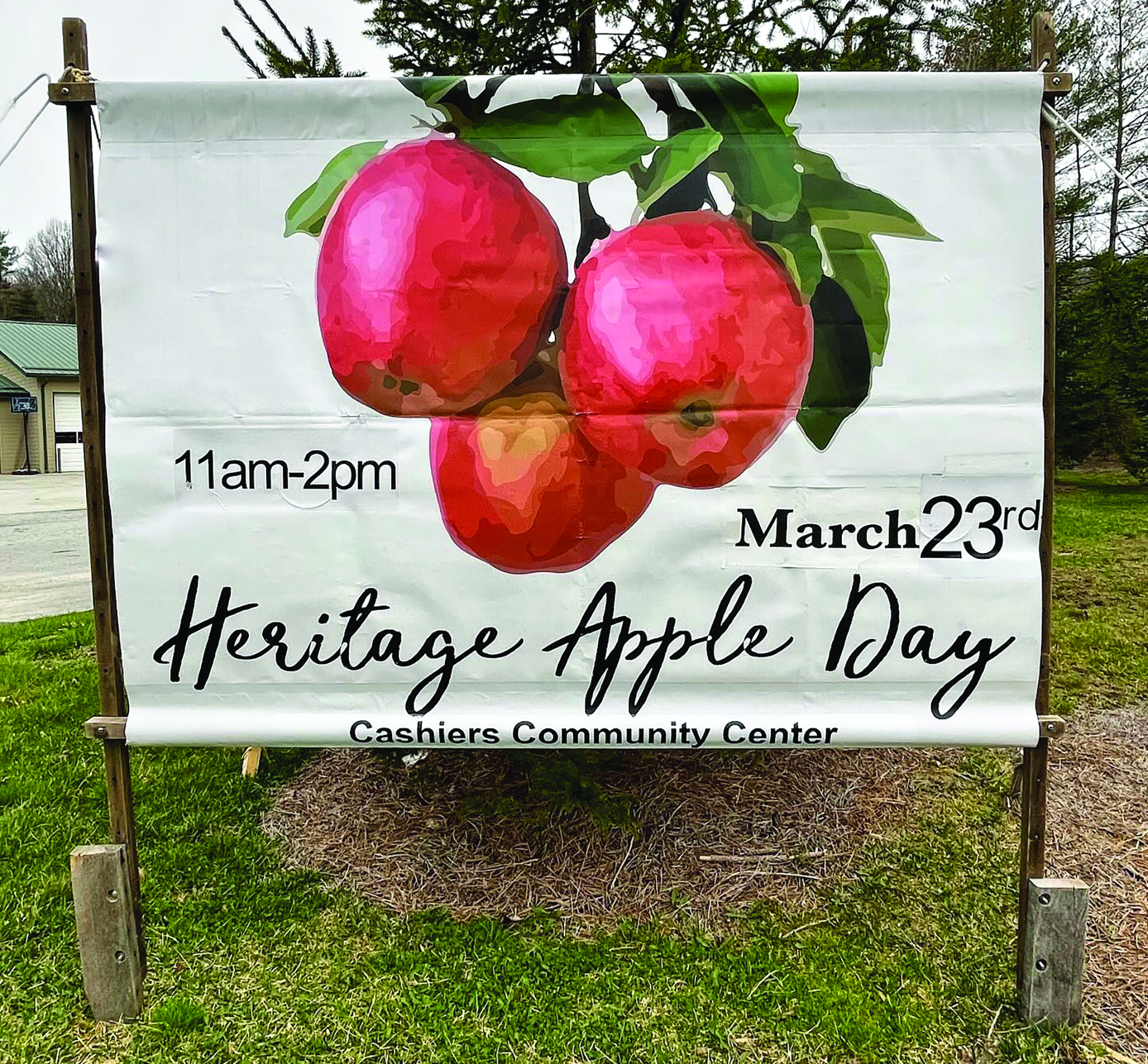
As the plateau wakes from its winter slumber, a community staple is returning to spread literal fruits of labor.
The Cashiers Historical Society’s annual Heritage Apple Day is returning Saturday, March 23 from 11 a.m. to 2 p.m. at the Cashiers Community Center near Boys and Girls Club.
Sandi Rogers, education director with CHS, met with The Highlander and pulled a faded ledger from the 1800s that belonged to Alexander Zachary. The ledger recorded his vast variety of 21 apple species, including some he grafted.
Heritage Apple Day is an homage to the early apple growers of Western North Carolina. Many apple tree branches hang low, which Rogers said is working smarter, not harder.
“A lot of your apple trees grow down,” Rogers explained, “They used to tie rocks to the limbs to weigh them down so they wouldn’t have to climb as high to pick apples.”
The mountains provided favorable conditions for growing. The crop became crucial for food and financial stability.
“Apples were really prominent. They were a cash crop,” Rogers said. “Farmers would grow apples for their food, and then anything else, they would take to South Carolina and sell.”
They could be prepared and preserved through a wide range of dietary staples, from treats to spreads to juice and cider, which Rogers said was often cleaner and more reliable than water. She joked some ciders likely fermented and became apple wine. Rotten apples were also given to animals.
Apple species used to be abundant, far from the select handful of species found in grocery stores. They have since been bred to produce the most common apples, and Rogers said many species in the Cashiers area were lost to disease. Few orchards remain in these mountains, but the Historical Society is planting a row of heirloom apples soon.
Heritage Apple Day is meant to reconnect the community after winter, welcome visitors, and, as the name suggests, celebrate apples and their early growers.
Heritage Apple Day will feature educational opportunities, children’s activities, tons of free food, and free apple tree grafts. Attendees can bring their own grafts or they can receive some from the Historical Society where John McCarley and Ken Fishcher will graft them. All factors are free, a gift from the Historical Society.
Rogers recommended storing potted trees on a porch or similarly sunny, protected area for a few years until they’re strong enough to be planted.