
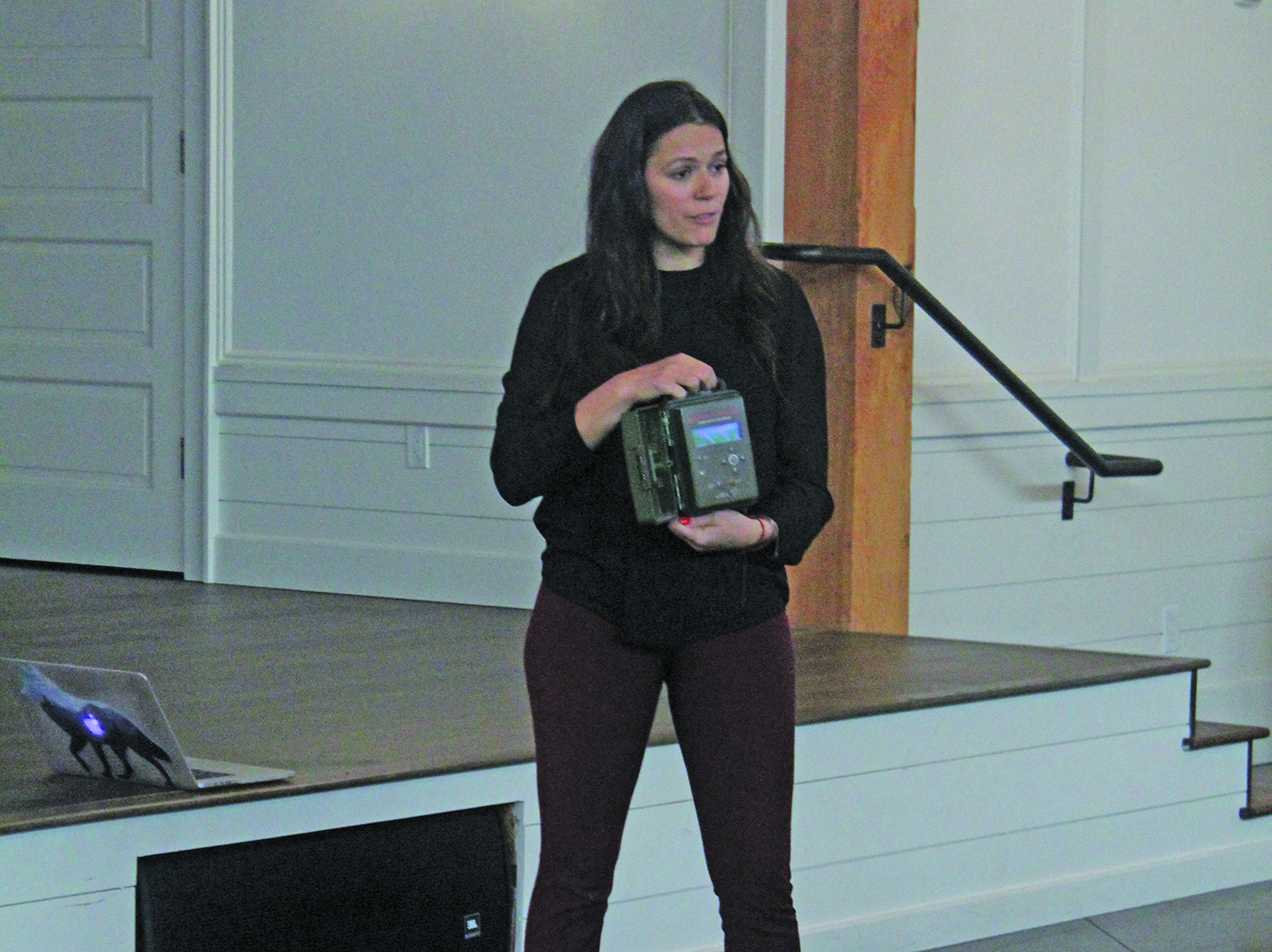
The Village Nature Series held its final lecture of the season on Monday, Oct. 25 on the “Secret Life of Bats,” featuring the director of the UNC Institute for the Environment at Highlands Field Site, Dr. Rada Petric.
During the lecture, Petric addressed a number of common misconceptions regarding bats, such as the idea that all bats are blind. In fact, Petric said that all bats are actually able to see just as well as people can, however, since they are nocturnal animals they rely more on echolocation due. To further get her point across, Petric asked the audience to think about how difficult it can be to see when out in the woods at night, she said it’s the same way for bats.
Other myths that Petric addressed was the idea that all bats suck blood or carry rabies. In reality, only about 0.5 percent of all bats worldwide carry rabies. Also, in regards to drinking blood, there are only three bat species, out of around 1,400, that actually suck blood and they only live in Central and South America regions. She also highlighted the fact that these three species are also unlikely to try and suck blood from humans due to the fact that they are much larger and can be perceived as predators.
In addition to debunking popular bat myths, the lecture also highlighted the ways in which bats are extremely important to an ecosystem and the environment as a whole, such as acting as a natural insecticide. This is because most bats are insect eating creatures and can eat up to their body weight in insects each night. In fact, throughout the U.S. bats help save up to $3.7 billion a year in reduced crop damage and pesticide usage.
The lecture also briefly discussed the ways that bats have come to be depicted in media as well as the cultural significance the animals have held in the past. Petric said that a lot of the myths regarding bats have spawned from inaccurate and negative representations within books and films, citing Bram Stoker’s “Dracula” as one example.
Petric concluded her lecture by informing attendees that the best way they could help protect local bat species, especially in the wake of the COVID-19 pandemic which has spawned a lot of hostility towards the animal, is through setting up bat boxes. Bat boxes are artificial roosts that provide safe environments for bats to live and raise their young.
The general guidance for installing bat boxes is to hang them around 12 to 20 feet high in an area that gets about six to eight hours of sunlight. It is also advised to build them near water sources if at all possible. Petric said that it is also important to avoid hanging the boxes on trees because bats can easily get caught in the trees, which makes it difficult to escape predators who are capable of climbing.
The Village Nature Lecture Series is sponsored by the Highlands-Cashiers Landtrust and the Village Green. This year’s series has officially concluded and should restart in May 2023. For more information on the series, visit the Village Green’s website at www.villagegreencashiersnc.com.