
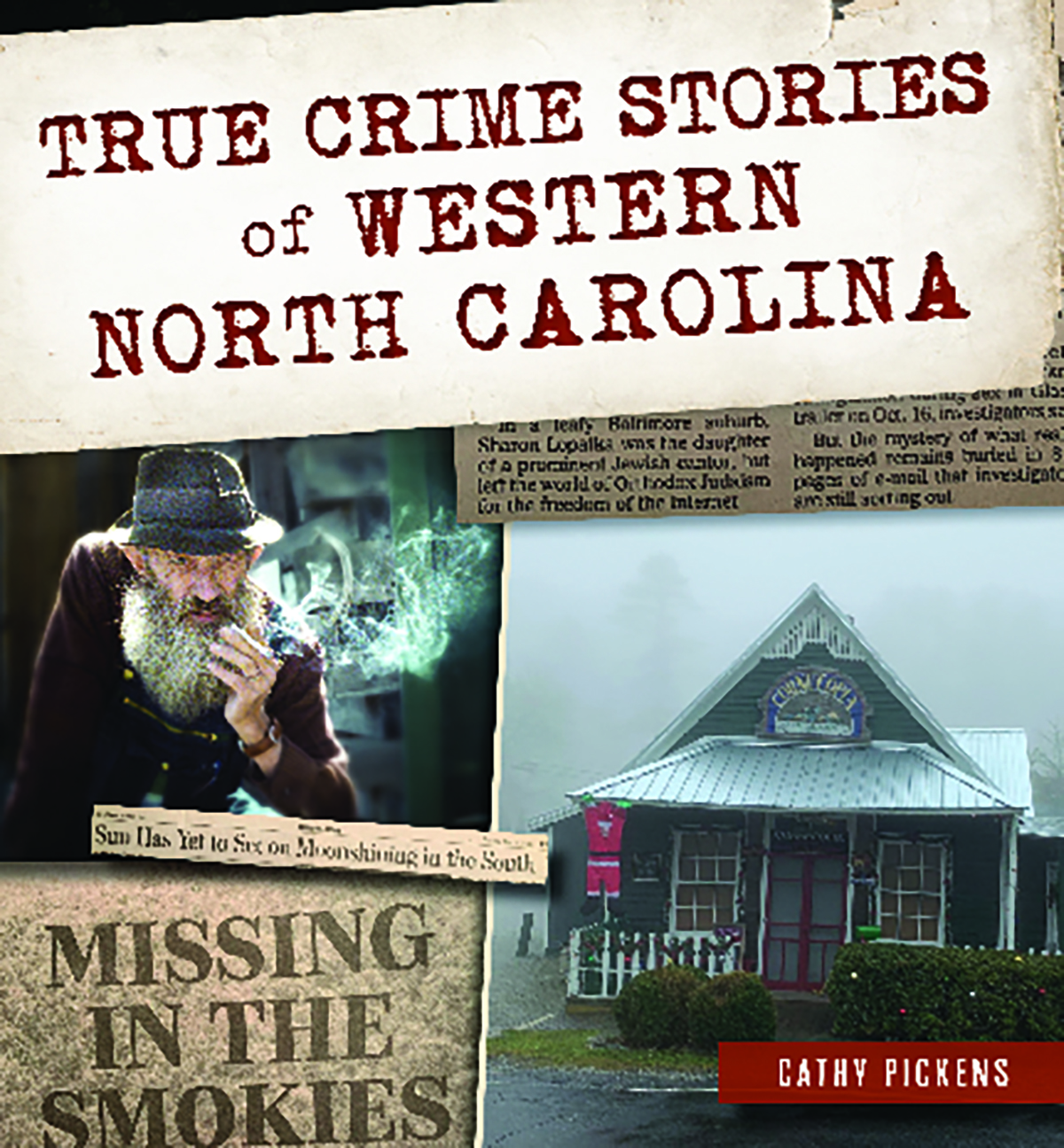
Cathy Pickens’ novel “True Crime Stories of Western North Carolina” details many of the region’s most infamous crimes and their lasting impact.
Western North Carolina is full of surprises, from it’s hidden waterfalls deep in the woods to the dark underground caverns, but something that many people don’t think about when they think of the secrets of WNC is gruesome murders, drunk shootings and assault, especially in the Highlands-Cashiers area.
Author Cathy Pickens is highlighting this darker side of the Highlands-Cashiers Plateau and WNC at large in her newest book, “True Crime Stories of Western North Carolina.”
In her book, Pickens writes about a multitude of different true crime cases across the region including a series of bombings in Mayberry, some of the most infamous moonshiners in of the region, a drunken shooting outside of the Cashiers restaurant Cornucopia and most notably, the crimes of Curtis Shedd.
In 1950, Walhalla resident Curtis Shedd brought tragedy to the area with the murder of his friend John Boyter and the subsequent assault and murder of Boyter’s two daughters, Johnnie Mae, aged 14, and Jo Ann, aged eight. Boyter’s body would be found by a man in Satulah, Georgia, just eight miles outside of Highlands and his daughters’ bodies would eventually also be found five miles outside of Highlands along what is now Hwy. 106 heading towards Dillard.
“I grew up in Walhalla, South Carolina, which is where he kidnapped the kids, but that was before I was born,” Pickens said. “It was a horrendous crime. So it was something that stuck in a lot of people’s minds, and I collect stories like that.”
While storytelling and the passing of oral histories has long been an honored tradition within the WNC region, Pickens highlighted the importance of keeping written records of events such as Shedd’s crimes as she said she found out about a majority of the stories she wrote about through old newspaper articles and other books on the topic.
“I like books,” Pickens said. “And [sometimes] somebody that is involved in a case or they’re passionate about a case will self publish a book [about it]. Newspaper archives are also a great place to look, and I always appreciate the fact that somebody dug into something and preserved it, because now with things online, we’re gonna lose some of that sort of preservation of the stories.”
Shedd’s crimes rocked WNC and the surrounding areas, resulting in crowds of people calling for blood prior to his trial. After negotiation between South Carolina, North Carolina and Georgia, Shedd was eventually transferred to jail in Georgia, where he would be charged for John Boyter’s murder. He would also be tried in Macon County for the assault and murder of the two Boyter daughters. That trial would be held in Franklin and would feature a jury brought in from Jackson County due to the local publicity and high feelings about the murders.
This tragedy was not the first, nor the last, true crime case to stir up massive amounts of publicity and local conversation. While the plethora of podcasts, television shows and other media surrounding true crime may make it seem as though today’s society has an almost strange fascination with it, Pickens said that the public intrigue is not a new phenomenon.
“I don’t know that it’s really so new,” Pickens said. “I used to think it was new, until I was really digging into things, and these cases I’ve written about were often up on the front pages of the newspapers, whether it was happening in 1926 or 1957. People were paying attention and they were crowding court rooms and everybody was talking about it. So, I don’t know that our fascination is so new, we just have so many ways to be aware of these stories and to consume these stories now. So, I think we get more of it now, but I also think we’ve always been fascinated by it, and I think it’s for the same reason that people like to read murder mysteries. We liked the puzzle, and we want to see if we can solve it.”
On Dec. 14, 1960, Shedd was found guilty and sentenced to death after just an hour of deliberation from the jury and would be executed at North Carolina’s Central prison via gas chamber. Shedd’s crimes, while possibly the most gruesome, is not the only true crime case to have ties to the Cashiers and Highlands area. Pickens’ book features a story about a shooting that would occur right here on the plateau outside of Cornucopia restaurant, along with many other tales of true crime throughout WNC.
Pickens’ book, “True Crime Stories of Western North Carolina,” can be purchased online through multiple major retailers.