
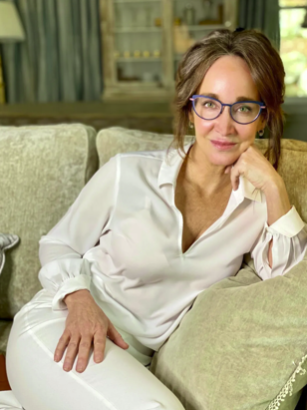
Submitted Photo Kelly McDaniel is scheduled to have a book talk and signing at Shakespeare and Co. on Thursday, Sept. 16.
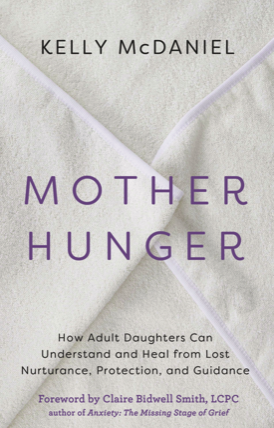
In her newly released book, Mother Hunger, Highlands local Kelly McDaniel aims to help women break the cycle of harmful behaviors by taking a fresh look at childhood attachment injuries and their lasting impacts.
McDaniel is a licensed professional counselor and author who specializes in treating women who experience addictive relational patterns. She is the first clinician to name Mother Hunger as an attachment injury and explore the repercussions of bonding to an emotionally compromised mother. She teaches workshops and speaks to audiences nationwide about Mother Hunger.
McDaniel said the book has a mission to explain how important and difficult mothering is.
“I never wanted to write this book,” McDaniel said. “But the stuff inside of it, about what mothers do, it is not in our consciousness. We have this idea that people just know instinctively how to be a mother, and that just isn’t true. We have this terrible fantasy that highjacks not only the process of mothering but devalues mothering.”
After her first book, Ready to Heal, McDaniel found several of her clients coming in with the same symptoms.
“In my book, there was one chapter about Mother Hunger,” McDaniel said. “It changed the whole face of my practice. Women started swarming my office wanting to talk about Mother Hunger.”
McDaniel describes Mother Hunger as a lay person’s way of understanding insecure attachment.
“I think attachment theory is gaining more mainstream awareness,” McDaniel said. “According to research, 50 percent of the nation of us are securely attached. We generally feel OK in relationships and pretty good about who we are. And 50 percent of us are insecurely attached. We struggle with relationships and self-image. Attachment theory posits that we don’t develop a ‘self’ independently. We develop a ‘self’ in connection with another. Our first, most primary connection is our biological mother.”
Based on what happens within the first three years with her, or without her, determines our attachment style. McDaniel explains that out attachment style can evolve over time based on input from others.
If a mother is readily available, excited about having a baby, doesn’t give the baby away, doesn’t die, doesn’t have an addiction, doesn’t sleep train, the baby will most likely have a secure attachment. But securely attached adults are not her audience, because McDaniel said they don’t generally seek therapy.
“Naming and understanding Mother Hunger isn’t about blaming mothers; this is generational,” McDaniel said. “If your grandmother was enslaved, you’re going to inherit her unhealed trauma. We have research now that shows women who were in their third trimester during 9/11, gave birth to children who were highly anxious. The high cortisone levels, the adrenaline that tells us to run, was transmitted through the placenta, to the baby in-utero.”
McDaniel continues to explain that there is a whole lot of education in the book about how Mother Hunger is cultural.
“This is patriarchal. This is not about blaming one individual mother. We don’t live in a world that values women, or its mothers; therefore, children suffer.”
For McDaniel, part of being a women’s advocate is sharing correct information.
“There are studies that reveal when a baby is given to a daycare within the first six weeks of birth, their cortisol levels are 75 percent higher than babies who are at home, with a consistent caregiver,” McDaniel said. “That is the kind of information that is not going to win me popularity contests, but women need to know. Many don’t know this when they are making the decision to have a child. We don’t get this information in school.”
McDaniel said women generally don’t identify Mother Hunger until they have already gotten over an addiction or had a few divorces.
“Nobody wants to betray their mother,” McDaniel said. “We feel like bad girls if we even examine the issue. It’s so taboo to talk about ‘mom’ and until now, there hasn’t been a name for this enduring heartache. A lot of women are struggling with eating disorders, addiction, loneliness and shame and not knowing why.”
Several of McDaniel’s reviews on Amazon talk about how her book as given them an eye-opening experience including:
“Kelly McDaniel has done for women what Brené Brown did with shame - she has cracked open a core issue hidden in plain sight and is showing us a path toward profound and transformational healing. Built on hours and years working one on one with so many women, the depth of research found in Mother Hunger combines the best of attachment theory, brain science, addiction recovery, complex trauma, family systems, and women’s’ health. This is not a quick fix, but rather a safe, loving guidebook offered with profound sensitivity, intelligence, humility, nurture, and hope. Be assured, the voice and wisdom you hear in this book is trustworthy. In courageously giving a name to the silent trauma and grief carried by so many, Kelly honors all women - healing heartbreak across generations and opening doors to a more just and compassionate world.”
McDaniel said the reviews and testimonies are what make everything worthwhile.
“This was a hard book to write,” McDaniel said. “It took me three years. I shed a lot of tears about my own failures as a mother.”
The final exhale of relief came for McDaniel when she started reading the first Amazon reviews.
“I was reading reviews from all these women and my heart grew three times its size,” McDaniel said. “These wonderful people liked my book. It hit them like I wanted it to. I knew that my mission for the book was happening.”
McDaniel’s research for the book was based on her years of clinical experience. To illustrate her concepts, she uses various pop culture references and memoir.
“I didn’t use any of my cases,” McDaniel said. “I didn’t think that would be fair for the reader. Instead, what I used to illustrate, let’s say, lack of maternal protection was the Netflix adaptation of real like, Case of Dirty John. In the series, you see how her grown daughters are unsafe with the man she chooses. In the end, her new husband tries to murder one of her daughters. It is a great example of a mother who is not safe herself, so she can’t protect her daughters. For the Third-degree Mother Hunger chapter, I used the story of Judy Garland, Edith Piaf with La Vie En Rose and the new Billy Holiday story that just came out. Each movie shows what happens when a little girl is abused by her mother. These iconic women each all died in their mid 40s, drug addicted, with love and sex problems. Despite their amazing talent, they were penniless.”
For the women reading her book, McDaniel hopes they get a sense of relief.
“I hope women feel a sense of connection,” McDaniel said. “A feeling that they aren’t alone anymore. I want them to find healing. I’m hearing from clinicians that have been brave enough to read it, how much easier it is making their job. That makes me happy. I tried not to write this book too scientifically, so that anyone can read it, but there is enough rigorous research in it that clinicians will be fortified by having this as part of their skillset. There is no book out there like it.”
McDaniel is scheduled to have a book talk and signing at Shakespeare and Co. on Thursday, Sept. 16.
- By Christopher Smith